
Beehaw
  • Communities
  • Create Post
  • search
    Search
  • Login
  • Sign Up
silence7 ( silence7@slrpnk.net ) M to Climate@slrpnk.netEnglish · 3 years ago

Can $500 Million Save This Glacier? A bold engineering project might show a way to slow sea-level rise — and bring new imagination to the fight against climate change.

www.nytimes.com

external-link
message-square
16
link
fedilink
  • cross-posted to:
  • nyt_gift_articles@sopuli.xyz
47
external-link

Can $500 Million Save This Glacier? A bold engineering project might show a way to slow sea-level rise — and bring new imagination to the fight against climate change.

www.nytimes.com

silence7 ( silence7@slrpnk.net ) M to Climate@slrpnk.netEnglish · 3 years ago
message-square
16
link
fedilink
  • cross-posted to:
  • nyt_gift_articles@sopuli.xyz
Can $500 Million Save This Glacier?
www.nytimes.com
external-link
A bold engineering project might show a way to slow sea-level rise — and bring new imagination to the fight against climate change.
alert-triangle
You must log in or register to comment.
  • Track_Shovel ( Track_Shovel@slrpnk.net ) 
    link
    fedilink
    English
    arrow-up
    7
    ·
    3 years ago

    While this would certainly help the glacier from breaking apart, the effort required would be imense and a geotechnical nightmare. Building dikes above ground is tough enough as is.

    On top of that we are warming so quickly. I don’t see how this would stop the sheet from melting from air temperature/solar radiation

    • Wanderer ( Wanderer@lemm.ee ) 
      link
      fedilink
      arrow-up
      3
      ·
      edit-2
      3 years ago

      I’d imagine the water makes in melt a lot quicker.

      Test it. On a cold day at like 4c or in your fridge. Put a large ice cube on something insulating and put a similar ice cube in a large bucket of water.

      It’s why if you go through the ice into the water you should roll around in the snow. The most important thing is to be dry.

  • Wanderer ( Wanderer@lemm.ee ) 
    link
    fedilink
    arrow-up
    4
    ·
    3 years ago

    I sometimes wonder if we should improve the world. Not just damage limitation but actually increasing biodiversity.

    Irrigate marginal lands for forests. Or building huge offshore underwater platforms where coral can grow. Either in-between island chains, near them or just out in the ocean.

    There was some work done on Iron fertilization in the ocean that seemed interesting.

  • jafffacakelemmy ( jafffacakelemmy@kbin.social ) 
    link
    fedilink
    arrow-up
    4
    ·
    3 years ago

    if the 500 million was spent putting up wind turbines and solar panels you’d save more gkaciers melting overall and make a profit.

  • atro_city ( atro_city@fedia.io ) 
    link
    fedilink
    arrow-up
    3
    ·
    3 years ago

    They’re going to put a white tarp on it, right?

    • silence7 ( silence7@slrpnk.net ) OP
      link
      fedilink
      arrow-up
      3
      ·
      3 years ago

      Maybe read the article

      • atro_city ( atro_city@fedia.io ) 
        link
        fedilink
        arrow-up
        3
        ·
        3 years ago

        Was going to edit my comment after reading it, but goodness me, they never get to the point.

        • silence7 ( silence7@slrpnk.net ) OP
          link
          fedilink
          arrow-up
          3
          ·
          3 years ago

          Sounds like you still didn’t read it

          • atro_city ( atro_city@fedia.io ) 
            link
            fedilink
            arrow-up
            4
            ·
            3 years ago

            Sounds like you can’t read.

            • silence7 ( silence7@slrpnk.net ) OP
              link
              fedilink
              arrow-up
              1
              ·
              3 years ago

              Lol

  • WHARRGARBL ( WHARRGARBL@beehaw.org ) 
    link
    fedilink
    arrow-up
    3
    ·
    3 years ago

    What a fascinating read! Thank you for sharing this article.

  • atro_city ( atro_city@fedia.io ) 
    link
    fedilink
    arrow-up
    2
    ·
    3 years ago

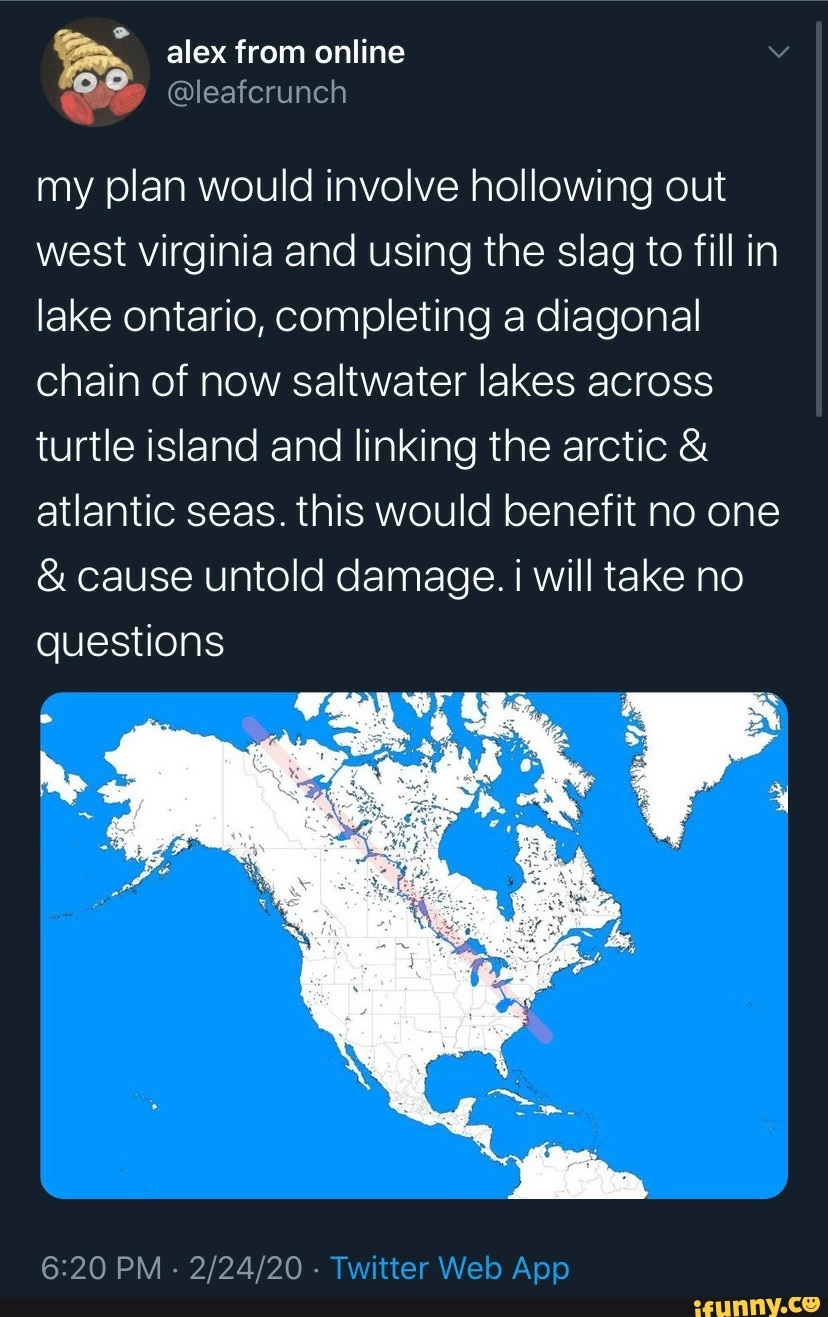
    In the realm of crazy ideas, why not flood parts of the Sahara? Build a canal from the closest sea and just let it drain into there. There are also areas in Australia that were one great lakes that could also have a canal or two built to them from the ocean and flooded. Given the temperature in those places, it might make enough condensation to rejuvenate those and surrounding areas with the precipitation.
    • Track_Shovel ( Track_Shovel@slrpnk.net ) 
      link
      fedilink
      English
      arrow-up
      7
      ·
      3 years ago

    • silence7 ( silence7@slrpnk.net ) OP
      link
      fedilink
      arrow-up
      1
      ·
      3 years ago

      Mostly because it’s expensive and the benefits unclear. This one had a bunch of modeling work done around the proposed intervention so we can know what it’s likely to accomplish

    • Wanderer ( Wanderer@lemm.ee ) 
      link
      fedilink
      arrow-up
      1
      ·
      3 years ago

      There has been some talk about moving water around in Australia. This and others like it.

      https://en.m.wikipedia.org/wiki/Bradfield_Scheme

  • crandlecan ( crandlecan@mander.xyz ) 
    link
    fedilink
    arrow-up
    1
    ·
    3 years ago

    That’s some out of the box thinking 👍

Climate@slrpnk.net

climate@slrpnk.net

Subscribe from Remote Instance

Create a post
You are not logged in. However you can subscribe from another Fediverse account, for example Lemmy or Mastodon. To do this, paste the following into the search field of your instance: !climate@slrpnk.net

Discussion of climate, how it is changing, activism around that, the politics, and the energy systems change we need in order to stabilize things.

As a starting point, the burning of fossil fuels, and to a lesser extent deforestation and release of methane are responsible for the warming in recent decades: Graph of temperature as observed with significant warming, and simulated without added greenhouse gases and other anthropogentic changes, which shows no significant warming

How much each change to the atmosphere has warmed the world: IPCC AR6 Figure 2 - Thee bar charts: first chart: how much each gas has warmed the world.  About 1C of total warming.  Second chart:  about 1.5C of total warming from well-mixed greenhouse gases, offset by 0.4C of cooling from aerosols and negligible influence from changes to solar output, volcanoes, and internal variability.  Third chart: about 1.25C of warming from CO2, 0.5C from methane, and a bunch more in small quantities from other gases.  About 0.5C of cooling with large error bars from SO2.

Recommended actions to cut greenhouse gas emissions in the near future:

Anti-science, inactivism, and unsupported conspiracy theories are not ok here.

Visibility: Public
globe

This community can be federated to other instances and be posted/commented in by their users.

  • 56 users / day
  • 79 users / week
  • 908 users / month
  • 3.42K users / 6 months
  • 172 local subscribers
  • 9.08K subscribers
  • 13.2K Posts
  • 22.1K Comments
  • Modlog
  • mods:
  • silence7 ( silence7@slrpnk.net ) 
  • BE: 0.19.21
  • Modlog
  • Legal
  • Instances
  • Docs
  • Code