
Cool beans. KVM is one step away from fully replacing VirtualBox and VMware for desktop virtualisation - getting a Windows 3D driver for Virtio. For use cases that can get away without it, it’s already there.
AFAIK it’s being worked on but time is a major issue for the person handling the MR.
I’d love to donate specifically to get Virtio/VirGL on a Windows guest. Given that VirtualBox and VMware could be on very shaky ground thanks to their owners, I think libvirt will be the long-term solution.
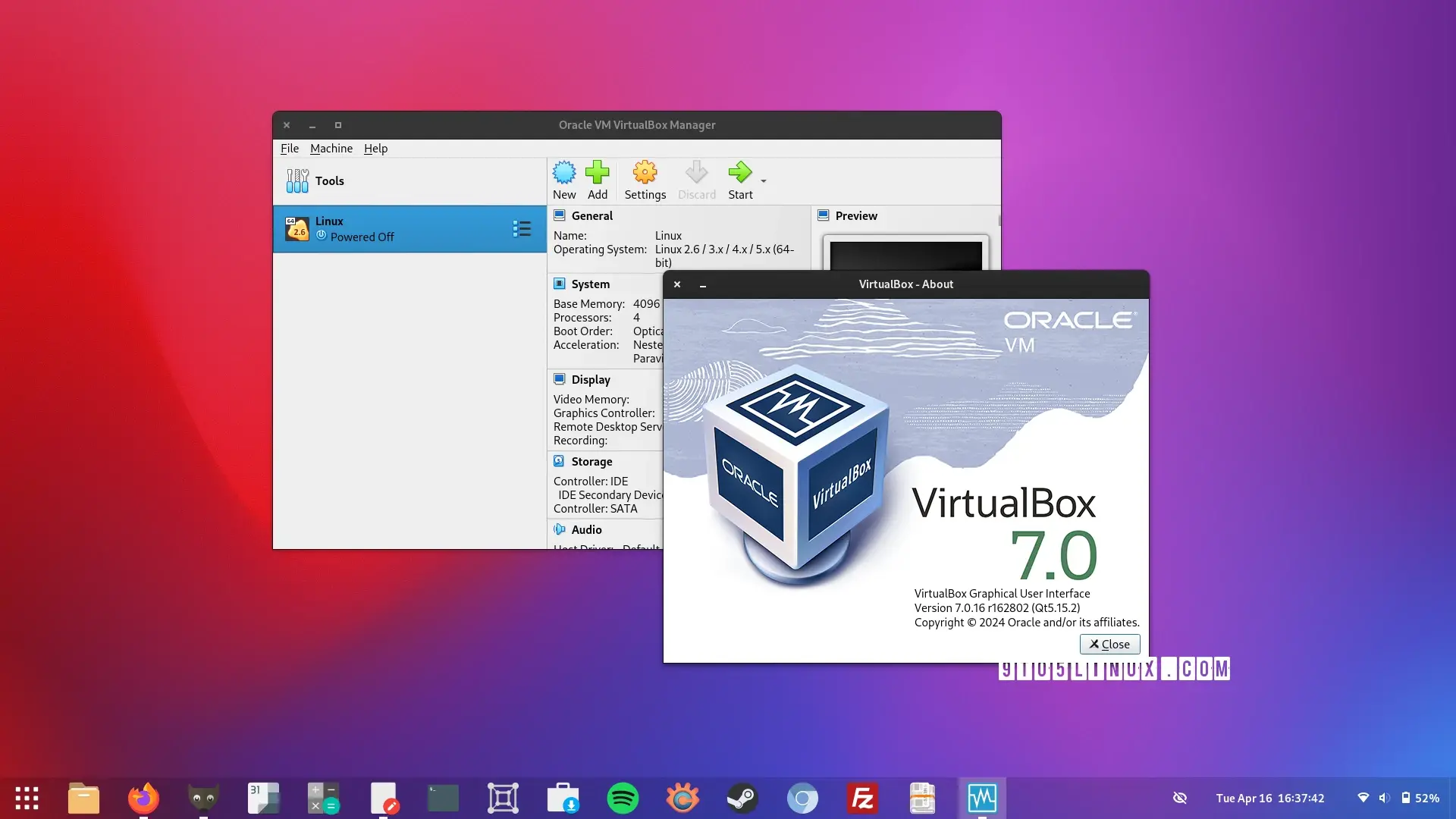
What happened to being able to use VirtualBox as a front-end to KVM? That seemed like the best of both worlds.
It’s still being maintained. It’s a third-party project btw, but it’s just a patchset so you’ll need to build it yourself: https://github.com/cyberus-technology/virtualbox-kvm
Arch users can also install the virtualbox-kvm package from AUR to get it all in one go, nice and easy.
Damn, never knew such thing existed. I’ll definitely give it a try. Thank you.
Why would you do that when libvirt exists and is GTK themed?
Libvirt is the backend for virtualization. Maybe you meant virtual manager? In that case it is Qt based.
I use KDE.
Virtual box is slow and buggy and it probably will always be that way. It is simply the nature of its design.
Quemu+KVM is the way to go.
*virtual manager
Qemu is pretty much an emulator.
Qemu can also be used with KVM, without emulating the entire hardware. My preferred way to virtual machinery.
From linux-kvm.org:
The kernel component of KVM is included in mainline Linux, as of 2.6.20. The userspace component of KVM is included in mainline QEMU, as of 1.3.
Virt-manager uses QEMU and KVM on the backend. The only difference is how you’re managing the VM.
Had to run linux VM at previous job. Dreadful experience. Glad I can run natively now.
I assume you are talking about Virtualbox. Yes, it is slow
I’ve been running my main desktop as a VM since 2009. I make a new VM for every client and plenty of others.
I have no what you are talking about.
You don’t have the same hardware, drivers and software as him. Off course you would not know what he is talking about then.
Hardware was why I went virtual. Before that, for a decade, I ran Linux bare metal, but was spending days recompiling kernels and drivers and futzing around with non-productive activities. Every upgrade would start the cycle again.
Once I went to VMware all those issues went away.
Now that new owners have taken over, it appears that I’m going to have to find a new solution.