
I read that completely differently from how it was meant.
They’re pushing out fossil fuel furnaces.
Been a little while since I looked up the utility rates, but last I remember gas is about 1/7 the cost of electricity in Saskatchewan. Makes it hard to justify heat pumps for heating in most places. Hope the technology continues to improve and it’ll be a more sustainable option when we have a more sustainable grid.
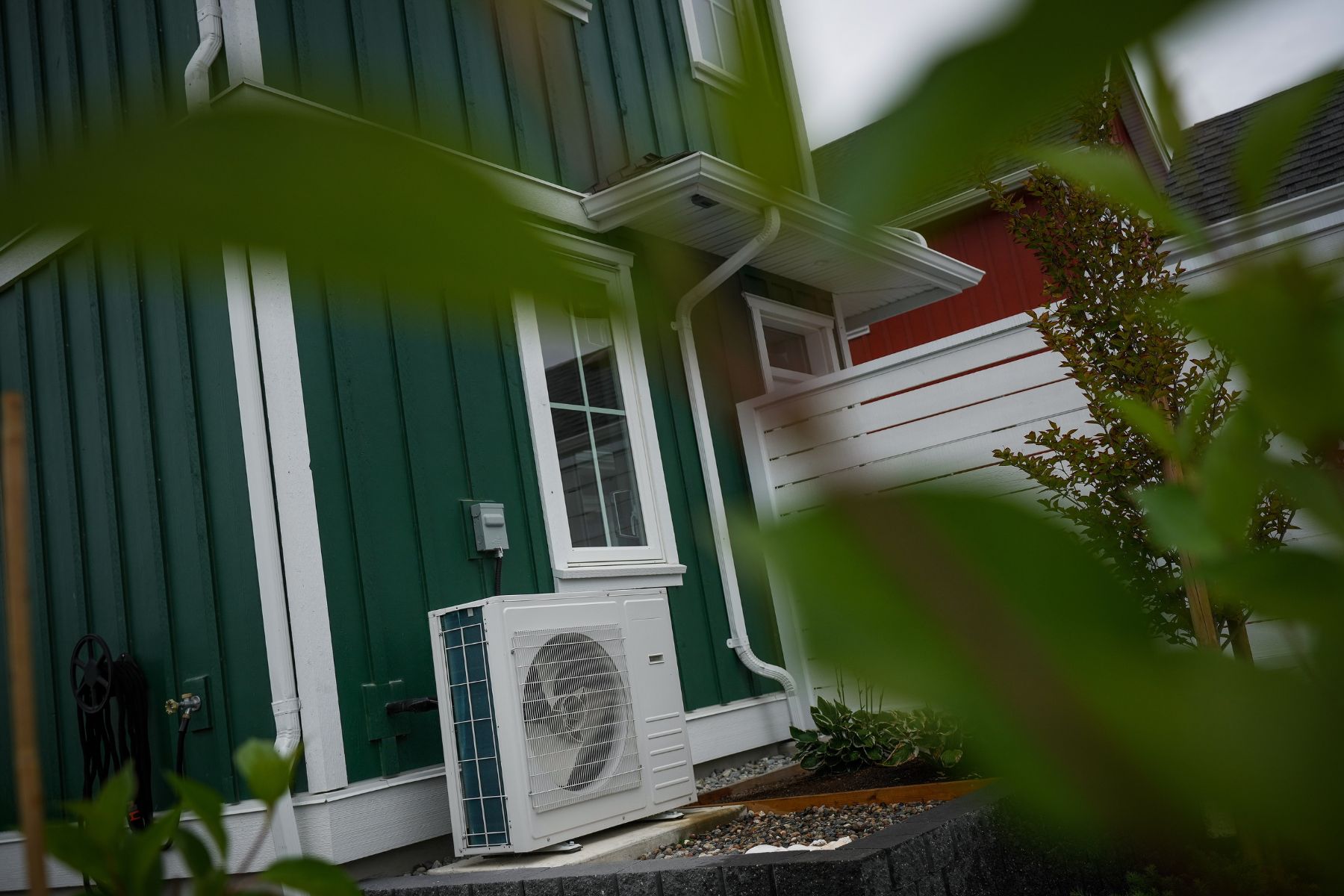
Gas furnaces achieve about 96-98% efficiency. Heat pumps achieve 300-400%. So you have to factor that in.
There’s still a cost difference but the hope is for governments to start supporting serious nuclear energy to drive down electric costs. It’ll take time but natural gas will become less economical as decades go on especially with investments.
Newly built nuclear would do many things, but it wouldn’t drive prices down.
Wind and solar would do that though.
How does something achieve 300-400% efficiency?
Its partly due to how you are measuring efficiency. It mainly moves heat rather than creates it.
Another fun way to get more heat is condensing, a dehumidifier gets over 100% efficiency if you were to use it as a heater. Heard of evaporative cooling right? Well condensing is the opposite, you get extra heat from that.
If you take 100 joules of electrical or chemical energy, and then direct them to a heater in a house, it’ll create about 100 joules of heat. That’s 100% efficiency.
But if you use the 100 joules of energy to run a heat pump, it might bring in 300 joules of heat into the house. That’s 300% efficiency, when measured locally at the place you actually care about (inside the house). Zoom out and laws of thermodynamics still make it impossible to create more energy than was put in, but if you look at just the part you care about, it’s possible locally.
Ok yeah, so you would consider it as two systems, one being the heat pump and the other being the rest of the world.
And instead of creating heat you’re moving it, so your heat pump is operating at above 100% efficiency while the rest of the world is not.
Thanks for the explanation!
start supporting serious nuclear energy to drive down electric costs
Eh, I can see a resilience based argument for why we need nuclear, but building new nuclear is never going to be cheaper than solar or wind.
Yeah, depends where you live. Saskatchewan is the worst place, Quebec is the best.
Yep, doesn’t make economical sense here yet. Better to put money towards air sealing and (the right kind of) insulation.
I’m in Manitoba and am kind of in the same situation. Even though our electricity is really cheap, it’s still more economically efficient to use natural gas. Coupled with just buying a new furnace and air conditioner, I don’t see myself getting one anytime soon. I’d still be happier if we subsidized electric heating/heat pumps (or stopped subsidizing fossil fuels so much) but recognize I’m in a place where I can afford that and many others simply can’t.
If you have AC you already have a heat pump
If you have AC you have 98% of a bidirectional heat pump and likely no way to easily convert it to bidirectional.
Air Conditioning only heat pumps should be taxed extra to entice people to get a real heat pump.
Absolutely agree.
I thought the vast majority installed in the past few decades could do both?
That really depends on where you live. The option wasn’t even mentioned when my furnace was replaced a few years ago, and when I checked my AC model, it was not listed as a heat pump.
I have to pay about $50 USD per month just for the luxury of having heating in the northern US., even during the summer when I don’t need it. R The gas company can fucking blow me, I’m getting natural gas out of my house as quickly as I can afford it.
£100/year was the standing charge just to be connected to the gas network for me, had it removed as the heat pump was going in a few years ago.
Never having to worry about gas or carbon dioxide leaks is nice. Still got water leaks to worry about though, that caused some damage a while back. My standards are low enough that I would have fixed it with some duct tape and plywood but my partner doesn’t consider that an acceptable level of workmanship. But at least we got a really nice shower out of it that the insurance company mostly paid for.
I wish I knew about heat pumps a few years back when we replaced our A/C and furnace.
But they, at least by the time I have to replace them again, maybe prices will have come down or the tech improved even more on these things 👍
In my case, it was that our local HVAC shop literally only sold one solution. I couldn’t even talk them into a more powerful A/C despite having both a grow op (at the time) and server farm in the basement.
Our A/C struggles to cool the house on room-temperature days, but that’s beside the point. Heat Pumps will really take off when the small time dealers start stocking them.
In my case, it was that our local HVAC shop literally only sold one solution.
In hindsight, I feel like I was taken advantage of. They even replaced my water heater “for free”, but I should have been given the option to buy one outright, as I’m now stuck in a rental plan that costs way more than owning it.
And had a heat pump been offered, I would like likely gone for it.
I’m glad that people are finally starting to realize that it’s a lot more efficient to simply run your air conditioner in reverse. Ten years ago people were ripping them out to replace them with a furnace.
What are they powered by?
Most of Canada’s power is hydroelectric and nuclear. 60% of Canada’s energy production is hydroelectric, and Ontario has three of the largest nuclear power plants in the world.
Given their vastly higher energy efficiency, they still reduce emissions even if running on fossil fuels by a significant amount.
How does it even work, I can’t understand it at all.
Basically it doesn’t produce heat by converting energy into heat, rather, it uses energy to move heat from one place to another. Hence the name heat pump - it literally just pumps heat around. The place where it gets the heat in this case is the outside. While it’s usually colder than inside at the times when you’d want to use a heat pump for heating, it’s still way more than absolute zero - the freezing point of water is 273 Kelvin, after all. This means there’s always some amount of heat that you can ‘steal’ from the outside and pump indoors.
You may infer that this means that the heat pump is going to be pumping colder air outside, and you’d be correct in that inference. What’s even more interesting is the realization that you can harness that property by running the heat pump ‘in reverse’ to cool a space - which is exactly what an air conditioner does. It’s merely a heat pump that pumps the heat out of a space.
Here’s a Technology Connections video explaining the concept even better than I could: https://www.youtube.com/watch?v=7J52mDjZzto
Thanks for the explanation and link.
Flip your refrigerator inside out. That is exactly what is happening.
You need to understand the difference between “heat” and “temperature”.
When you squeeze a gas inside a perfectly insulated container, no heat is transferred, but the temperature increases. If you allow the gas to expand again, it will return exactly to the temperature it started at. Again, no heat has transferred into or out of the gas, due to our (hypothetical) perfect insulation. The temperature has changed, but no heat has moved.
In reality, we aren’t using a perfect insulator. When we compress the gas, the temperature of the gas rises. Heat starts flowing from the compressed gas to the container, and into the air. The gas is still compressed after the heat has left, but its temperature falls to ambient. This all happens inside the house.
The cooled, compressed gas is now piped outside. It is expanded. Because it doesn’t have the same amount of heat that it started with, the temperature plummets. It gets extremely cold, far colder than the outside atmosphere. Heat from the atmosphere flows into the cold gas. The cold, decompressed gas then goes to a compressor, and the cycle repeats.
Its not always piped in/outside. IIRC mine the refrigerant never leaves the outside unit, instead hot water (and a shitload of glycol) is pumped around between the unit and the inside of the house. My heat pump only does heating in this configuration though but because of that I got £7.5k from the UK government towards the install, more than half the total cost and that included getting all new pipework and radiators. I assume the idea is they don’t want to be giving people AC as that is seen more as a luxury.
I suppose that makes sense if you’re retrofitting a heat pump onto an existing hot-water radiator system. The unit replaces the existing boiler.
Well it also provides my hot water for the shower, I had a completely new hot water radiator system installed with the heat pump but they are by far the most common form of system in the UK anyway. Convenient to be able to hang clothes on them to dry and the cat loves sleeping on top of it when its on as its warm.
Intuitively cold winter air is cold, but that’s just our perspective. From a physics perspective any air that exists anywhere on this planet at any time has still got huge amounts of heat stored in it (it’s literally hundreds of degrees above absolute zero, the most blisteringly cold arctic air still represents a huge reservoir of physical heat energy even when it’s cold enough to kill us). A heat pump doesn’t care about how heat feels to humans, it uses physics: specifically evaporation and condensation of refrigerants to extract heat from the cold winter air outside (making that air even colder while the refrigerant absorbs heat from it) and move it indoors (making it warmer when the refrigerant releases the heat).
To use a water level analogy, the heat pump moves its heat out of an absolutely massive heat reservoir (the planet’s atmosphere) that at any point might be slightly lower or higher than the level you actually want, and deposits the results of its pumping into a tiny reservoir (your indoor air) that it is responsible for controlling the heat level of. In both cases there is lots and lots of water (in the analogy, heat) available to pump around and the contents of your little tank makes no real significant difference either way, depending on how much water you need in that tank you can easily pump it in either direction you want, within reason, but eventually if the water levels start to get too different, you start running into practical problems with pressure and the amount of power you need to pump the water level up that high to overcome the height difference, and can also run into problems with inlets being uncovered if the water level drops too low. In the analogy this represents the range of temperatures and pressures where the refrigerant can still change between a gas or a liquid, which is determined by the design of the system and the refrigerant used.
Air conditioners do the same thing (in fact essentially ARE the same thing) as heat pumps, it just makes more sense to us intuitively because we’re familiar with how they work, and are unfamiliar with the idea of this principle being reversed. Imagine if you put the hot-air blasting outdoor part of an air conditioner inside, and put the cold part that normally lives inside your house, outside. Now turn it on, and it starts working as a heater, and it’s making the outdoors colder for no reason, and we call this “wasteful” but when you actually need heat it’s actually not wasteful. So we add a reversing valve so you can make either end the hot side or the cold side, as needed, and you’ve got a heat pump. They sometimes select different refrigerants that are more efficient across the desired temperature ranges and they will have some different sizing considerations and mechanical needs to operate optimally, but fundamentally they’re the same kind of machine, just with a slight rearrangement of the plumbing.
Interesting, thank for the detailed explanation.
A bicycle pump or other type of air pump warms up when the air is compressed.
A spray can or propane cylinder cools off when the gas inside it is released.
Plug the two together in a loop, put some coils on either side so that heat (or lack thereof) can be easily exchanged with the space, and you have a heat pump.
A heat pump doesn’t generate heat, it just moves it using the physics of pressure and state changes of a fluid (refrigerant). Moving heat in this manner uses less electrical energy than would be used generating heat from that electricity.
Heat pumps are very common. Refrigerators would be the most ubiquitous (heat pumped from inside to outside), but there are AC units, of course, and also clothes dryers and water heaters that are available.
It could still be fossil fuel, but they’re more energy efficient than burning the fossil fuel directly for heat.
deleted by creator