Make rego 10x for these yank tank wanks
Smaller cars and tax the ultra wealthy. Really not that complex.
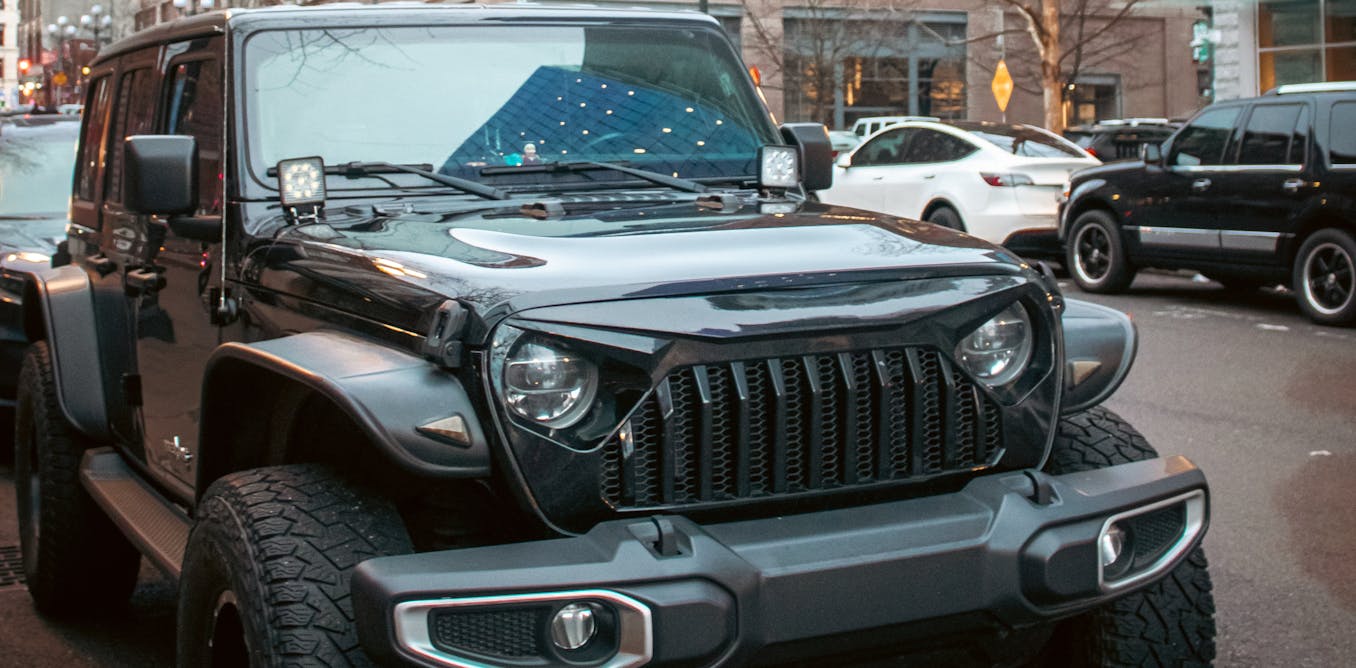
First, the “SUV loophole”: under US law, most SUVs are classified as light trucks, meaning they’re subject to less stringent fuel-efficiency and crash-safety standards than passenger cars.
This has always been baffling to me. Make the standards universal and I reckon people would make very different choices.
Pretty early the article points out that the top selling car in 2011 was far smaller than the best selling car now, in 2025, a Ford Ranger
It then says:
Four in five new cars sold in Australia are SUVs or utes – more than double the share of 20 years ago.
And follows up by pointing out two parts of US legislation that are driving manufacturing in the US to produce larger cars and ends by pointing out the extra risks with larger cars and how the situation can be improved using local legislation.
Why does the article ignore that the 2011 top selling car was from an Asian manufacturer and that Asian and European manufacturers exist. I went looking for data on sales from regions / brands over time but failed a bit. Anyone want to fill in the gaps? Obviously Mazda is no longer selling the top selling model and Ford is, but was there a swing in sales to Ford, a consolidation of sales on one model or maybe more that people that loved Ford just started buying the bigger cars? Any chance someone knows of some sort of data that helps fill in the gaps?
just remove the tax rebate/incentive
Could it be so simple?
Pretty much yes.
If the vehicle has RANGER on the back i just automatically assume they are a cunt.
It was a meme that the majority of incidents in DCAU were Rangers; to the point that when the Range Danger special was released, I know a few people who through it was just another episode.
DCAU is a great resource for learner drivers, to discuss and debate who is primarily at fault and who else contributed to the incident be being an arsehole.
Double the price of gas. Problem will solve itself.
We have done more than that over the thirty years. It hasn’t helped.
$1.65 AUD/L (as per brief google search) is not that expensive. Although, I also find it funny that a Ranger is considered a “large” vehicle. That’s a mini truck in NA. The cousin humper trucks here could literally drive over a Ranger.
Speed limit Rangers to 40kph within city limits. They usually speed through school zones and roadworks so it won’t slow them down but we might get a few disqualified from driving which will help.
Zero BAC requirement for vehicles exceeding various hazard thresholds? Say, 2.5T GVM, vehicle width/length, and a particular vision path requirement.
I’m guessing the sales of emotional support vehicles would drop overnight with that policy.
You don’t want to catch small EVs in the rule, I’d do it on dimensions and view angle and classify anything big or inefficient under a different category with different licence rules and conditions. I mean we don’t want drivers of big engined fast cars impaired any more than we want drivers of giant utes impaired
On weight, why not? – because F=ma – weight influences the risk posed by the vehicle regardless of whether it is lithium or steel.
Then again, newer cars have ANCAP pedestrian/vulnerable road user safety ratings which could override a weight threshold where available.
ANCAP guidelines are pushing for larger and larger vehicles.
Crumple Zones, and pedestrian protection add significantly to the size and weight of a vehicles, and negatively impact driver awareness.
Driver Assistance is OK to provide an extra level of protection, but result in complacency.
A compact vehicle with good visibility and visceral road awareness will be less destructive on the roads than an oversized SUV with a driver ignoring all the ADAS technology blithely unaware of their surroundings.
That said, a compact vehicle with unobtrusive ADAS would be even safer.
I’m just grappling for an objective measure of the impact hazard posed by a given vehicle which might be more accurate than weight alone.
Impact hazard × Impact likelyhoodcould form a determination of whether a vehicle should be subject to a Zero BAC requirement.Impact likelyhood should be determined by dimensions and sight-lines – maybe there’s a good comprehensive measure of this that doesn’t give too much weight to things like ADAS?
Time for an anecdote. When Holden were designing the HQ, there was a design paradigm called “Passive Safety”.
The reasoning was that if the driver did not feel safe driving at speed, they would drive more slowly, and therefore be safer.
That is why the HQ had narrow A-Pillars that were unfortunately in the wrong position to observe cross traffic and a suspension geometry that caused terminal understeer.
As terrible as this paradigm was (they reworked the geometry for the HZ) it was vindicated in the 1990s when inexperienced and unskilled Subaru WRX drivers felt so confident in their handling that they would push beyond the capabilities of their vehicles.
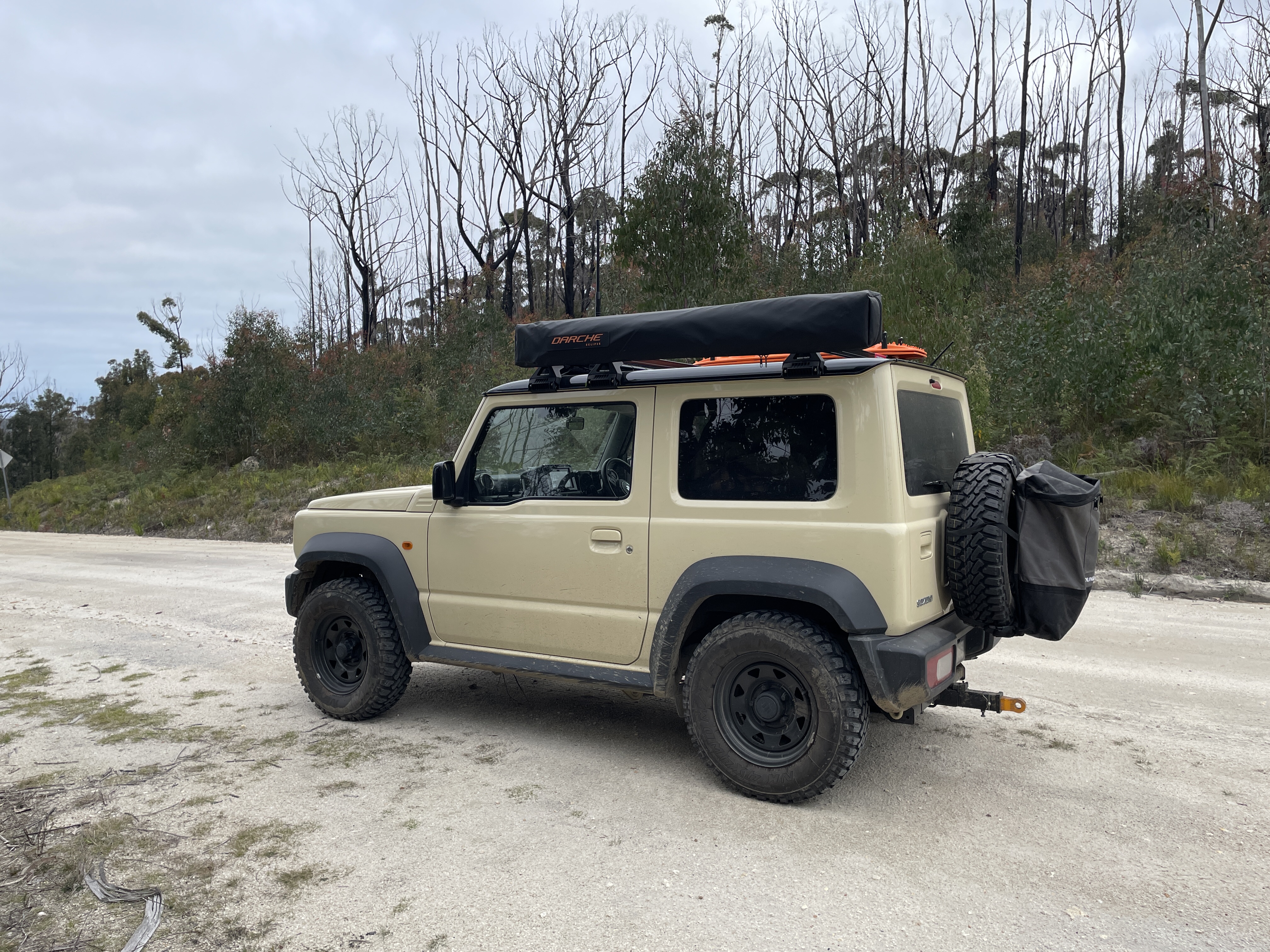
I still believe that deliberately engineered flaws are a terrible idea, but I can tell you that I am ultra careful and ultra aware of the traffic in my tiny little Jimny with bad driver crash ratings and live axles front and rear.
Let us bully them again, these dipshits with their shit over sized vehicles used to be publicly mocked for their insecurities, bring that back and you will see a drop in sales for them, shame works wonders.
I thought that was specifically a North American issue. Damn. Stay safe pedestrians (those drivers of too-large vehicles won’t even see you when they run you over)!
Rest of is could vote Green
“Rest of is could vote Green”
“is”? Islamic State?
Oh!.. “us”… you meant “us”. A typo…
So… the “United States”, right?
Am I right?(I’ll shut up now…)
“Second, under US fuel economy rules, fuel-efficiency targets are adjusted based on the size of the vehicle’s “footprint” — the area between its wheels. In practice, this means larger vehicles are allowed to consume more fuel while still meeting the target.”
So this is the problem (in US) remove that rule and cars will shrink again. Deformities often caused by unnatural pressure, and this is an example.