

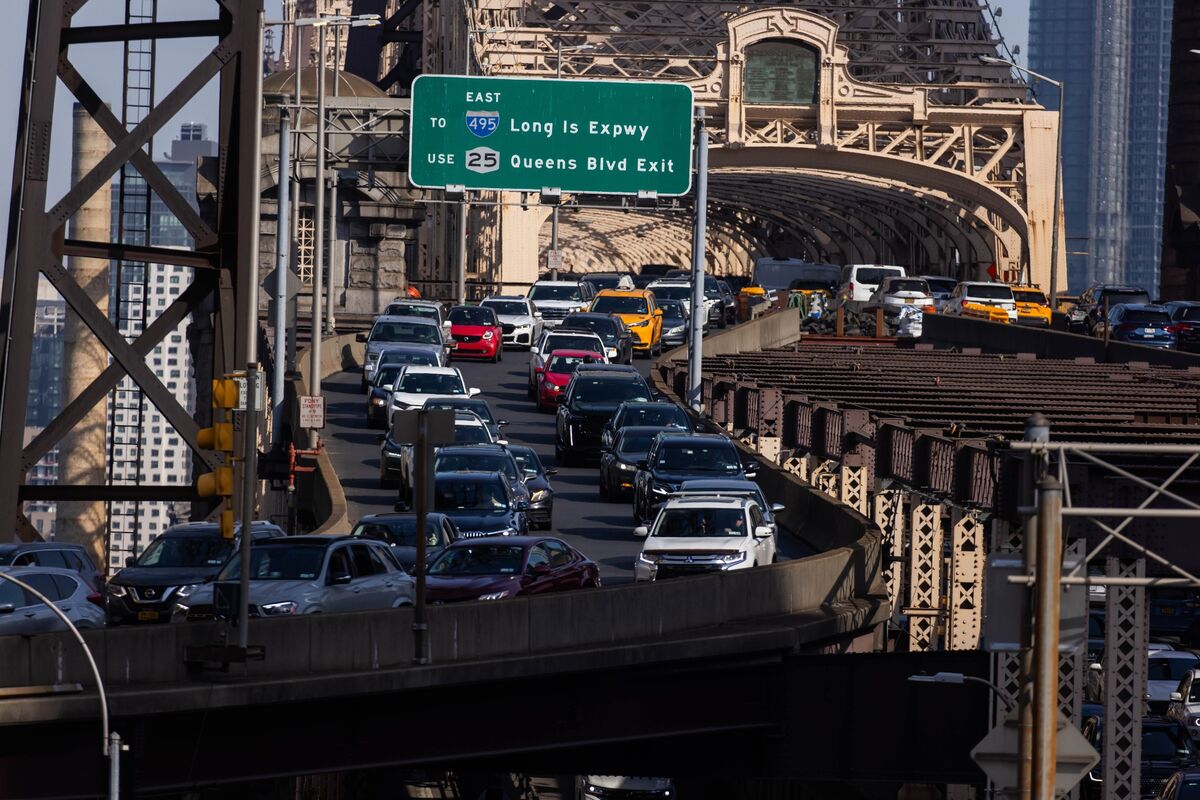
Nearly a year ago, New York City embarked on a controversial program to toll drivers entering some of Manhattan’s busiest streets. The goal of the congestion pricing plan, the first of its kind in the US, was to improve air quality and raise $15 billion to upgrade the city’s extensive — and aging — transit system, all while relieving traffic in a routinely clogged part of town.
Critics of the initiative warned that imposing a $9 fee on most drivers would dampen economic activity in an area that was still trying to rebound from the Covid-19 pandemic, while placing an outsized burden on small businesses and working families. Opponents ranged from New Jersey Governor Phil Murphy, a Democrat, to Republican President Donald Trump, and it narrowly survived years of political bickering before finally become a reality on Jan. 5.
Despite all that, congestion pricing by a number of measures is working as planned, a reality that may turn New York’s experiment into a blueprint for other US urban centers. Early indicators point to a significant drop in pollution in parts of Manhattan, according to a Cornell University study, with traffic declining by 11% in the tolled zone. The Metropolitan Transportation Authority, which implemented the new toll, is poised to beat its target this year of generating $500 million of revenue from the program after expenses. And the business impact in the district, which runs from 60th street to the southern tip of Manhattan, doesn’t appear to be as onerous as some had feared.
“I undoubtably see it as a success, in the reduction of traffic, the improvement of public safety and air quality and the funding of public transportation needs,” said Sarah Kaufman, director of New York University’s Rudin Center for Transportation.