
- cross-posted to:
- fuckcars@lemmy.ca
- fuck_cars@lemmy.ml
- cross-posted to:
- fuckcars@lemmy.ca
- fuck_cars@lemmy.ml
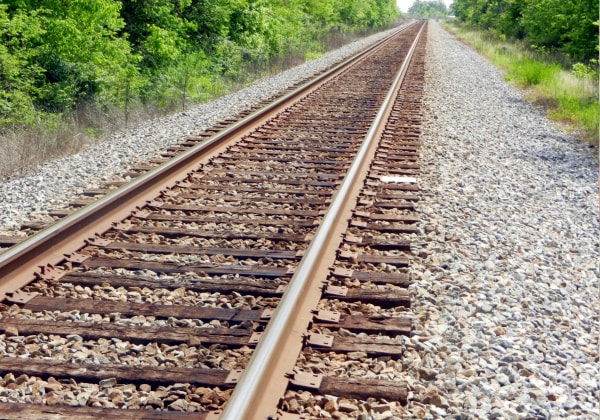
The two trains pictured:
More info about (and photos of) the driver, Han Junjia:
You must log in or # to comment.
It’s absolutely hilarious to me how people in the west are genuinely surprised that people in China overwhelmingly support their system and government. Just imagine what it must be like to live in a country where you see this sort of progress happening all around you in a single generation. You see a clear and tangible demonstration of the government working to improve your life everywhere you look.
It’s also quite amusing to see the cognitive dissonance when you point out that the Chinese system (classified as communist by many here in the U.S.) was the one that has pulled off the greatest improvement in living conditions in human history, pulling hundreds of millions of people out of poverty in basically a generation.
“But muh capitalism!” (Don’t worry, capitalism is proceeding to do the opposite.)
A lot of people don’t understand the historical context of the US having sat out WW2. The whole myth of capitalism being a superior system was built on the fact that the US got to develop its industries while the rest of the world burned. So, naturally, the NATO bloc that it formed was far ahead economically. And the west has been riding that advantage ever since.
Oh, I believe it. I got a degree in environmental sciences, and in the course of my studies, learned the historical context that goes way back earlier than WW2, even: The United States initially became an economic superpower, and built its industries, on the sheer bounty of natural resources that it extracted from North America and the Caribbean. Nothing much to do with the economic system, except to concentrate the gains to a lucky, elite few.
yup
The most surprising to me is how much China got fucked by the opium war.
It’s incredibly depressing to read about the horrors of the century of humiliation.
Removed by mod
Removed by mod
I could be wrong as I know little about the topic but I should imagine people like this train driver has seen, in a single lifetime, such drastic change. Kind of like saying “I remember how bad things were compared to now”.
Not really sure what you’re trying to say to be honest.
What irks me so much about electric cars is that, while their energy density is much better than that of ICE cars, and they have the potential to increase it further as battery technology advances, when you compare them to even the most modest form of public transport, public transport wins by such a landslide that it’s laughable.
Electric cars are only existing right now because the car industry wants to continue to sell very expensive individual vehicles, not for efficiency nor the environment. Electric cars are, in a way, greenwashing. They are certainly better than cars with ICE but there’s still so many issues with cars and their infrastructure that them being electric will not change that much.
But buy buy buy, they’re “good” for the environment. Buy!
while their energy density is much better than that of ICE cars
Ummmm, no? Battery energy density is much worse than the energy density of gas. Electric is better for the environment but what you said is factually incorrect.
Gas has a Energy density (MJ/L) of 34.2 while lithium ion maxes out at ~4.2.
He said it wrong, but isn’t it implied that he meant the right thing? What’s the correct term or principle? The one where we get 30-40% of the energy from fossil fuel in ICEs whereas an electric motor gets some 96% from the battery?
Yes, disclaimer here, disclaimer there, electricity has to be produced in order to be put into a battery. But didn’t he mean the right thing?
ICE is closer to 20% gas to wheels. 30+ (reaching 50 on large diesel) is at the best efficient point, mainly when used for diesel-electric or pumps.
EV has 85% charging and 85% battery to wheels, overall 70+.
Sorry, to be more exact I should have said efficiency.
I was taking into account energy lost due to conversion at the engine where an ICE is between 20 and 25% efficient, or wheel to wheel efficiency if you will, I thought that would have been self-explanatory.
Even accounting for that pretty sure it’s still wrong, that’s why ICE vehicles usually have better range despite not stuffing gas tanks into every available space.
You know what that’s fair, I was speaking in a informal tense for which I should have avoided using technical terms to dissuade ambiguity
Imo it was clear what you mean if you apply any benefit of the doubt. But we’re on reddit, so they didn’t. (I know it’s not reddit, das de joke.)
It’s correct though.
ICE efficiency in a car ~ 20% for a car, gas to wheels.
Worst case scenario :
- diesel running to generate electricity (the engine stays at its efficient point): 45-50%
- battery efficiency to charge 85%
- battery to movement efficiency ~85%
Electric cycle efficiency : ~33%
You need to add ~15% overweight for EV, making a conservative 28% total cycle efficiency.
It is definitely the energy density which makes the difference.
Public transport is excellent in towns and cities, where there’s a high enough density of destinations people are trying to get to, and stops where they can get on and off the public transport, but little use anywhere more spread out. I live a few miles from the nearest town, and there aren’t many other houses around here; we have a bus service, but it’s infrequent, and it wouldn’t really make much sense to make it more frequent as there aren’t enough potential passengers. Cars make much more sense around here.
Speaking from a German perspective: We used to have a great solution to public transport in areas that are spread out: public transport infrastructure that is also spread out.
I’ve lived in several rural areas, all of which used to be connected to rail lines before those were closed down in the 70s to “modernize” transportation (for cars).
If you lived in an area without a rail connection, you’d probably drive a tractor more than a car.Rent in the city is double rural rent. We need regular public transit. Trolly even.
Hot take: Cars don’t make sense for people who live a rural lifestyle in a low-density area miles from town, because they don’t really need to go anywhere that often.
If they do need to go other places often, like commuting to a job in the city, or frequent trips to stores, then that’s not a rural lifestyle. It’s an urban lifestyle transposed into a rural area, and massively subsidized by building the roads that allow them to do it.
Living outside a conurbation doesn’t mean you don’t still need access to the amenities there. You still need groceries, to get kids to school, to visit the doctor, or even maybe visit friends, either in the city, or somewhere else outside it.
Roads are going to be part of the transport mix for the forseeable future, both within towns and cities, but also linking them. We need them for transporting goods and people long distances where public transport diesn’t have a reasonable route, and we need them for the “last mile”, from a transport hub, to where we actually need to be. The more people who use public transport the better for everyone, including those who can’t use it for a particular journey. For that to happen though, there needs to be frequent local service, linking to the wider scale network, and it needs to go where people actually want.
An hourly bus service to go the few miles to the nearest villiage to buy some eggs or milk isn’t really practical as the whole process of getting there and back will take far longer than just driving.
So yes, living outside town is more awkward than living in one, but you’d have to actually imprison me to get me to do that again, it almost destroyed my mental health last time.
Living outside a conurbation doesn’t mean you don’t still need access to the amenities there. You still need groceries, to get kids to school, to visit the doctor, or even maybe visit friends, either in the city, or somewhere else outside it.
That’s an urban lifestyle.
Not that I blame people who live out in the sticks and commute into the city. The roads were there first, after all, and they’re taking advantage of conditions. It’s just a net-loss for society, and as is becoming clear, isn’t sustainable.
Are you suggesting that the only way to have a “rural” lifestyle is to grow all of your own food, act as your own doctor, and educate your children entirelt by yourself? Bear in mind that, to do even a fraction of this, you’d need lots of land, which would mean you’re a significant distance from any neighbours who might help, which would mean you’d probably need a car, or similar, anyway.
EVs are already running at 85*85%=72%.
We might squeeze 10 points more out of the cycle, but just having a full car vs driving alone ratioes it so much, there is no way public transit can loose.
Damn that’s quite an upgrade in such a short period of time.
The train doesn’t go choo choo anymore 😔
But it can play choo_choo.wav if you want.
I first read; “Same train, 26 years apart.” I bubbled; “You be lyin’.” And then my eyes was like; “Oh they be talkin’ about the driver.”
How come he was able to grow so much taller as an adult??!??!
It’s a shame china is still so full of cars and massive roads, and they don’t seem to be placing too much of a priority on avoiding cars and creating walk-able cities.
Not to excuse them, but they do have an absolutely fucking absurd population and population density, so it should be noted that they’re doing hilariously better than much of the world, proportionately.
I’d say they’re a lot like japan: Very good in some ways, still quite amazingly shitty in other ways, and they’ve ended up like that because they’re fairly non-corrupt (at least on a local level, in the case of china) and actually prioritize genuine economic growth (as in: having industry) rather than making people happy or jerking off the friends of politicians.
Much like japan, except completely different in almost every way.
Japan has had completely stagnent ecenomic growth for the last 30 years, china tho…