When we can’t feed everyone, that’s weakness, and it is sad.
When its a choice, that’s power, and its fun!
Exactly, can’t be won’t.
To make more food to stockpile and force people to buy or watch rot you silly billy!
Seriously though. Its one thing to want to sell the food, I get that people gotta get paid, but the fact that in a lot of places we just throw away the unsold food to rot in the rubbish is ridiculous!
Like seriously, we’re just gonna throw away this food rather than even attempt to give it to those in need, and fire anybody who tries, cause it might slightly eat into profits?? That’s just psychopathic levels of corporate apathy.
There are places where the trash bins of supermarkets are locked so homeless people can’t take thrown away food from them
Most supermarkets have compactors.
So, here’s a problem: food logistics is a massive, complicated morass of infrastructure. Getting food from the area where it’s produced to the area where there are people who want to eat it is difficult. A lot of individual steps have to go right for a bell pepper grown in Coahuila to show up in a grocery store in Tokyo, unspoilt and ready to eat.
The timing of when the pepper is picked, how fast it will ripen and how long until it spoils is built into the steps of the supply chain. The cost of the logistics system for distributing food, and the overhead for managing and containing the chaos, is probably substantially higher than the cost of actually producing the food.
The point being, when the bell pepper is at the store it is now ready for consumption. It will be there 2, maybe 3 days, and then if it is unsold it is at least halfway to rotten. Now at this point you want to try to redistribute it, which will require another supply chain, but there isn’t time to figure out where to send an overripe bell pepper or who would want to eat it, or to pack it and ship it and then unpack it and hopefully use it before it’s completely rotten.
Refrigeration is a wonderful technology that has brought massive reduction of food waste, but it has limits. You can’t un-ripen a fruit. Trying to re-ship food at this point would not be worth the cost, and ultimately would create environmental harms that would outweigh any benefit.
Always buy local, as much as you can!
Okay, that’s true for fresh produce with a minimal shelf life. But we also do that for shelf stable (like dried, canned, jarred) foods which can much more reasonably be donated after their display date.
And that’s assuming some sort of centralised donation scheme, and not just mandating the stores donate to a local foodbank or such - which would make it a bit more feasible to donate some fresh produce.
As far as “buying local”, there’s no reason why we shouldn’t be seed-bombing food plants everywhere. Destroying the soil to grow a field of peppers for example, to mass produce and mass distribute them across the world, is not sustainable. Why should food even be “bought” local or not? How are we not lining the streets with fruit trees? Why are urban environments packed full of shrubs and bushes that aren’t growing food? Why are we using lawns to just grow trimmed grass? Why aren’t we utilizing natures impeccable clockwork of self-maintaining edible gardens and forests? We have all the food energy we need raining down from the sky, why aren’t our rooftops being used? We could be living in an abundance of food, all local, all free. Human societies have done that for thousands of years both before and after the so-called “agricultural revolution.” We know it’s possible. We figured out how to turn deserts into forests by just digging a bunch of semi-circles and waiting for a bit.
But we don’t because number go down instead of up. There’s no money to be made in that, so even the most altruistic of investors will be deterred from the lack of monetary ROI and not the ROI of a better world. It’s like the world is stuck in Dark Ages Europe, where people couldn’t imagine how the world could function without the Christian god, the gospel, and the divine leadership of Kings and Queens. Now we’re in a dark age where people can’t imagine the world functioning without money, economic models, and the divine leadership of investors and CEOs. Thinking otherwise makes you a heretic, and considering how they used to burn thousands for the heresy of atheism much like we kill thousands for the heresy of environmentalism.
We credit the Enlightenment era for getting us out of this braindead mindset, yet little has really changed. Whether you call it capitalism or socialism, we’re still draining water tables and making land uninhabitable, then turning the land into gravel and call it “development” or “productivity”. The whole universe is open to this sort of insanity. We really need to go back to the ideas that inspired the Enlightenment and opened European minds to something other than their death-cult religions, like the indigenous critiques of Native Americans.
I’m an atheist to people who believe in money - I just go one God further.
Unsold food that is given away creates a liability if it causes problems. Food banks are the middle man in that respect, where they can toss things that aren’t going to stay good and provide for people with the rest. So here’s where government, regulation, and socialism comes into play. Companies should be encouraged with money to do something other than toss that food. Better systems should be in place to move that food to the food bank. Better regulation there to make sure that the food is being examined well enough. More places for all this to happen.
This ignores fixing the real problem, profit driven consumption, societies where people aren’t able to provide for themselves, etc.
So by itself you aren’t going to get unsold food to the needy, the risk and cost is too great for companies.
Actually, this is completely false for US based companies.
They limited liability in 96
https://en.wikipedia.org/wiki/Bill_Emerson_Good_Samaritan_Act_of_1996
Do you think industrial safety standards that companies spend tonnes of money on maintaining every year just popped out of thin air or the good will of companies?
Hell no. The mega-corps at least would be chucking children into factory machines 7 days a week like back in to early 20th century if they thought they could get away with it.
If you want companies to do something they’re otherwise not incentivised to do, you regulate it into existence. Force their hands just like Governments did in the past, and have now become increasingly less willing to do because of blatant corruption.
The easiest path in my mind is a one-two combo…
Firstly you give minimal liability to the food donor, so as long as they made a good faith effort to check the food wasn’t bad before handing it over you can’t be sued (I.e. if you’re giving a batch of cans, you’d check them for defects like bloating or cracks/dents).
Secondly, you create criminal liability for throwing away non-defective shelf stable foods (such as dried, canned and/or jarred foods) for companies over a certain size (to prevent from screwing over small businesses that may not have the logistics to ensure consistent donations).
Those two things create a pathway by which donations can be made with minimal risk, and disincentivise the route of least resistance (aka. Throwing it all away).
What is the point of automation and mass production when the prices of certain basic staples keeps going up? You are really going to tell me we can’t get a loaf of bread down to 1 dollar?
I mean, in Holland a loaf of bread is like €1…
Remember that a portion of the sale of every loaf of bread goes to make the stock-holder douchebags richer.
What is the point of automation and mass production
Profits for the few, enslavement for the rest.
the prices of certain basic staples keeps going up
It’s very hard to enslave people who are free and have their needs met.
we can’t get a loaf of bread down to 1 dollar?
Capitalism can not exist with the violent deprivation of basic human needs.
Liberals absolutely loath the hungry and starve people for entertainment. They hate the fact that anarchists adore their comrades and feed ourselves for solidarity.
Tell a liberal to open a canteen, and see how they send cops to destroy free food caravan.
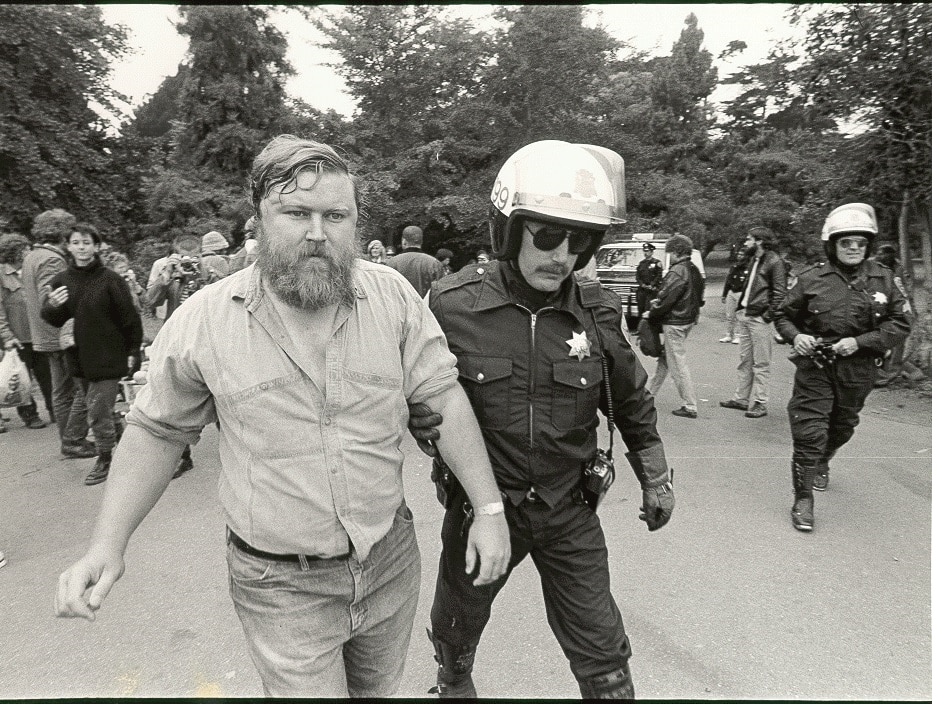
Housing, healthcare, clean water and food security are all human fuxking rights
I wonder what percentage of people actually disagree with this in the US. I bet it’s a very small percentage.
Edit: like definitely less than 50% of people, probably closer to 25% or maybe even as small as 10%
Please don’t ruin this for me, I need my hope for humanity to come back.
Hierarchy was there right from the start so I don’t agree that we were ever on the same page as to why we do anything.
The indus valley civilisation was very likely egalitarian
That’s certainly a historical gap in my education tbh.
They never teach about egalitarian civilisations at schools. I wonder why 🤔
I’m aware of the omissions of 90’s Alberta public education 🤭 Being made to stand for anthem and Christian prayer every morning was also pretty creepy. Special needs were bullied heavily and segregated from general school population. The Eugenics programs had only just ended there in 1990. I didn’t even know about residential camps until it became an international scandal. Embarrassing to find out at the same time as the rest of you.
I’ve been mainly focused on the history of languages, medieval period, and the Canaanites as of late. Indus Valley Civilisation makes the list now. I guess Bill got it wrong, damn. Still a catchy vid.
Yeah you can tell how bro this place is by how nobody has mentioned patriarchy…
No offense, lemmy <3
The start. When was that?
Removed by mod
Genocidal zio kids grow up starving people.
Yeah these two would vote against air being a human right.
plant-based, sure.
Because dragon gold
The shareholders disagree. And their opinion is the only one that matters
No we obviously built agriculture so we could have futures trading
Then what SHOULD be a commodity, smart-ass? Since you’re the king of commodities?
Toilet paper
More like commode-ity, amirite?
Luxuries. Human needs are well understood, finite, and easily provided absent violent control.
deleted by creator
That is kind of what civilization was built for, yeah. Slavery, consolidation of power, etc aren’t new.