

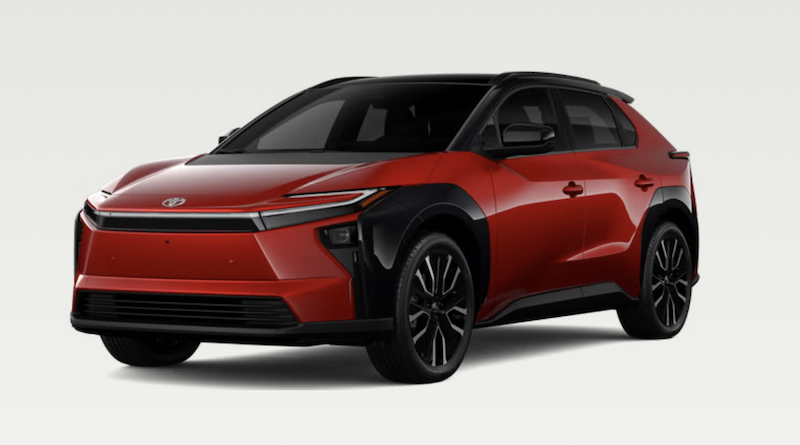
Harvard economists calculate that EV sales will accelerate rapidly in the US, despite last year’s sharp U-turn in federal energy policy.
Doubt. It’s currently at 7% and I really doubt 32% of buyers in the US give a shit to buy EVs.
Buyers in the US would definitely give a shit about buying EVs… if there were more to choose from, and there were cheaper options. Basically just open up the US market to Chinese vehicles and we’d get there in no time.
Buyers in the US already have many cheaper options - used EVs. They keep harping on how quickly new EVs lose their value, but refuse to even considered the used market.
Main reason being misinformation about battery pack longevity. They think it’s the same batteries as go into their cell phones, which start dying in 3 years. Couldn’t be further from the truth, but who’s going to tell them otherwise? Dealers? Riiiiight.
Another big one is range anxiety, which in some cases is valid, especially if you don’t have the option of charging at home. The one thing Tesla is doing right is building out charging infrastructure. I see them popping up all over the place, which is great.
I’m very impressed with how long batteries are lasting now. I had a friend buy a hybrid Honda Accord in 2006 or so, and within just a couple of years the batteries were shot and it became just a regular car with decent fuel mileage. That tainted my view of EVs and hybrids for a long time, but a couple of years ago I heard that the batteries had actually gotten much better and they are lasting longer than anyone had really anticipated.
A little over a year ago I bought a used 2018 Chevy Volt, and to this day I’m still getting around 60 miles out of the battery (on a perfect day). It cost me around $20k (after rebates) and I couldn’t be happier.
Hybrids are a completely different animal though. They can run on a traction battery alone, but at very low speeds, and not for long. The main point of it to keep the engine at peak performance at all times, giving much mileage than ICE car ever could. The fact that it can turn off the engine when the car is stopped and power the low-voltage stuff like the light and radio and A/C is just a nice bonus.
Battery packs of plug-in hybrids are more like EVs, but much smaller.
Just did the math, to reach 32% market share, EV usage would need to grow by 66% each year, for four years.
I’m not saying it can’t happen, but it would really need some extraordinary growth.
That’s really not much but also, ICE is going to drop in that time so EV won’t even have to grow that much
Here’s a direct link to the white paper, instead of this low quality repost summary.
The analysis models that if 2024 law had remained in effect (the 2024 baseline), that consumer behavior would have shifted things up to 48% EV market share for new vehicles in 2030, but that the policy changes will reduce that number to about 39.4%.
They modeled consumer behavior based on EV adoption in 2023, looking at how their EV purchasing decisions were influenced by vehicle price, local charger availability, local gasoline prices, local electricity prices. Based on the very high gasoline prices of 2026, the widespread availability of chargers, both public and private installations, and the shrinking price differential between EV and gasoline vehicles, the model predicts that a substantial number of new car buyers (already relatively affluent compared with the general population) will choose new EVs.
I don’t know enough to critique their consumer behavior model, but that’s what they did.

