

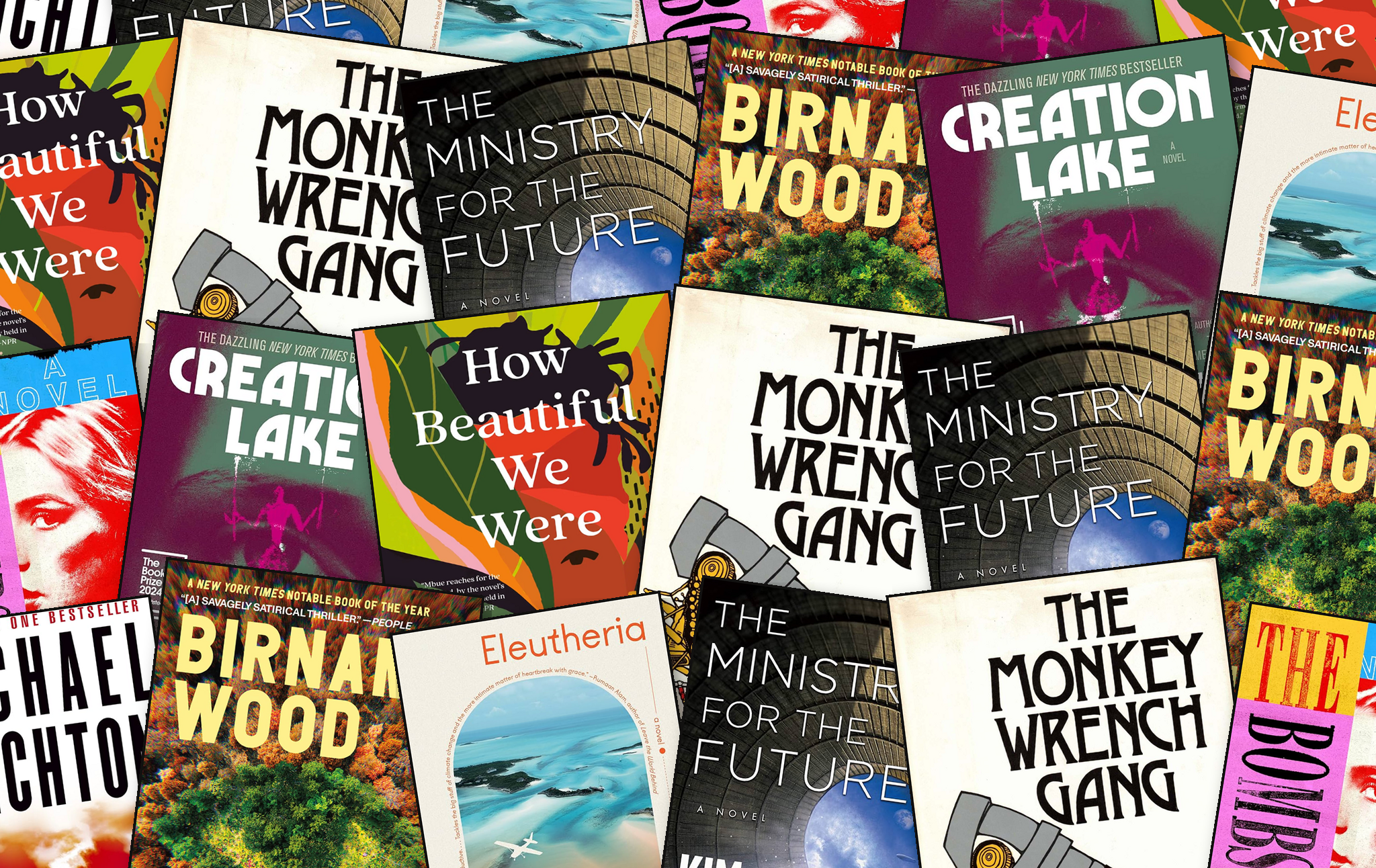
By what mechanism did a work of fiction inspire a new form of climate activism?
Imagination. Or so argued Dr. Burak Sezer, Assistant Professor of American Literature and Culture at TU Dortmund, when I talked to him about radical environmental novels, one of his areas of expertise.
“We should never underestimate the power of literature to spawn these kinds of movements,” he said. “Coming into a book undecided is a good, affective state to be in. To be brought to a place that goes against your political project can bewilder you, make you shaky in your foundations, which is powerful because it shows you’re still protean enough to allow things to affect you enough to change. If there’s a protagonist I love and they’re committing violence that I’m not sure I agree with, and I’m asking myself, ‘Is this really the right way to go about it?’ Then boom—a universe explodes. Suddenly I’m thinking. That’s a wonderful state to be in.”
Novels, Dr. Sezer believes, have an imaginative power to expand what we think of as possible in the physical world. By presenting a radical group that rubs against readers’ conventional moral codes, Abbey helped birth an organized radical flank.
Yet strangely, while the existence of ELF and other sabotage groups proved the power of fiction, and as the environmental movement went global, literary novels explicitly addressing ecotage in the four decades after Monkey Wrench are few and not particularly inspiring. Perhaps novelists were satisfied with Abbey’s efforts, or perhaps they, too, were hiding from Operation Backfire.