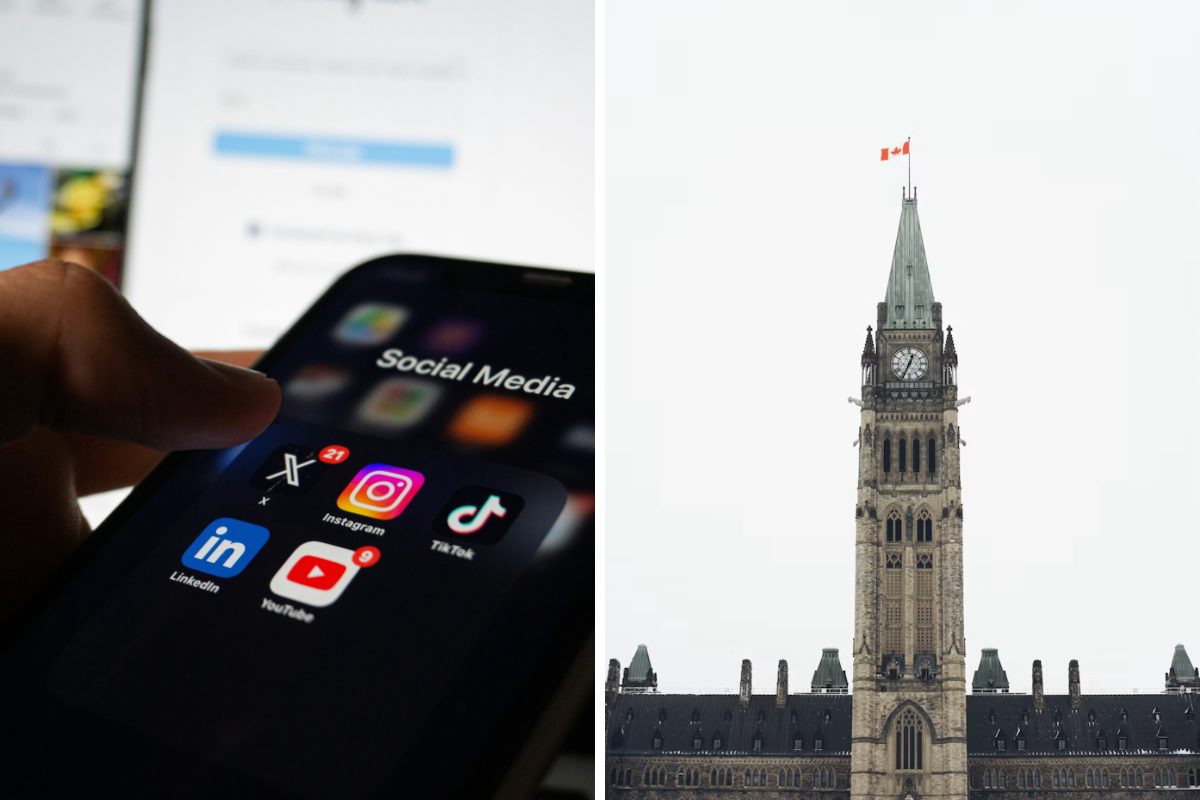
Bill C-34 is Canada’s own version of an Australian social media ban, but it’s come into question as to how it will be implemented, if at all.
Australia’s social media ban outlines that under-16s are outright banned from using major social media services. This includes TikTok, Facebook, Instagram, YouTube, Snapchat, Threads, and X.
Any existing profiles were deactivated once the ban was implemented, and no new accounts can be made.
Dumb as hell
-
It age gates the internet for everyone meaning access to the internet is predicated upon government identification, privacy does not exist on any level
-
It doesn’t work
-
Even if it did there is no conclusive evidence it will help youth
-
Australia pushed the ban hard so ONLINE GAMBLING companies could continue to advertise online
-
Denying youth a way to connect with sympathetic peers (say for example you are a queer youth in a suffocatingly conservative small town) without immediately providing new functional alternatives is attempted mass manslaughter
Australia pushed the ban hard so ONLINE GAMBLING companies could continue to advertise online
Ah, it’s that the reason?
I’m not connecting social media ban with online gambling; can you please explain for me? They’re both bad, that’s as far as I’ve gotten.
The reason for Australia’s ban which became the example for other countries was in actuality pushed by gambling companies wanting to advertise online without having to deal with the thorny issues of this.
It was a slap in the face to Australia’s youth
We’ve talked about the Australian social media ban that went into effect last week, how dumb it is, and why it’s already a mess.
But late last week, some additional news broke that makes the whole thing even more grotesque: turns out the campaign pushing hardest for the ban was run by an ad agency that makes gambling ads. The same gambling ads that were facing their own potential ban—until the Australian government decided that, hey, with all the kids kicked off social media, gambling ads can stay.
Really.
That’s the latest in this incredible scoop from the Australian publication Crikey.
The big marketing campaign pushing the under-16 social media ban was called “36 Months”—framed (misleadingly) that way because they claimed that raising the social media age from 13 to 16 was keeping kids offline for an additional 36 months.
But, as Crikey details, the entire 36 Months campaign was actually planned out and created by an ad company named FINCH, which just so happened to also be working on a huge gambling ad campaign for TAB, which is a huge online betting operation in Australia. And, it wasn’t their only such campaign:
-
Remember, there is no such thing as age verification without identity verification. Any time you hear “Prove your age” it always, always means “Prove your identity.” And that information is being recorded somewhere.
It is entirely possible to have an identityless age verification system but it requires a competent, non-shit, government to execute, and citizens who aren’t morons.
The government sets up a system where you are given a unique and random certificate, signed by their system, when you turn 16/18/19/whatever age, that certificate’s is linked only to a value of “Of Age” in the government’s database. Services that want to verify a user’s age can check that the user’s certificate is in the government DB, verifying the age of the user without ever knowing the user’s identity and the government doesn’t know who the user is because the certificate was randomly generated.
When a certificate gets compromised it is reported to the government and the certificate gets expired, the next time you try to use it you are notified that it is expired, you go down to service Canada and get a new random certificate issued to you.
OK, I post my certificate online for every under 16 to freely use. I’ve just broken your entire system. Since there is no identity verification element, there’s no way to prove that the bearer of the certificate is the person that certificate belongs to.
And there’s no way to prove I did it, since you have assured me that the government has absolutely no way of connecting these certificates to individual people, right?
When the government eventually cancels my compromised certificate, I will get it reissued. Each time I will be very upset that some evil hacker has stolen my certificate from your database. And I can do this as many times as I like because, once again, you have assured me that there is absolutely no way to connect these certificates to identities, which means that anything that could be used to establish a pattern of use would have to be impossible. Presumably this would involve certificate reissuance being handled by some kind of black box system that creates no link whatsoever between the old and new certificate, so from the government’s point of view random certificates just keep getting compromised and shared online.
(By the way, the government is the only group in this scenario that is not capable of tying these certificates to unique identities. The big tech corps will de-anonymise them in seconds just by connecting them to various other unique or semi-unique identifiers that are present whenever you connect to a web service. Except mine. Mine will be used by thousands or even millions of people all across Canada, making it the only one that’s impossible to track.)
I did mention the part about morons, you didn’t have to demonstrate for the class.
Good point. If one moron can destroy your whole system this quickly, God only knows how bad it would be if an actual smart person got their hands on it.
Will Canadians still be able to use Lemmy?
Also, fuck big tech and the horse they rode in on. (I cursed them with two prepositions at the end of a sentence!)
If social media practices are harmful to minors, they’re harmful to all users
If you want a single simple fix (over time): make social media companies over a certain size divest their research teams and use independent, transparent studies rather than quietly shelving findings on beauty filters, teenage suicide rates and how to influence users’ political decisions until it’s convenient for a Congressional hearing or forced out by a lawsuit
Also if they are harmful to adults artificially gating access to that harm to a specific age creates a potential blowback mechanism to maximize potential acute harm.
Canadian politicians have already noted that they view it as harmful to other age ranges, but claim they’re focusing on the youth because “we gotta protect the kids”, and “we likely cant convince adults to put down their phones”.
It’d be hard/impossible for Canada to get the USA companies to disclose anything, given the tone of the USA and its fascist / authoritarian trends and anti-Canada rhetoric – let alone convincing them to have a congressional hearing. If you meant a Parliamentary hearing (ie. Canada government forcing it) … well, US Tech leaders have quite literally given the finger to the Canadian government in regards to summons to answer for things already, and they’ve gotten away with it. Our government is pretty shit – I mean it’s ok relatively speaking, but it’s still pretty shitty.
If social media practices are harmful to minors, they’re harmful to all users
Correct, this is the statement that should be constantly highlighted when these fascist laws are talked about.
All the effort seems to be concentrating on punishing the victim rather than the abuser - minors are being stripped off their rights, and all the rest are being forced to consume harmful content.
Clearly this is not the way.
100% meant for tracking activists.
and this is going to get a lot of of them killed not at least by mossad
I see Palantir is lobbying hard in Canada.
Dont verify and give them verifiable information. Drop social, which will absolutely lead to them dropping this law.
Done if they need my ID then guess what I can find some other service, I had my ID stolen once and it was hell for the next several years because I had some credit lock put on that made it hell.
I don’t understand who benefits from this. They have suffered so many hacks and leaks and so rapidly that it is almost as if they have the buyers for all this ready for the moment they have a database ready.
I don’t understand who benefits from this.
Accurate demographic information is extremely valuable to the advertising business.
I don’t buy it. The idea that the fucking advertising industry alone is able to have this much influence is fucking stupid.
Meta is one of the corpo that spearheaded the movement.
It’s simple. Push age verification so that they don’t have to change anything and continue to use blackbox algos and make money from it.
The beneficiaries? Oh, that’s easy. AI and big tech Social media is not AI. Social media’s already getting cannibalized by AI, this just helps move it forward a bit by clipping future users. The regulatory push is coming in at the sunset of social media, to kill it off.
There are comments in the thread about vulnerable groups losing out on community/outlets – but AI companions are meant to replace the need for that. Human social groups can still lead to vulnerable people being exploited. It’s better for them to trust biggaybotbro to help them with their sexual identity. It will likely have features that’ll allow for its advice to be adjusted to be as “aggressively pursuing the gay” or as “cautiously exploring passing as straight”, as the person, or local US government tech fascist company, decides is appropriate.
They’re meant to replace search engines too, as that lets companies better capture customers for more covert ads, offered up in organic speech/conversations with your AI companion. Not only does it allow advertisers better access and visibility into every prompt/word a target customer writes/says, but it has the added benefit of letting the AI company think for the person. Sorta like how Twitter taught a whole generation that reading beyond a short paragraph was too hard, and youtube shorts obliterated most of what was left of their attention span – AI will go a step further, making critical thought mostly pointless. Just do what your AI companion says.
Getting kids fully captured in the emerging AI ecosystems is really important, for the betterment of the children of course. And if they can do it while clutching their pearls and screaming “Won’t anyone think of the children!”, well, all the better.
If people give up their IDs to access facebook, are they already beyond saving?
Good. Hopefully this helps kill social media.
Fuck that.
Aww naur, no more social media for me.
This doesn’t tickle my fancy at all!
Removed by mod