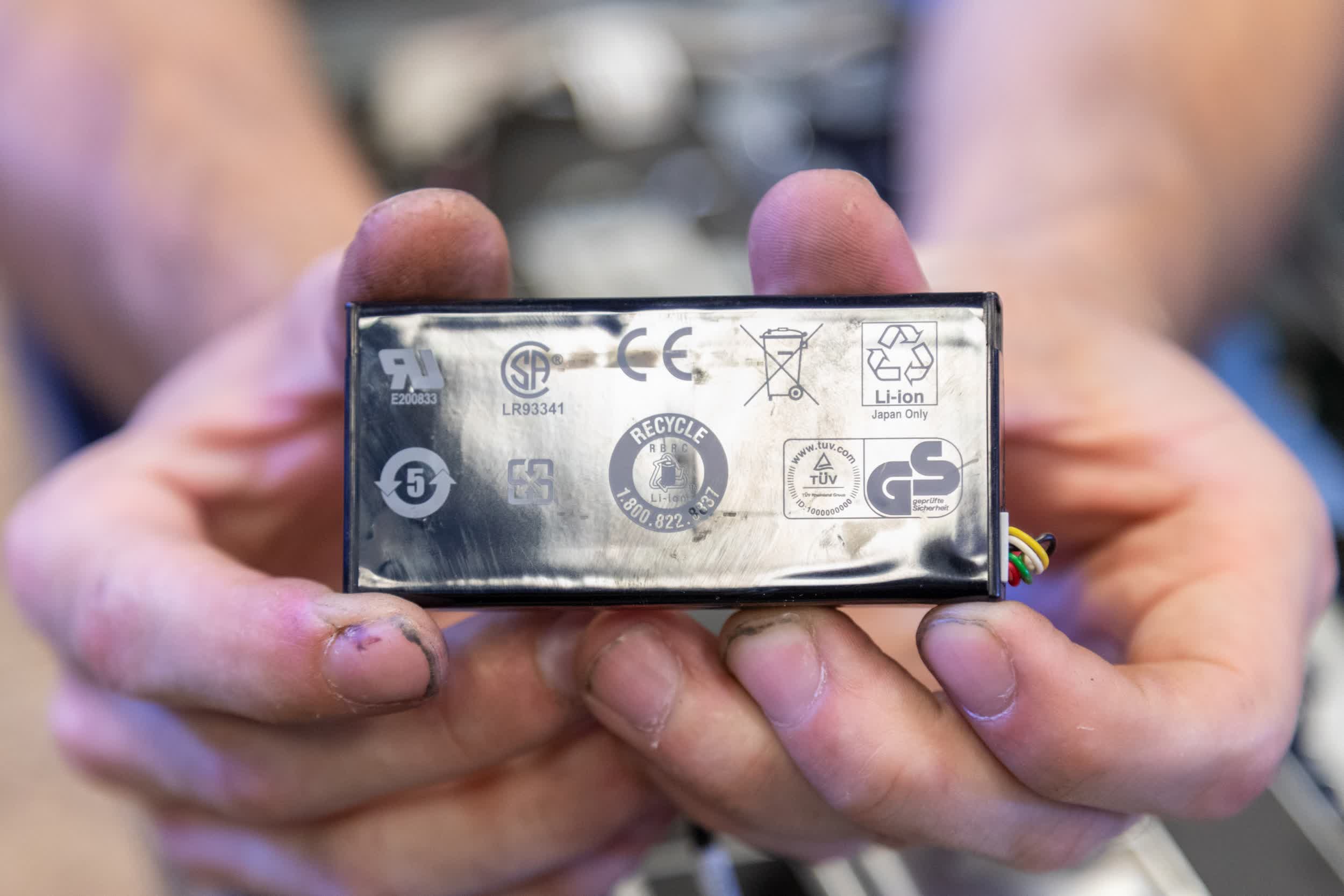
Among the many changes, the new rules would require batteries in consumer devices like smartphones to be easily removable and replaceable. That’s far from the case today…
deleted by creator
Can’t say I have ever needed the water resistance, but I also never drop my phone, so I guess I’m in the minority.
the old razer flip phones were horrible. I went through four of the things in the course of a year because they got so much of a whiff of water they’d crap out. the last time, it was left in the truck while I was fishing and the humidity killed it.
Another model… got done in at a pool, it was left on a table and kids happened.
it’s not that people are klutzes and drop their phones. It’s that shit happens. Yeah, it was a trade off, but, sealing it against stuff… is a lot easier when it’s sealed
Yeah, if you keep a phone for 5-6 years, you usually only have to change the battery once. I reckon the dust hasn’t settled on this though - I think there will be compromise where battery replacements are cheaper, but still need to be done by a professional
deleted by creator
You can have a swappable battery and water resistance. Samsung galaxy s5 had a removable plastic cover and IP67 water resistance, so if the manufacturers tried they could easily have them both.
Also, if you do any repairs on a new phone you lose water resistance (unless you replace the silicone), while on the s5 you could just replace the battery and would just need to press the cover back on. After the repair the phone would still be water resistant, unlike the new phones with glass backs.I too take a shower every day with my phone in it.
I prefer non swappable phone batteries. If I need to charge my phone while out I use USB power bank, which is infinitely more useful than a naked phone battery that can only be used in the phone. Non swappable batteries also allow for phone casing to be much more resilient to impacts and the elements, and can help reduce the phones size.
A phone battery is not to going to reach end of life for 2-3 years in normal use, so it doesn’t seem too much of hardship to get the toolbox out or go to a service centre when it does eventually need replacing.
Maybe require manufactures to not use such incredibly strong glues that some use to secure the batteries, but mandating they be swappable seems the wrong approach to me.
Have you thought about having both? It shouldn’t be that hard to make
Oh gawd yes. I love the EU.
Removed by mod
There’s no reason you HAVE to sacrifice durability and water resistance. It’d just cost a tiny bit more in materials, which I’m perfectly fine with given how much this would save the environment.
You can already swap the battery on most non-fruit-branded phones while maintaining water resistance if you do it right.
? How do you swap batteries on most phones nowadays in 5 seconds?
Removed by mod
User-replaceable batteries do NOT use adhesive. It’s even directly stated in the EU specs.
Screw the environment. I demand convenience instead!
The level of entitlement people have nowadays is insane, especially regarding issues that they are happy to say are super important. They just refuse to give up an iota of cenvenience to do anything about it.
Removed by mod
I’m all for this. The big argument against it is that it makes it harder to waterproof but I’ll take that over a phone I have to replace every 18 months because the battery is shit.
Removed by mod
That’s just not true. I’ve always been an android user and it’s non-trivial to change the battery, hasn’t been easy for years.
Removed by mod
What are you even saying? What has nostalgia got to do with phones dropping removable batteries as a feature?
I don’t think you get it. Batteries used to be swappable in 5 seconds flat.
Removed by mod
Let me introduce you to the Nokia 3310, aka ‘The Brick’.
Removed by mod
Don’t know about the video, my personal experience and that of my generation is that we abused the duck out of those phones and they survived.
Removed by mod
Put it in a case. It’s not difficult.
Removed by mod
No, we have always had to make a compromise or a choice between sustainability, convenience, or price. The EU just decided to limit that choice to convenience or price.
It’s easy to waterproof. Put it in a waterproof case.
Finally. So tired of having to replace a phone simply because the battery no longer lasts a day, while the rest of it is still functional.
You can just replace the batteries in most phones for $100 or so. No need to buy another $500-$1000 phone.
You may or may not lose water resistance, but im sure you can live with that vs having to buy another one.
Interesting.
I remember struggling to find a phone with replaceable battery. The galaxy S3 was good because of this. “We can’t make the battery replaceable, otherwise the phone won’t be waterproof”, yeah that was bullshit.
This will make the phone more expensive and this is totally fine and expected.
As someone who tends to hang onto my phone for ages, I like being able to get replacement batteries… but I wish they would just take everything fairphone does (removable battery + lineage + and especially right-to-repair stuff) and base new standards on that.
OTOH, I also believe that would not be impossible to engineer a phone that could be taken apart where you could have replacement parts for both the battery and seals (e.g. while many companies currently frame things as “removable batteries OR water resistance”, I see no technology reasons why BOTH couldn’t exist in the same device) … There just hasn’t been a big push for businesses to develop something like that bc everyone buys their products without them needing to put that much effort into it.
If companies stopped auto-voiding warranties over users opening a phone and stopped treating everyone as incapable of doing their own repairs, I could totally see user-replaceable seals being a thing. You can basically look at other markets that do have right-to-repair. Sure, replacing seals on a phone might be a bit much for grandma. But grandma is also probably going to call either a repair shop or someone in the family who is good with it. Really not much different than upgrading laptop ram/hdd or doing your own plumbing or changing the oil on a car today… pretty damn easy if you know what you’re doing, but not something everyone is going to know how to or want to do.
When Samsung and Apple are seemingly incapable of producing repairable devices while Fairphone comes out of nowhere and are doing it just fine, it’s not a question of it being difficult. It’s a question of it being profitable. If Fairphone managed to make a repairable device, Apple or Samsung would have managed to create one that is both fully waterproof and repairable if they considered it a priority.
From the view of the industry, the logic is that “if you’re not going to have your phone break down in heavy rain, at least make sure you’ll have to replace it in three years because the battery starts sucking”. There’s absolutely no incentive to make a product that will actually last.
If people were buying the Fairphone there would be lots of incentive. But people just like to talk about how they care about the environment, human rights, etc. And then go buy the new iPhone.
The question is will this new system work like it used to be, as in can you just buy a battery from some seller in china or is it going to be similar to what we have now where the batteries are paired to the device.
The article never said a company like Apple couldn’t pair the battery to the device and charge €100 for it.
The article goes into it a bit but the downside to user replaceable batteries is that they are bigger while not giving more charge, you have to include the plastic casings to ensure that they aren’t damaged when being pulled out or dropped or thrown in bags so you do end up with a thicker device and while some devices may allow a hotswap if the phone is plugged into a charger that’s not guaranteed.
I also question the viability of it leaving the EU market, take Apple for example, they already make a different model for the US market and a different model for the china market and a different model for the international market for the 12,13, and 14 lines, they could just make it a Europe only model as it will likely effect the design of the phone in some ways. USB-C I can see coming to all models as it’s something that doesn’t affect the design as much and it’s already on their other devices. But we’ll have to see.
At this point I’d say for any skilled repair person replacing a phone battery shouldn’t be too hard but I guess this can make it easier. For the iPhone 14 lineup you heat up then remove the display, pull the battery pull tabs, life the battery and put in the new one then reseal the display and your good.
While having easy to swap user replaceable batteries seems nice on paper I worry it will lead to chunkier devices. I’m more in favor of right to repair, or basically requiring the parts such as batteries and displays have to be available to everyone including third parties at a reasonable price and ensuring that third parties can actually do the repairs without having to say call up a customer support line to recalibrate the battery(ie pair it to the device); cough couch, apple self service repair.
*disclosure; I’m a certified Apple partner repair technician and as such my view point may be skewed.
It’ll definitely lead to chunkier devices, I just don’t really care. Like, smartphones are insanely thin rn, I’d much rather have one that’s more capable and built to last that’s a few mm thicker
After skimming parts of the actual adopted text (its a 537 [albeit wastefully formatted] pdf, dont blame me), which is mostly an update to the old directive, I think I might be able to address some of these concerns. (Not an expert though)
The article never said a company like Apple couldn’t pair the battery to the device and charge €100 for it.
The important part to remember is that this isn’t just about consumer rights. Even the first few pages make it very clear that sustainability and battery recycling play a huge goal, ultimately aiming for a “circular economy”. While we should for now not debate what that actually means, one part of that is ensuring less waste. Hence the second part of the adopted text, “waste batteries”. If companies would simply start making it unfeasible to actually replace a phones batter, we will probably see an update of the directive.
you have to include the plastic casings to ensure that they aren’t damaged when being pulled out or dropped or thrown in bags so you do end up with a thicker device
Fair point, theres probably no objective argument to put against this. My subjective argument would be that the thinness phones have reached is a bit absurd anyways and one or two mm more wont hurt them. I mean, we all put them in cases anyways. If you absolutely need a thinner phone, buy a thinner case.
I also question the viability of it leaving the EU market
Its absolutely not going to happen. Its more likely that we might see a sort of California effect, where manufacturers that have no reason to produce several versions simply start producing only the EU version and market it as sustainable and environmentally conscious in markets where legislation is more lax.
I’m more in favor of right to repair, or basically requiring the parts such as batteries and displays have to be available to everyone
Completely agree. But this wont be the last we see of this, since batteries will continue to be a topic in EU politics. For now, battery collection and recycling are relatively low in the EU, but is supposed to rise in the coming years/decades. To reach that target, more action will be necessary.
Its also important to mention that the adopted text specifically mentions that end-users should be able to replace their batteries without specialised tools, contrasting it later on with “independent professionals” that should replace batteries in unsafe environments:
“A portable battery should be considered to be removable by the end-user when it can be removed with the use of commercially available tools and without requiring the use of specialised tools, unless they are provided free of charge, or proprietary tools, thermal energy or solvents to disassemble it”
And that is why I support the move. When Apple was flexing its green credentials a few years ago, I honestly thought that they might adopt repairability as their next big thing.
Apple saying that ‘yes we are going to deliberately make out devices a millimetre thicker, flaunting small screws on the back of the case as a bade of environmental honour would haven great. And probably would have driven a cross-industry trend.
Ah well.
Its not really as easy for non apple repair techs to change the battery. If anyone but a certified person does I bet that would void any water resistance part of the warranty, possibly if anyone but apple specifically does it?
Easily changeable batteries that don’t compromise water resistance would be really great, but that will definitely make them bigger.
And fortunately the Euros are choosing sustainability over convenience, which is the ethical and smart move. The whiners can STFU as far as I’m concerned.
If people won’t choose to do the right thing I have no problem with limiting a tiny bit of consumer choice.
I held onto my older GalaxyNote for this very reason. During the good times of PokeGo it was like having a super power to just switch out my battery and be back to 100%.
Fruit-branded companies are in absolute shambles (fuck 'em btw)
“Oh no!! Our phones have to be 1 mm thicker in the EU!!” - Apple designers probably
I’ve never lost a phone to water damage in my lifetime either before or after batteries became more difficult to swap.
I have bought some old used electronics lately. Having an easily accessible and replaceable battery in the Game Boy Advance SP and the Nintendo DSi is very nice though.
I’d probably replace the battery on my phone right now if I could.
It’s going to be interesting to see how companies adjust to this. Also interesting if water proofing will still be possible.
I mean, the Galaxy S5 was waterproof (IP67) and had a removable battery… so it should be very possible. I think this was always a BS argument, mostly just a facile excuse for a consumer-hostile decision.
Yeah, waterproof phones existed back when most smartphones had removable batteries, claiming that making the battery non-replaceable was necessary for waterproofing was always a lie to justify making phones more disposable
I’ve missed swappable batteries so much. The convenience of having another loaded battery with you, increased drop resistance due to parts flying, replaceability. So good.
If you’re worried of water resistance, get a water-proof case or be more careful with the device costing you possibly hundreds of dollars.
I feel like if a device is designed well there doesn’t need to be a tradeoff. Removable batteries and water resistant would be amazing.