

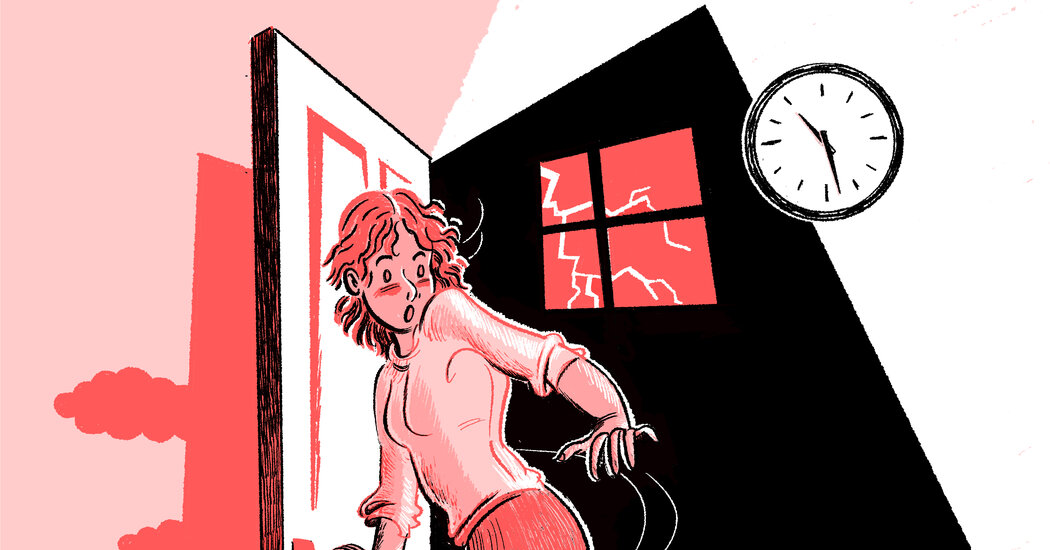
Harping on people to get married from up in the ivory tower fails to engage with reality of life in the dating trenches.
deleted by creator
There have been scientific studies to determine if humans are monogamous or not … it was inconclusive … we like to think that we can or should be paired together for life and live happily ever after but in reality, most of us are not.
The majority of my friends get together for a few years and then divorce, separate or live together in a personal hell because they feel they have to.
I have friends in Quebec in Montreal that have been together for 50 years now. They never had children worked as artists and writers their whole lives and pretty much had a free life between themselves. They made an agreement with each other when they started living together that every five years, they would sit down and discuss if they wanted to continue their relationship. They’ve been doing that ever since.
I do that in a way with my wife every few years … we also don’t have kids … we just sit down and talk about whether or not we want to continue. It’s not done during a crisis, a falling out or when we’re angry or out of sorts … we try to have it when we’re clearly thinking of things but it’s not easy … it’s not an easy topic to discuss … which is also why it’s important to have. After 28 years, we still choose to be together.
The current assumptions and expectations that society has about monogamy and commitment are insane. The idea that one person should meet all of your social, relationship and sexual needs is insane. Especially for those people who consider being attracted / look at other people / looking at porn to someone else as cheating. Like you don’t stop feeling physical attraction or even get crushes if you are committed. You just don’t do anything that violate other peoples trust.
The queer communities take on monogamy and commitment that does have any assumptions is really the best method going forward. Not to mention the removal of gender expectations for house work etc. Its exactly like you described it. An on-going discussion about what your commitment means and what is and isn’t allowed. It priories the relationship over everything else.
I think one of the biggest issues everyone glosses over is … we change during our lifetimes.
We are not the same person in our 20s, our 30s, our 40s for all kinds of reasons … our work, our situations, events in our lives, trauma, biological changes, genetics or just psychological changes. Some people stay the same sexually and stay the same throughout their lives, whether its being straight, bi, gay or anything else … I know some people who changed over time from being straight, to bi, to gay or to just asexual … in one way to another. I’m sure everyone know people like this. It’s human nature, most people are not born a simple being that stays the same forever, we evolve and change sometimes because we want to, we have to and other times against our will and biology.
So to have an ever changing pair of people living together … we should not expect them to stay the same forever and want to be together indefinitely.
But the inverse is also true too … maybe the two 20 year olds accept one another but change when they’re 30 … and now the 30 year olds now accept each other at this age … and on and on.
Exactly. People and relationships should change and mature. We should also look at different measures of success. A couple of was married for 15 years and then got a divorce but don’t hate each other. That is a successful relationship but it didn’t last an entire lifetime
I’m single but I’m taking notes, this is good advice…
Always remember to talk through any assumptions or expectations up front. It will save lots of issues in the future
Yup, been with my partner for over a decade. Live together, not married, no kids. Originally there was some talk of marriage, but I’ve always said that there’s no reason to insert the state or the church into our relationship. There’s nothing stopping either of us from leaving the relationship if we’re not into it any more. It keeps us treating each other with respect, knowing that there’s no higher authority telling us we have to stay together until we spend thousands of dollars in paperwork and waiting periods.
That is a great point and I wish they went further on the better social safety nets. If you really want healthy children that should be the focus regardless of gender of the parent. I think its odd when people talk about how marriage is only for children or you need to be married to have children its gross and so old fashioined.
yeah like why can’t people just get married if they want to get married, or not get married if they don’t want to get married? has never made sense to me
Whenever I hear people talk about marriage rates and birth rates I get disgusted. Like we’re a bunch of animals in a zoo
This is the best summary I could come up with:
The most recent wave of commenters have tended to position themselves as iconoclasts speaking hard truths: Two-parent families often result in better outcomes for kids, writes Megan McArdle, in The Washington Post, but “for various reasons,” she goes on, this “is too often left unsaid” — even though policy wonks, and the pundits who trumpet their ideas, have been telling (straight) people to get married for the sake of their children for decades.
But harping on people to get married from high up in the ivory tower fails to engage with the reality on the ground that heterosexual women from many walks of life confront: that is, the state of men today.
Ms. Camino, for her part, has dabbled in dating since her partner left, but hasn’t yet met anyone who shares her values, someone who’s funny and — she hesitates to use the word “feminist” — but a man who won’t just roll his eyes and say something about being on her period whenever she voices an opinion.
The in-depth interviews, he said, “were even more dispiriting.” For a variety of reasons — mixed messages from the broader culture about toughness and vulnerability, the activity-oriented nature of male friendships — it seems that by the time men begin dating, they are relatively “limited in their ability and willingness to be fully emotionally present and available,” he said.
Navigating interpersonal relationships in a time of evolving gender norms and expectations “requires a level of emotional sensitivity that I think some men probably just lack, or they don’t have the experience,” he added.
The behaviors were ubiquitous enough that Ms. Inhorn compiled a sort of taxonomy of cads, such as the “Alpha males” who “want to be challenged by work, not by their partners” or the “Polyamorous men” who claim “that their multiple attachments to women are all ‘committed.’” Her breakdown — table 1.1 in the book — reads like a rigorous academic version of all the complaints you’ve ever heard from your single female friends.
The original article contains 1,877 words, the summary contains 335 words. Saved 82%. I’m a bot and I’m open source!
I feel like at least in Europe a lot of people see marriage as an outdated concept.
Removed by mod