

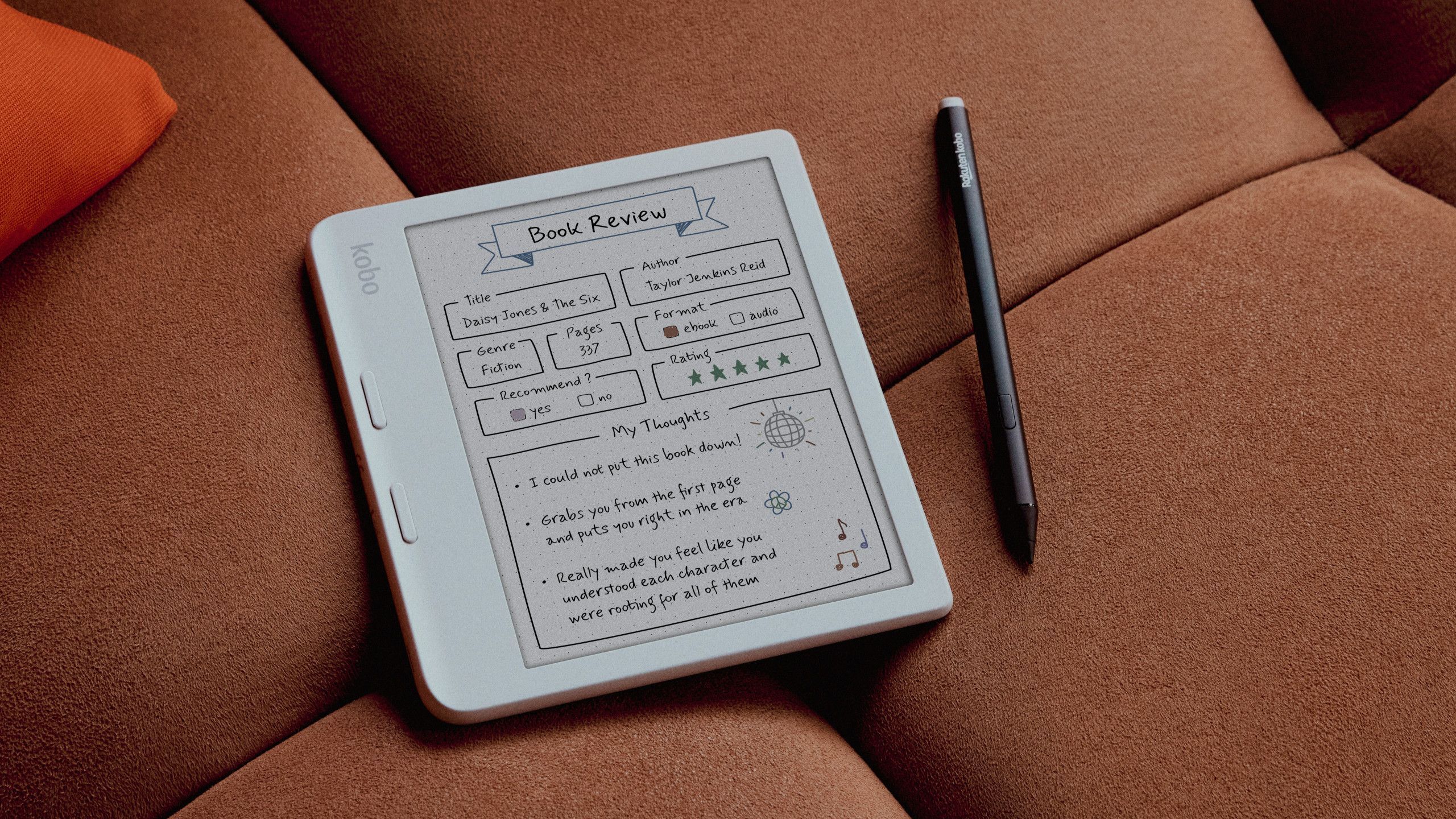
I can only advice to try out a color E ink eReader in person. Their screen is usually low contrast and dark, to a degree that you need to use it with backlight by default, which kinda defeats the purpose of an E ink eReader. For E ink, monochrome displays are still the way to go, and if you really need color, a device without E ink.
I used a Hisense A5 Pro CC phone for a few months as my daily driver. For books, colour eink is okay at best but yeah, contrast sucks. It pretty much always will with the extra layers of filtering needed for each colour.
Outside of static pages of text and images, you pretty much need to drop colour depth to pretty garish levels for a decently responsive user experience. It’s a nice idea but really isn’t very good in practice.
The black e ink version is 300ppi. The color ones are 150ppi, so half.
Only. Cool ad. 🙄
Interesting thumbnail strategy on this ad. It’s hard to see it as just a seat. My mind keeps trying to make it into a human palm, so I’m seeing a tiny Polly Pocket tablet and stylus.
Good catch. I got excited seeing this, but I can’t say I’m 250 USD excited. Maybe if I had more time to read.
I wish they wouldn’t advertise days of battery life, when their “day” is 1/2 an hour. Just say how many hours the battery will run. The math for how long it’ll run for my use is not rocket science. It’s good to see color E Ink in a reasonable price range. I think I’ll wait for the size to increase while staying affordable.
What do you mean their day is half an hour?
My e-reader battery barely flutters after several hours of reading.
When they say something like “60 days battery life” what they mean is using the device for half an hour everyday for 60 days.
OP is arguing that it would make more sense to just say the continuous use battery life, which in the above example would be 30 hours (60 × 0.5)
That’s true, but I get easily more than that on my current kobo, which has a similar advertised battery life. I can get easily 5-6 days of reading 8h a day on it.
We’re looking at 40 days based on 30 minutes of daily reading at 30% brightness, and with Wi-Fi and Bluetooth turned off. Dropping the brightness down to 10% nets an increase to 53 total days of runtime.
So as long as you don’t use it, the battery will last a long time!
deleted by creator
Kobo is open source? I don’t think so.
It’s not open source but it is easily rooted and you can install custom add-ons or even replace the os.
It happily uses epub and not proprietary formats.
The only downside to my Kobo is Amazon’s walled garden exclusive books being unavailable.
I finally figured out calibre and dedrm. Spent a weekend downloading each Amazon ebook purchase, one by one, and stripping out the drm. Now I have 500 sone epubs in my library that I can use some books or a kobo to read.
Honestly I never felt the need to modify my Kobo Aura, it just works, I load books by connecting it to my laptop, and that’s it.
deleted by creator
Yeah, I’ve had a couple Kobos. If you just want to put arbitrary documents on it to display, they work well.
I think that the problem is, though, that while eInk ebook readers are really good ebook readers, they’re a specialized device in a world with a lot of general-purpose portable devices that people are already carrying.
They have extremely long battery life compared to an LCD or OLED display, and they work fine in brightly-lit environments like outside on a sunny day. And even if you want to use them in the dark, they have a soft backlight that can use very little power. And they’re really light and thin.
But…I carry a smartphone. And a tablet. And a laptop. Maybe not everyone carries all three, but they probably have at least one of those. And so you gotta ask yourself whether you want a really good ebook reader that’s only really good at reading ebooks (and can run a web browser or similar slowly and poorly), or whether you can tolerate using a device that can read ebooks and can also do things like browse the Web and play videos.
I’d only really suggest that someone consider a dedicated ebook reader if they’re regularly carrying paper books around with them because they want to use those books outside or the like. I do that and I still don’t think I’d get another ebook reader. It just doesn’t buy me enough extra functionality.
I often want to use a non-ebook-reader device to refer to the Web or something to look up something related to a book that I’m reading, and if I’m doing that, I’m using a general-purpose device anyway.
By the same token, MP3 players can be really good MP3 players. Like, they can have really long battery lifetime, and be really small, have physical buttons, etc. But very few people carry dedicated MP3 players today, because they already have a general-purpose smartphone with them that can act as an MP3 player…and even if it isn’t quite as good as a dedicated hardware device, it’s still good enough. They still exist, but there’s enough overlap that for most people, they probably aren’t worth getting. Same thing for audio recorders. And I think that ebook readers are in that camp too, albeit maybe not to quite the same degree.
Reading from a tablet, phone or a laptop is pure savagery! Ebook is a must have if you’re any kind of prolific book reader.
Replace the os with what?
I heard their OS is quite locked down? Onyx is easy rooted.
There is NickelMenu and you can telnet into it. You can also install other OS like KOReader easily, it doesn’t have a locked bootloader or anything like that. So imho that’s pretty accessible and open.
Ok? On Onyx you can install any Store and app you want, bootloader is unlocked per default. Though it has lots of telemetry (Kobo probably too) which is why you should root and cleanup.
Btw, Kobo is a reader app and maybe a launcher but not firmware/OS.
I never said anything about Onyx, I don’t own one but have considered them. They look nice and open.
I do own a couple of Kobo devices though and just wanted to say it’s not running Android of any kind but it’s still relatively open. Especially compared to phones, tablets and Kindle. The firmware/OS point you’re trying to make is irrelevant there and I think you know it :)
Huh I didn’t know that guess they just run a version of android
No it’s not running Android.
deleted by creator
We are talking about the Kobo right? It’s not running any kind of Android or AOSP fork.
deleted by creator
Why can’t they just use Android? I have books on all kinds of book stores.
Using Calibre you could probably glue that together. I wouldn’t want Android on an ereader personally.
deleted by creator
Kobo? No. They have their own firmware.
some ereaders do use android, my old onyx did, but honestly i much prefer the dedicated solution kobo has. they could use android, but if they’ve got the resources to make their own os targeting their actual use case instead of cramming a mobile phone os in there, why wouldn’t they? even their os has too much cruft for my taste, but it is a lot less than an android ereader.
Onyx and Kobo do. But their battery life is way inferior to PocketBook, which uses naked Linux.
I’m not aware of any Kobo using Android.
All kobos use a custom OS built on Android…8 (lol). Its not recognizable as Android, but it is the base.
I’m dubious Android even serves as a base for Kobo’s OS. I’ve seen no evidence to support that claim.
EDIT: if you are referring to Tolinos, they are not simple rebrands of Kobos.
No, I forget where exactly it was, but at some point last year I was deep in Rakuten’s documentation and it referenced that the Clara HD’s OS is based on a modified Android 8 kernel.
Since Kobo rebrands as Tolino too and one i had years ago was clearly some sort of Android, i think they are still? Maybe more locked down and under the hood?
Tolinos use different processors precisely because they run Android, while Kobos do not.
Right, now i remember reading about that. Which is why i got an Onyx then. Thanks!
deleted by creator