Mine is Local Send which is a FOSS alternative similar to air drop that works across a variety of devices.
Lemmy
It’s been a bit over a year for me, otherwise this would be the answer.
deleted by creator
Bitwarden or KeePassXC is my favorite too :)
Hello fellow bitwarden user! I also self-host my server with vaultwarden
deleted by creator
HomeAssistant, it’s such an awesome Tool. You want to combine your plant sensors with air quality sensors and an plant light? Easily done. You want to forward your mastodon follower count to an mqtt-LED-Pixel-Clock? No problem.
It’s just an amazing piece of software.
Pretty cool, I use it as well. Works with basically everything thanks to the big community.
I just wish it allowed for proper programming of the automations. I despise the YAML-as-code hack they are using. I get it, it’s much easier to offer a GUI editor for such a format. It feels very limited and cumbersome compared to regular programming though.
Yeah, as far as FOSS I almost actually can’t live without: HomeAssistant controls my spring pump to the cistern so that the pipes don’t freeze.
I was previously using Obsidian, which is great! but didn’t like that it was closed source. I then went on to try various options [0] but none of them felt “right”. I eventually found notesnook and it hit everything I was looking for [1]. It’s only gotten better in the last year I started using it and just recently they introduced the ability to host your own sync server, which is one of the requirements it didn’t initially make, but was on their roadmap.
[0] Obsidian, Standard Notes, OneDrive, VSCode with addons, Joplin, Google Keep, Simple Notes, Crypt.ee, CryptPad (more of a collabroation suite, which I actually really like, but it did not fit the bill of a notes app), vim with addons, Logseq, Zettlr, etc.
[1] Requirements in no particular order:
- Open source client and server.
- Cross-platform availability as I use Windows, Linux, Mac, and Android.
- Cross-platform feature parity.
- Doesn’t fight me over how notes should be taken - looking at Logseq’s lack of organization.
- Easy notes syncing.
- End-to-end encryption (E2EE). It’s about to be 2025, if the tools you’re picking up aren’t E2EE, you’re letting unknown strangers access your data and resell it. It doesn’t matter what their privacy policy says as that can always change and/or they can get compromised/compelled to expose your data.
- Ability to publish notes.
- Decent UX.
Lol love the use of references. So glad you posted this. Looks fantastic.
Nice ive been using obsidian as well I’ll give this a shot
I started using Zettlr after Obsidian and i am pretty happy with it (besides one or two little things). I’ll also look into Notesnook
Currently im using standard note but id love to give this a try. I first heard of it from techlore
Mine will probably be Bottles.
The team behind that application did a fantastic job. Wine was due for something much more user friendly like this. And integration with Proton, allowing 3D acceleration is the cherry on top.
Great choice, i prefer bottles over wine for that reason
Immich - Such a polished piece of software that I couldn’t imagine storing all my images without
Termux. A Debian-based Linux system running on top of unrooted Android.
It lets you interface with your phone’s functions (GPS, calls, etc.), and install packages to extend functionality.
Turned my phone into a mobile network troubeshooting device, lets me grep through my sms, and I can ssh into my server on the go.With AnLinux you can install a full standard linux system in it, including a GUI, and connect to it with a VNC viewer. (AnLinux is just a helper script linking to some dude’s repo, so if you are at all security-minded, you can also bootstrap and install any Linux distro manually).
So you could have a Debian with Gnome desktop running on your unrooted phone.Oh my god, that’s amazing. I’m getting on something that can be rooted posthaste, but in the meanwhile…
And here I thought this is running with the Android subsystem in a limited environment utilizung “plugins” as the packages.
That sounds so coolNot to mention that with proot, you can even run kernels greater than that native to your phone.
- URLCheck: Bring back the “open link with…” functionality of android with so many more features
- PassAndroid: I was looking for a wallet-type app to store tickets. This is the perfect combination of simple but works.
I also started using KDEConnect recently just for the remote input function and I already consider it essential.
KDE connect is 🔥🔥🔥
I actually tried fWallet first but it couldn’t import my .pkpass file at the time and it didn’t show any errors so I just gave up. I might try it again next time I have a ticket.
Hmm, that’s weird. It worked just fine for me. I even tried it with a file that I exported from Apple Wallet, it worked just fine in fWallet.
+1 for urlcheck and add Rethink firewall for me
deleted by creator
deleted by creator
Not discovered in the past year, but in the year before that:
Blender (program for 3D modelling, animation and rendering)
cobalt.tools(web-app for downloading video or audio content from youtube and other websites)
VLC (media player that plays almost everything)
media player that plays almost everything
What doesn’t it play?
It can’t go back one frame at a time yet has no problem going forward at the same pace.
Pathetic.
Are there any FOSS apps that can do this? MPV can move frame by frame but moving back is so unusably slow.
Depends on the machine and… maybe other things. I used to think that, too, but on my current machines I can step backwards just fine.
It’s probably a much more intensive operation requiring processing a lot of the file from before and throwing away current buffers or something.
OpenShot. But that’s a video editor and not a conventional video player per se.
I discovered that VLC isn’t so good at playing .flv files. This are video files that are saved in the Adobe Flash Video container format. I have some episodes from cartoon series which I downloaded years ago. Sometimes there are no playback issues with VLC, but sometimes the audio track is delayed. For this reason I have installed IINA, but I like VLC’s user interface better.
Thankfully, vlc’s audio offset function is very easy to quickly adjust and save. As long as the audio delay is consistent you can adjust it pretty quickly.
Weirdly enough I often find things playing back better in IINA than VLC even though as I understand it they’re basically the same under the hood. I also find the reverse occasionally as well.
The funny thing is that said .flv files could be played with VLC without any issue at the time I acquired them. I downloaded a bunch of cartoon episodes in this file format back in 2010 (?) when once-click-hosters like Megavideo were a big thing then. I was able to play them with the then current version of VLC without any problems.
Since then there were several updates with VLC and some time along the way it suddenly didn’t work that good anymore. I might add that this file format is not very common today (it was, when Adobe Flash was still around), so today there might be no incentive to maintain any old codecs for these type of files any longer.
When it gets worse with dwindling playback compatibility I probably have to acquire these files with a more recent file format (e.g. .mp4) in the future.
You can convertí the files in another playable format with Handbrake, probably you Won’t need Change the codecs of the files only the container and the conversión will be fast than reencoding all
You can, but it’s a lot of number crunching time to convert a bunch of files like that, as opposed to just using a different player.
Yep, but if it only he need to remux then is less time than reencoding.
Yes, this would be an option (that I did not think of). But I assume that it would be easier to download the same file in another file format, as there will be probably an improvement regarding the video resolution (480p versus 1080p or higher).
I Think so.
It also in more recent years had an update that messed with it’s vcd playback ability. Don’t remember exactly the problem but I had a rip of an old vcd and was pleased that it played it back no trouble, and even from the original disc too but then a couple of years later it changed so I had to do something to extract an mpeg2 stream or something to get it to work and it from then on had audio issues that had never been there before.
The Stargate SG-1 DVDs for some reason. All others I tried work fine.
I didn’t know cobalt.tools was OSS. cool!
PCSX2. It’s an open-source PS2 emulator, and a dang good one at that. It has a high degree of compatibility and functionality. I absolutely adore it since so many of my favorite games happen to be PS2 games, and after playing some of my favorite games on this emulator, I realized just how much the PS2’s native resolution doesn’t do the graphics of the PS2’s best games justice.
It is also free and available for Windows, Linux, and macOS!
Love PCSX2. I play a lot of old games as they have a charm to them and no micro transactions
Same! Have you played the Ratchet and Clank original trilogy? The old games have this special charm to them that I don’t really see in the newer games of the series.
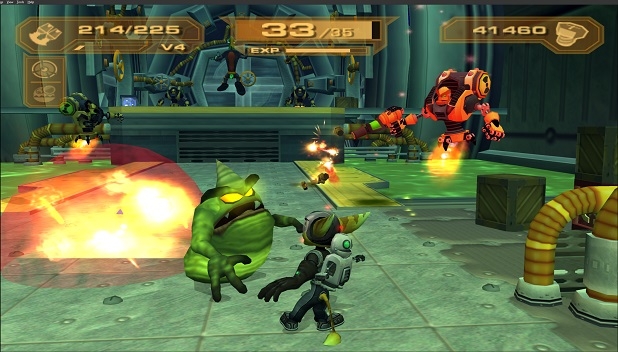
deleted by creator
Tubular then?
Immich as an alternative to Google Photos, it has all the main features but it’s self hosted.
Is it stable yet to use it? I’ve seen it and it looks promising, but it’s also under active development.
deleted by creator
- Voyager --> feddit for android
- Fossify --> essential apps for android
- syncthing – > more use cases than i thought
- paperlessngx --> finally going digital
- obtainium --> get android apps directly from their github
I am still learning and try to replace my stuff with open soure software
Some good recommendations. Im using voyager now to type this :P syncthing is so versatile. I have my devices sync my rom save files so i can pick up and play retro games and carry on from the same place across devices.
+1 for Fossify, great set of apps.
This isn’t exactly “can’t live without,” that would be HomeAssistant. But what I Immediately thought of?
This is an RTS game in the spirit of Total Annihilation.
- labor of love
- fully 3d, including ability to rotate or raise/lower view
- tens of thousands of units without hardware lag for reasonably modem hardware (3-4 years old)
- all shots actively rendered, leading to:
- realistic friendly fire
- even air units can get hit by ballistic shots targeting land units (although odds are fairly slim)
- redirect-unit-to-dodge micro is effective in some situations
- meaningful terrain
- radar will have blind spots based on line-of-sight
- radar gives clear indicator of coverage during placement
- two factions, almost 200 units each, with tier 1, 2, and 3 units. A third (currently playable with a setting change) faction is in the works.
- crafty, non-cheating ai opponents
- free server hosting (!)
- active servers all times of day
The overall feel and balance of the game is great. The changes they make to balance are generally light and reasonable, and the game had a good community.
Fam and friends play together often.
Well we can’t live without a modern game that acknowledges how awesome Total Annihilation is as an idea so effectively that means we can’t live without Beyond All Reason/The Spring Engine right?
I mean Forged Alliance Forever is amazing and I am zero percent bashing it… and ok I guess we would still have Planetary Annihilation, and that game looks pretty awesome too…so I suppose technically we could live without Beyond All Reason but I doubt even the Planetary Annihilation devs would be happy about that world, I know the FAF community wouldnt be happy lol.
Home Assistant. I only installed it to help me control my solar/battery but I ended up putting other things on it and fell down a rabbit hole.
That’s how it starts. Before you know it you’ll be buying no-name smart bulbs from Ali Baba and investigating custom firmware for full local only control.