You must log in or # to comment.
True but people also use this as an excuse to dismiss any research they disagree with which is idiotic.
Most research is legit. It just might not be interpreted correctly, or it might not be the whole picture. But it shouldn’t be ignored because you don’t like it.
People are especially prone to this with Econ research in my experience.
For sure, but it’s important to keep in mind in fields with large financial interests.
Medicine especially. Most studies claiming Cealiac disease (gluten allergy) was not real before it was conclusively proven to be legitimate were funded by bread companies. You won’t believe the number of studies funded by insurance companies trying to show that certain diseases aren’t really disabling, (even though they really are).
And sugar probably kills as many people as smoking, but… yup.
Then again, we all are okay with killing children too, so long as it is with a gun and unwillingly rather than safely in a doctor’s office and medically necessary or at least expedient.
That seems like a crazy low estimate for deaths caused by sugar…
Isn’t there a replication crisis. I am not sure you can really claim “most” research is legit.
I wouldn’t call it a broad crisis, and it isn’t universal. More theoretical sciences or social sciences are more prone to it because the experiments are more expensive and you can’t really control the environment the way you can with e.g. mice or specific chemicals. But most biology, chemistry, etc that isn’t bleeding edge or incredibly niche will be validated dozens to hundreds of times as people build on the work and true retractions are rare
That’s just not true, false research gets posted alot in biology and can go for years without getting caught
For example, the whole Alzheimer’s research thing. A paper that was published in nature faked data and sent everybody down the wrong path for Alzheimer’s cure for 20 years. They claimed to have found that a certain protein causes Alzheimer’s, therefore all new research went towards making drugs that strip that protein.
This was a landmark paper that was in a “hard science” field and still fooled alot of people
Sure, there will be examples of problems in any field that has hundreds of thousands to millions of humans working in it. That doesn’t mean there’s a broad crisis, and it doesn’t mean that most research is faked or fallible. In your 2004 example, all of the data wasn’t faked, some images for publication were doctored. There’s been potential links between alzheimer’s and aBeta amyloids since at least 1991 (1), long before this paper that posited a specific aB variant as a causal target. Additionally, other Alzheimer’s causes and treatments are also under investigation, including gut microbiome studies since at leasg 2017 (2). Finally, drugs targeting aB proteins to remove brain plaques work in preclinical trials, indicating that the 2004 paper was at least on the right track even if they cheated to get their paper published. This showcases science working well: bad-faith actors behaved unethically, but the core parts of their work were replicated and found to be effective, so some groups followed that to clinical trials which are still ongoing, and others followed other leads for a more holistic understanding of the disease.
Also, I’d very much argue that human neurological diseases are both bleeding edge and niche, which inherently means that recognizing problems in studies will take more time than something that is cheaper or faster to test and validate, but problems will eventually be recognized as this one was.
- Cras P, Kawai M, Lowery D, Gonzalez-DeWhitt P, Greenberg B, Perry G. Senile plaque neurites in Alzheimer disease accumulate amyloid precursor protein. Proc Natl Acad Sci USA. 1991;88:7552–6.
- Cattaneo, A. et al. Association of brain amyloidosis with pro-inflammatory gut bacterial taxa and peripheral inflammation markers in cognitively impaired elderly. Neurobiol. Aging 49, 60–68 (2017).
There’s a replication crisis in a handful of more recent fields that use human subjects and didn’t have hard rules and restrictions on how to treat human subjects in the early 20th century. Psychology is the field that has had the biggest issue, with many old studies having what we now see as serious methodology issues. It doesn’t inherently mean all of those studies are wrong, just that they need to be revised with updated methodology to confirm if their results are accurate.
There’s also about 1500 years of scientific study aside from that which doesn’t relate to human subjects at all, and by this point has been replicated numerous times, so I would not doubt the claim that most research is replicable and valid. I would expect about 80-90% of our collective scientific knowledge to be accurate.
The entire thing is an edgy strawman. Honest practitioners obviously take seriously the need to understand and articulate the limits of empiricism, and are hostile towards those who abuse the public trust placed in scientific authority. It would honestlt be great if we could do the same with our critiques of capitalism.
Science doesn’t change just because some groups try to use it to forward an agenda.
But it does. Cigarettes were healthy and climate change didn’t exist 50 years ago
There was never any science saying “cigarettes are healthy”.
I mean those things didn’t change, it was just about how research was manipulated by money and human biases.
The truth doesn’t change. Scientific consensus does. Scientific consensus has been wrong on countless things. After all, science is about getting things a little less wrong every time.
Exactly.
Yes but science is a process, not a thing, and that process is corruptible.
There is a differentiation between the natural world for how it’s made and the human process that quantifies that knowledge.
Science has always changed, just like human culture did
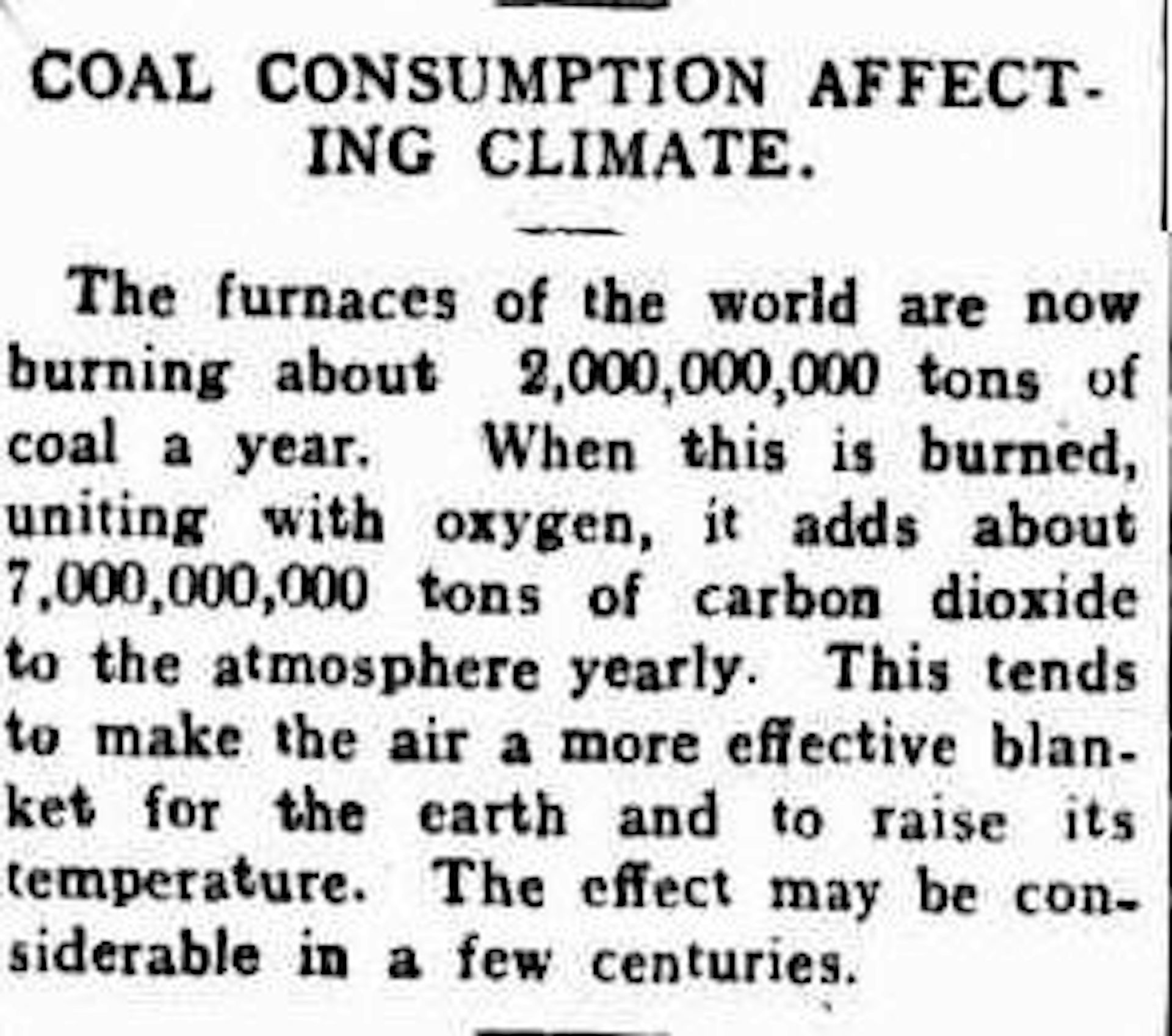
Climate Change has existed for over 110 years in science.
What it is vs how it’s (ab)used
Or “real science” versus “imaginary science”
Bonus round : “real science has never been tried”
One more to fill the bingo card
No True Scotsman argument sort of.
Now, I’m not saying we ignore science or throw it out, but there are flaws.
Is it made by humans? Yah, there are flaws.
deleted by creator
Let’s also not forget that Scientists are also humans. Humans with their own beliefs and biases which do get transferred into studies. Peer review can help reduce that but since peers are also humans with their own biases, but also common biases shared amongst humans it’s not bulletproof either.
There will always be some level of bias which clouds judgement, or makes you see/think things that aren’t objectively true, sometimes it comes with good intention, others not so much. It’s always there though, and probably always will be. The key to good science is making it as minimal as possible.
If you catch your friends using Science as a religion, tell them they’re not a skeptic, they’re a cunt.
Am scientist (well, was, before career change), can confirm. Fuck dogmatic scientists, they’re worse than regular dogmatists because they’ve been given many opportunities to know better.
Ah SoleInvictus, he is an average [Insert Career Here], but he was a BRILLIANT Scientist!
Memes aside - (https://youtu.be/F_DFJ-OXTzQ)
This is such a common problem that it’s lead to the phrase “Science progresses at the march of funerals.”, what with all the people so attached to their pet theories they can’t humor anything that contradicts them…
Hah, I haven’t thought about Dragonball in ages. Thanks for the laugh.
Progress through turnover is true, and it’s maddening because the core tenets of science are explicitly against this. At our hearts, we’re still just apes with extra inflated egos.
Well look here buddy this was proven better than p>0.05 therefore it is scientifically accurate !
Why not both?
What’s decided to be worthy of study is subjective. The process to hypothesize, experiment, and conclude what’s being studied is objective.
Do you or have you ever worked in science? I did for a bit and that was not my impression.
One cannot really argue that science as practiced is very effective at certain things but it is also extremely far from being objective in practice. Especially the further you stray from simple physical systems.
Also like I never saw someone formulate a hypothesis in any sort of formal sense haha.
Do you or have you ever worked in science? I did for a bit and that was not my impression.
I imagine it depends heavily on the field. In some fields there are ideas that one can’t seriously study because they’re considered settled or can’t be studied without doing more harm than any believed good that could be achieved. There are others subject to essentially ideological capture where the barrier to publish is largely determined by how ideologically aligned you are (fields linked to an identity group have a bad habit of being about activism first and accurate observation of reality second).
Ideally, absolutely. That’s what makes the hallmarks of a great scientist.
In practice, institutionalized science can be just as dogmatic and closed-minded as some of the worst religions.
I have had advisors/coworkers/management straight up ignore certain evidence because it didn’t fit their preconceived views of what the results “should be”. This doesn’t make the process of science objective anymore when people are crafting experiments in ways to fit their views, or cherry picking data that conforms to their views.
And you would be surprised at how often this happens in very high-stakes science industries (people’s lives are at stake). It’s fucking disgusting, and extremely dangerous.
Even by itself, the first statement might not be the case. I don’t remember the book that well, but I remember thinking it was a good introduction to this topic. Philosophy of Science: A Very Brief Introduction by Samir Okasha.
Science is a method of empiricism and inductive logic.
Nihilism is fun! Science as a framework for truth seeking, and big S Science are functionally different things. Nobody is making the argument that Science is free from political or economic bias, or even that empiricism is the sole arbiter of truth. Literally just finish reading Kant, I’ll wait.
On the other hand, you can look at the world and very plainly see that science… does things. It discovers truth with a far better track record than every other imperfect epistemology. But sure, capitalism bad. Twitter man cringe. And the internet is just like, an opinion, or something.
The fact that capitalism taints everything it touches is not a criticism of the things it touches.
Yet, it’s not as simple as “scientists are under capitalists’ interests”, but “the ideologies within capitalism permeate the way we do science”. A common example is how we measure functionality (and therefore pathology itself) in medicine.
Actually, it is.
No, it isn’t.
Whether or now “it” is touched by capitalizm is relevant. Because if it is touched, then “it” at least needs fixed if not viable at providing benefit anymore at all.
What about the scientific method is ‘unviable’? What is the issue with empirically driven analysis? Is your issue not with those things? If it’s not, then your issue is not with science, but capitalism. It’s pretty simple, really.
There’s antitrust litigation against the publishers. Here’s one article: https://www.forbes.com/sites/michaeltnietzel/2024/09/16/scientists-file-antitrust-lawsuit-against-six-journal-publishers/
science is science. it can be (sometimes necessarily) prioritized via societal influence, culture and monetary means.
socialist countries have different types scientific spend but I don’t see femboys taking things in the ass for them I guess.
Look, the only thing in the world which hasn’t been corrupted by capitalism is OP’s brain, which happens to be in a jar, on a shelf, owned by an evil demon, who lives in a hole at the bottom of the sea. Just be thankful that the capitalists have not figured out how to harness this phenomenological power yet.
Oh, we’re totally going to do brains in vats
Source (of drawing)?
It doesn’t matters what it is, if you use a strawman I will automatically disagree.
You’re going to hate wojak comics
🔫👨🚀 I always have.
Even if you follow the rules strictly, confirmation bias can kick in… which is basically “always” because you have to start somewhere and will think a certain way.
Based on that argument, why bother? /s
Does anyone remember all the bogus studies that showed smoking was healthy?
Wrong example. Here better example would be “does anyone remember how underfunded were those studies, that said smoking was not healthy?”
Fair enough, yeah from what I remember big tobacco was funding the former. They even had the surgeon general recommending smoking.
Does anybody understand what this meme is trying to say? I feel like its pretty obvious
Some kind of commie drivel that’s literally incomprehensible since the last nail in the coffin of scientific Marxism in the 70s
You can even see identity politics held at the gunpoint to make it more appealing to minorities though no one knows how those matters relate to any of this
So no, no one understands it.
What was the last nail, exactly? I don’t see how swapping out neo-liberal drivel with “scientific Marxist drivel” would be any improvement
https://josephheath.substack.com/p/john-rawls-and-the-death-of-western read it
I want to emphasize that several of the greatest minds in political philosophy of the 20th century spent the better part of two decades working the salt mines of Marxist theory, trying to make the “exploitation” critique of capitalism work and every single one of them gave up and became an egalitarian. Surely that should count for something! Anyhow, there’s no need to take my word for it, the library is full of books.
This is garbage why should I care about what some nerd with a sub stack thinks about other academics? Intellectuals suck, Marxist intellectuals are no exception. So in the wake of MacCarthyism, at the dawn of Neoliberalism, intellectuals in universities were being pressured to gravitate away from Marx. No shit. Does this mean they were correct to do so? Well the death of the militant labor movement around the same time would give us some indication.
Why would you care so much to try and ensure that people don’t read very good books that you likely havent read? Seems like someone with an axe to grind. But let me assure anyone who is reading this, Marxist Intellectuals are as big a pain I’m the ass, and kind of necessary, as they are in any other org. The problem isn’t with the intellectuals though, it’s that there’s not enough regular working people who read and understand revolutionary theory to push back against them and their tendencies toward splits and polemics and laziness.
This is the problem with not reading Marxism though, the basis of the argument is “all these smart people stopped studying Marx” and takes it for granted that it is because the source material was somehow incorrect. And maybe some of it was, there’s no shortage of that. But that explanation completely ignores structural and social pressures that would have been a clearer and more direct explanation than, “all at once all these smart nerds left Marxism, so they must have been right to do so.” This is not what causes a mass exodus. What causes someone to leave a field of study for another one is the threat that their livelihood will be taken away.
Its so funny I wonder if this would have worked on someone who was new to Marxism. Homie I’m so far gone, if you think this post might be the reason someone would give up on reading Marx that person would have to be already unfamiliar. Actually engaging with other Marxists will do more to run you out of Marxism than this goofy ass nerd ass substack