You must log in or # to comment.

And that pot looks iron!
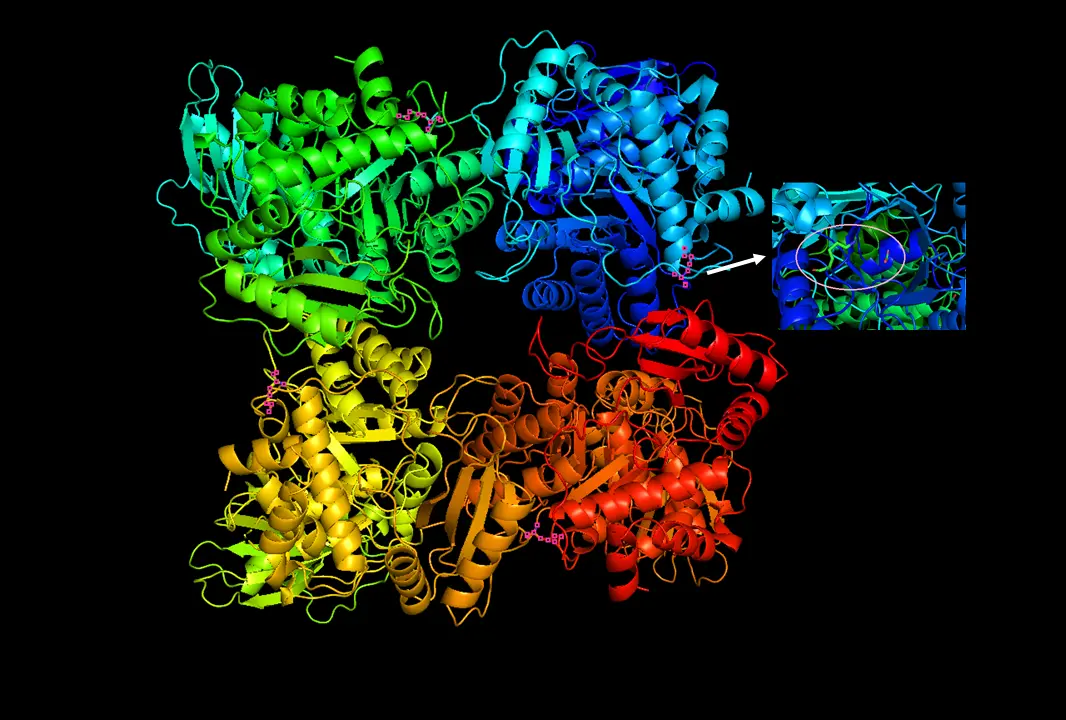
The infamous elephant’s foot
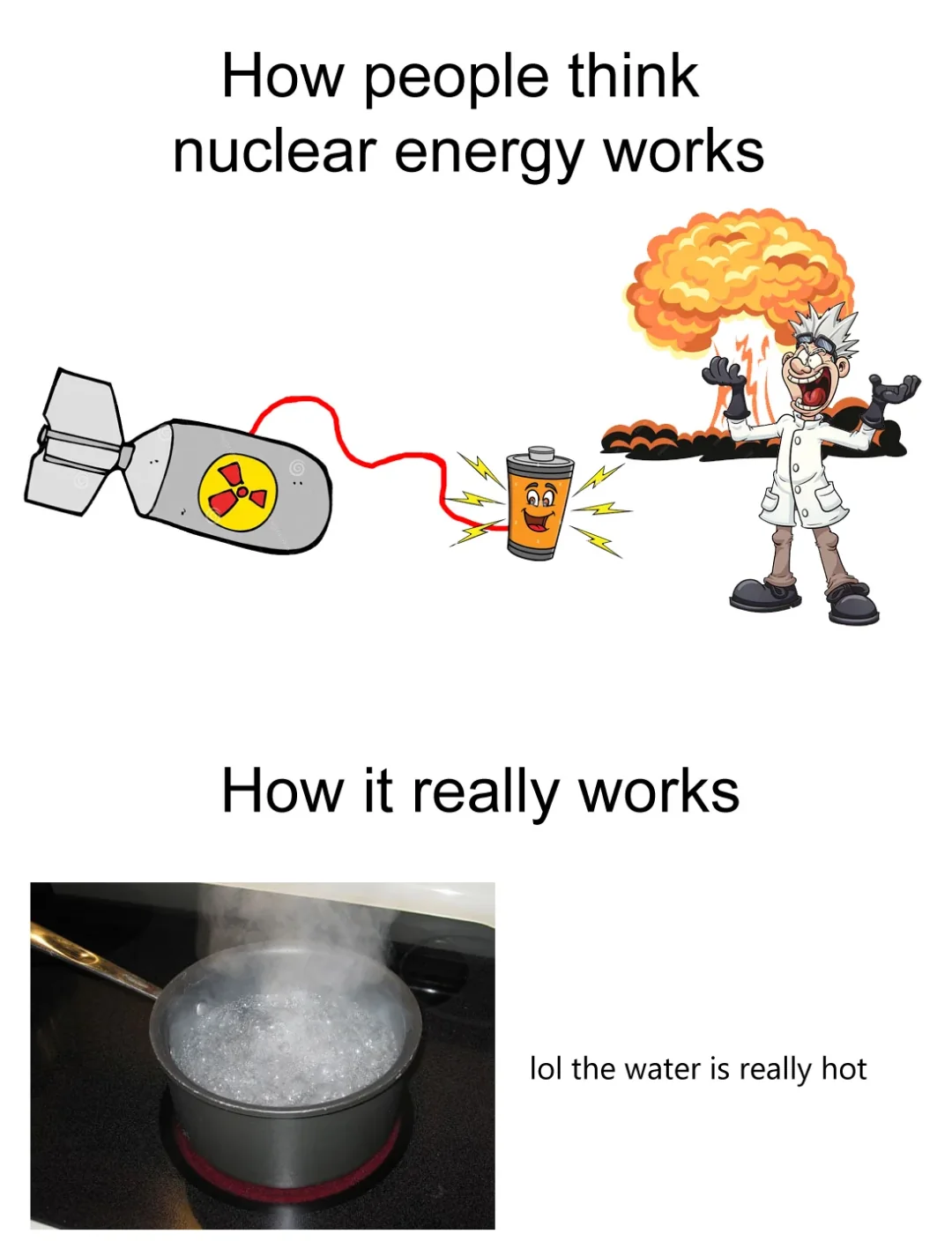
Most of our power generations comes from “make water hot, hot water boils into steam, steam spins magnet”
Nuclear power is just a different source of heat.
It’s all variations of “make things spin.”
Either by heating up water so steam makes thing spin, using wind to make thing spin, or moving water to make thing spin.
I am willing to bet if you watched photo cells on solar panels under a microscope, the light would make something spin.
Electrons are suspiciously close to spinning dynamos, so even just moving electrons might be considered spinning something.
I am willing to bet if you watched photo cells on solar panels under a microscope, the light would make something spin.
Nope, solar cells are solid state devices. ;)
Other examples of solid state electronic devices are the microprocessor chip, LED lamp, solar cell, charge coupled device (CCD) image sensor used in cameras, and semiconductor laser.
Nope, solar cells are solid state devices. ;)
except for the fact that you actually want a grid tied interia component for stability.
So even in that case, you still tangentially need a “spinning mass” even if emulated in software with how it supplies energy to the grid. It’s still technically there.
Have you considered supercapacitors could be used for that?
that’s still just inertia though…
Now just using the complicated AC coupling of DC energy, through complex electronics…
All when you could just, big motor with massive mass spinny real fast like, and then when the mass starts spinning the motor, it makes power.
Mechanically, it’s probably both cheaper, and more cost effective to just use a flywheel, which is literally going to be an inertial system.
to be fair ; its both.
It is not the top one in the typical usage of the word “nuclear energy.” Sure, it is nuclear energy, but that normally refers to electrical infrastructure, not nuclear weapons. Nuclear electricity is pretty much always just heating water up in a safe and controlled manner, and using that to spin a turbine.
Until something goes wrong and it is not safe and controlled anymore. You know, because of the whole exponential chain reaction thing.
meltdowns do not resemble bombs at all. nor are they really possible either.
On a world where everybody is effraid of nuclear power, station safety is really overboard, and nuclear is super safe.
If everyone accepted nuclear power the same way we accept cars, then you can be sure capitalism would cut corners on nuclear safety…
(Source: many of my clients are nuclear power plants people)
sure, like corners are cut in every industry including renewables (which have a higher accident rate even). yes a nationalized nuclear power program is less perversely incentivised. if you look at countries where nuc is accepted more you wont find insane accident rates nor are plants bombs.
I heard that Fukushima was problematic because non-engineers thought it would be easier cheaper?) to put some of the critical infrastructure near the sea rather than on the hill…
that is believable, no structures should have been where fukushima was nor with the lacking tsunami protections it had.
I heard that Fukushima was problematic because non-engineers thought it would be easier cheaper?)
fukushima was problematic because literally everything in the chain of safety that should’ve happened, either didn’t or was ignored, due to callous stupidity.
If literally any one thing had gone differently, there’s a good chance it wouldn’t have been that bad.
If everyone accepted nuclear power the same way we accept cars, then you can be sure capitalism would cut corners on nuclear safety…
and yet, cars keep getting safer, and safer every year, they also keep getting larger, and more expensive and harder to repair, but they do get safer.
Interesting.
To be complete, you can’t ignore the dangers of nuclear power plants in a war setting. It sucks but it is what it is.
To be honest, every large power generation systems is critical is a war setting… Don’t tell them about hydro dams!
Critical? Yes but there are a few different kinds of critical. Critical to the power supply? Ofc. Critical as in potential environmental disaster? Some, dams are 1 example.
Sometimes transportation is the cause of the potential of an environmental disaster like gas pipes. Those are a potential wildfire. Tbh, badly maintained high voltage over the ground wires have caused huge disaster too.
Energy is dangerous by nature. But some are more abusable and have longer term consequences than others. In a war setting, you have to assume abuse and plan with the consequences in mind.https://en.m.wikipedia.org/wiki/Zaporizhzhia_Nuclear_Power_Plant_crisis it is a reality.
Station safety is so overboard, that we only had like three meltdowns or so, and only some hundreds of thousands of people killed by premature cancer deaths as a result of them and some million or so permanently displaced.
But surely after the next event we will have learned and then it will be totally safe. Like they said after Three Miles Island. And like they said after Chernobyl. And like they said after Fukushima.
killed hundreds of thousands
more like a few thousand ever, if you are really really conservative tens of thousand, though the methodology to get there is unscientific. tmi killed nobody, fukushima will have killed nobody. meanwhile people falling off roofs installing solar or accidents working on wind are much more common. keep doing solar and wind, but your perception about nuclear is wholly irrational and unfounded.
Chernobyl was a ridiculous level of negligence on the part of the technicians working at a plant with a very unsafe design.
Fukushima was a reasonably safe reactor design with terrible (and noted as such decades before the meltdown) site designs which could be described as “designed to fail”.
You could argue that lessons have been learned from both of those, and Three Mile Island, and safer designs are the result. Or you could argue that Fukushima clearly shows that people shouldn’t be involved in such high-risk projects because they will cut corners that will inevitably lead to disasters. If the second is your stance, take a look around. There are plenty of projects with similar risks in other fields all the time.
There are plenty of projects with similar risks in other fields all the time.
Then name three examples please, that have a Chernobyl level of risk.
Coal power plants release more radioactive waste in the environment than nuclear stations.
I’m not sure if this statistics includes meltdowns, but considering their rarity, it may still be true.
Which is why both technologies need to be abolished asap and replaced with cheaper and sustainable renewable energies.
have we built and RBMK reactors since chernobyl? Have we built and confusing and badly maintained reactors since TMI (that weren’t legally operating btw) have we built any BWR reactors in bad places, with no concern for safety since fukushima?
Did people during the concept and design phase of these anticipate them causing disasters?
Did the people who operate them adhere to best safety practices, maintenance and regulations?
Did the regulatory authorities ensure that there would be no disaster possible through enforcing said regulations, in particular regarding location specific concerns such as Tsunamis in Fukushima?
As long as you have the same human characters in the same economic structures in the same administrative structures, there is no reason to be confident, that these disasters will not happen again.
That must be why it’s still advised to not collect and eat wild mushrooms in parts of southern Germany.
Also I didn’t say they resembled bombs.
did i claim chornobyl didnt have any effects or are you just searching for stuff to argue about?
that’s the thing though, the exponential chain reaction isn’t possible.
The problem is that when fuel breaks the strictly controlled fuel rod environment, it stops being cooled properly, and regulating it becomes more interesting (not impossible, there are some clever solutions out there, look at metal cooled reactors for example) and as a result, the spicy particle generation tends to break containment, which is why we have things like PCVs, which contain the corium long enough to at least prevent the elephants foot troll, which is then contained by the secondary containment (the building around it) which is also contained by the rest of the building, surrounding the containment building.
It’s pretty hard to fuck up a reactor. Even harder when the idle state of the reactor is safe, as is with metal cooled reactors. Those are some of the most promising designs, because you can literally just do nothing with them, and nothing bad happens.
deleted by creator
We’ve had this discussion here on lemmy a few days ago: practically all electricity generation is by making turbines spin.
Hydropower means river makes turbine spin. Wind power means wind makes turbine spin. Coal/gas power means combustion makes turbine spin. Nuclear means hot steam makes turbine spin.
However, that doesn’t mean that all electricity sources are spinny things.
- solar cells have no mechanically moving parts
- batteries utilize chemical energy directly
solar cells have no mechanically moving parts
ironically, large grid tie systems are starting to “emulate” the spinning mass behavior of turbine generators, since there’s an exponential failure issue waiting to crop up if you aren’t careful, as texas has already learned, a very significant part of your solar generation can just, go offline, if it decides grid conditions aren’t suitable, which can lead to LARGE drops in power production and frequency, which is likely to kill even more generation.
So the solution is to make it emulate the physical mass tied to a turbine, or at least, more generously provide power in fault like conditions, to prevent this sort of exponential breakdown of the grid. You could of course, use a large spinning flywheel to regulate grid frequency, as is being used in a few places right now. I’m not sure how popular that is, outside of wind energy. It’s likely to get more popular though.
weird little side tangent, but the frequency of electricity on the grid is essentially directly tied to the rotational speed of all turbines currently on the grid, meaning there is a very large inertia in the grid frequency, it’s weird to think about, but makes perfect sense, and it provides for an interesting problem to solve at large scales like this.
Batteries are really fucking cool btw, the fact that you can just chemically store electricity, and then use it, is really fucking crazy. The fact that it’s the most accessible technology is also insane to me. But maybe it’s just the adoption being the way it is.
Also, solar trackers are a big deal for large farms when you start to scale above residential. Those trackers physically moving the panels to optimize generation are moving pieces.
this is sort of true, it depends on the array, but from what i understand, unless you’re doing an experimental array, it’s most common to just use fixed axis mounted panels, it’s much cheaper and more cost effective that way. Ideally you would use a tracking array, which is better, but more complicated, and requires significantly more maintenance and investment. Single axis tracking arrays might be a clever solution to this problem though.
Regardless, it’s not relevant to the grid inertia problem at hand.
I dont think this is true.
I think people underestimate the value of intertia in power generation. I liken it to the way capacitors regulate voltage changes or coilovers absorb bumps and vibrations.
The inertia of the generators connected to the grid helps stabilize frequency changes caused by blackouts, power plant issues, etc. by resisting and thereby slowing down frequency decline. It buys time for grid operators to find a way to balance loads in a way that doesn’t weaken or disable the grid as a whole.
Here’s a great NREL report explaining how this all works, and what other systems we use to stabilize grid frequency.
I think people underestimate the value of intertia in power generation. I liken it to the way capacitors regulate voltage changes or coilovers absorb bumps and vibrations.
the best way to think about it is a literal flywheel, because that’s what this is, just at a grid scale, and directly tied to the frequency.
The inertia of the generators connected to the grid helps stabilize frequency changes caused by blackouts, power plant issues, etc. by resisting and thereby slowing down frequency decline. It buys time for grid operators to find a way to balance loads in a way that doesn’t weaken or disable the grid as a whole.
TLDR it moves the “OH SHIT OH FUCK” window from about < 1ms worth of time in the worst cases, to the much more manageable, seconds window.
It’s a potential challenge with moving to renewables, but not a significant one, i think. This is also a big advantage to having sources based on thermal generation, like nuclear.
Spicy rocks make water hot.

fission is bad for us
“sHoW yOUr WoRK!”
https://en.wikipedia.org/wiki/Fukushima_nuclear_accident
https://en.wikipedia.org/wiki/Runit_Island#Runit_Dome
https://en.wikipedia.org/wiki/Hanford_Site
https://en.wikipedia.org/wiki/Three_Mile_Island_accident
https://en.wikipedia.org/wiki/Chernobyl_disaster
https://en.wikipedia.org/wiki/List_of_nuclear_power_accidents_by_country
The first light bulbs ever lit by electricity generated by nuclear power at EBR-1 at Argonne National Laboratory-West, 20 December 1951.
That is a lot of “accidents” for an energy source less than one 80 years old. We only have so many places to store the waste. And the accidents.

fukushima was entirely a skill issue, just don’t
TMI was entirely a skill issue, and didn’t even release any significant radiation as far as we can tell. Didn’t even breakthrough the PCV, so this probably shouldn’t even be on the list.
chernobyl was a bad design, and a skill issue, plus a few other skill issues.
the runit dome was from atomic bomb testing right? Not even real nuclear power, it may have been a fission bomb, but i’m not looking into it far enough. Weird that you don’t mention nagasaki or hiroshima in that case.
the hanford site, i’m not familiar with, but im guessing this is a development plant? And probably just procedural skill issues? There have been a number of smaller accidents, most of which are due to people being stupid.
Don’t feed the troll. It won’t come back, it’s too expensive.
i mean… This is how most electricity production works.
Project PACER:
I mean, there’s barely any difference between the heating of the earth’s mantle, i.e. geothermal, to the heating by fission. We are just kind of doing the process manually on the surface of the planet where a tiny mistake will cover it in contamination.