
I never understood leather car seats.
Can someone here explain to me the appeal of car seats that get extra cold in winter, extra hot in summer, and that will get all sticky against my sweaty leg if I sit down with shorts…
They last essentially forever if maintained even just a little bit and is a good quality leather. I’ve been in cars from the 70’s with the original leather seats in amazing condition.
I don’t personally care that much what the material is in my car, but I’ve never had good experiences with fake leather, I’d rather honestly have any other fabric. And those other fabrics are very common already in cars!
The car won’t last forever anyway, if it’s used regularly.
I threw away my last car at 19 years and 380’000km with no tears on the cloth seats.
And yeah, fake leather is almost always a big no.
My car also has 480000km on it and 20 years old, seats still perfect. Maybe Seat just makes good seats :P
Well, it’s right there in the name!
…
Mine was a 2001 Fiat Multipla, powered with natural gas. One of the most reviled cars ever made, and produced when Fiat was at its worst. It was awesome.
As a lover of weird and ugly cars, I love the Multipla. If I needed a larger car like that, I’d totally get one. Though my need for weirdness is currently satisfied with ny Trabant
The cactus is on my wishlist but un/fortunately I don’t really need a car anymore as a moped suffices
In my experience good cars can last a lot longer than the cloth
I guess your cars usually go to ~1million kilometers then?
Longer than the cloth for sure
Then take your seats with you to the next car!
/s
One advantage is that they are usually much easier to clean, stains that soak into regular fabric can often just be wiped off from leather, however I do believe it’s usually about leather having a more “premium feel”.
With leather seats, you get a sense of panic as you spill something, before realizing that it’s leather.
You won’t believe how many years I’ve had a driving license without spilling something on my seats…
Kids?
Me too. I’m just using a feeling of relief that I have experienced in the past to illustrate the point that leather is easier to clean.
You guys spill things in your car!?!?
You guys drink something other than water in your car?
You guys drink in your car?
Leather feels much nicer than cloth. I prefer my seating surface smooth.
I don’t remember the last time I had a car without heated seats. I’ve had a car as old as 2003 (bought for 3k) that had ventilated seats. The are also ways to make sure your car is the right temperature by the time you get in it.
I’d like to know which country are you from. I live in Italy and I’ve never even seen a car with heated seating, it sounds like those fancy things for rich people in movies.
Estonia. I’ve seen 1980s or 90s heaps of junk with heated seats. It’s kind of a requirement when it gets to -33C in the winter. It’s also very cheap for manufacturers to add, so a lot of them include it as standard equipment in northern countries.
It was more common than AC here until AC became standard equipment in cars.
USA here. It mostly depends on the regional climate, in my experience. If you’re buying a new car in Texas, it probably won’t have heated seats in the options package. If you’re buying one in Vermont, it would be a lot more likely to be available.
Because they are so comfortable and everything you said applies to all car seat materials.
They’re comfortable, super easy to clean, and stay in great condition with minimal effort. My car has cream-colored leather seats with a seat warmer, so they’re a comfortable temp in both summer and winter.
Agreed. My mum’s car and my boss’s car have leather seats and I hate it. Both of my cars (and almost every other car I’ve ever driven in) have fabric seats, and they’re infinitely more comfortable. And I presume considerably cheaper.
Hmmm this feels like green washing to cut costs.
Isn’t leather mostly a byproduct? Leather boots and car seats can last decades, which could reduce waste.
What are the alternatives and what are they made or? Afik the alternatives are usually petroleum based don’t last as long and introduce micro plastics
Would like to see a proper study on the alternatives and their long term impacts compared.
Despite its reputation, leather is definitively not a byproduct. The modern leather industry does not reduce the waste of animal agriculture, it collaborates in it. Leather is best viewed as a coproduct, meaning that the two industries are distinct, but inextricably linked.
The global leather goods market is gigantic, and Grand View Research predicts it will reach USD $405.28 billion by 2030, up from $242.85 billion in 2022. In 2020, global production reached 12.5 million tonnes and included the skin of over 1.4 billion animals. (That’s nearly 20 percent of the entire human population at the time killed within a single year.)
Apart from the staggering inherent environmental footprint of raising cattle, turning hides into leather itself has a significant impact. So significant, in fact, that Collective Fashion Justice believes turning hides into products creates more CO2e emissions – about 110kg per square meter – than simply putting them straight into landfill. (Which is very likely where the product will end up rotting and producing emissions eventually, anyway.)
It’s also not just cows that are used to produce leather. Hides from sheeps*, lambs, goats, and pigs are also frequently used, while animals such as crocodiles, alligators, snakes, kangaroos, zebras, elephants, and more – including rare, endangered, and keystone species – are hunted specifically for their skins, frequently for luxury accessories by high-end brands.
Fashion designer and vegan icon Stella McCartney, who uses plant-based alternatives to leather in her various products, previously told Plant Based News (PBN) that the idea of leather was a byproduct was “sheer nonsense.” She added: “I’m here to let people know that’s a lie that’s been created by the meat industry and leather boards.”
https://plantbasednews.org/news/environment/the-problem-with-leather-cruel/
Not dismissing the claims, but that seems like an obviously biased news source.
Interesting topic, I’m keen to dive deeper into it.
This report covers a preliminary life cycle assessment (LCA) on imitation leather made from hemp fiber (hemp leather) and a comparison to bovine leather, to examine whether hemp leather is an environmentally sustainable alternative. The bovine leather industry is responsible for heavy chemical use and emissions, detrimental effects to the environment as well as to human health. The United Nations (UN) and other organizations call for immediate action against the animal product industry sector to greatly reduce emissions and protect the environment. Hemp is a versatile plant that can be used for many things, including paper, composites, textiles, food and medicine, and is probably a suitable material for imitation leather. The hemp plant requires little inputs, grows fast and without pesticides, has positive effects on the environment and can be cultivated on every inhabited continent. The preliminary LCA was based on a patent describing the manufacturing process of hemp leather completed with data from literature and a few assumptions made. LCA- results for bovine leather were collected from literature and the two leather fabrics were then compared. The comparison showed that hemp leather is superior to bovine leather in all compared categories except for water consumption and hazardous waste. Bovine leather had 99% more energy use, 78% higher acidification potential (AP), 99,9% higher eutrophication potential (EP) and 83% higher global warming potential (GWP) than hemp leather. The large water consumption in the manufacturing phase of hemp leather is possible to be explained by over dimensioning of inputs. The report concludes that hemp leather would be the environmentally and ethically admirable choice between the two leathers and that more research on more modern methods of manufacturing it should be performed.
In recent years, there has been a growing interest in the leather industry towards sustainable and innovative alternatives to traditional leather production methods. Alongside this trend, efforts have been made to reduce environmental damage by focusing on natural tanning methods in the production of natural leather, thus adopting more sustainable production techniques. Alternative materials such as apple leather, pineapple leather, banana leather, cactus leather, bacterial cellulose leather and cork leather have emerged as viable options in response to this shift. Additionally, there has been notable development in exotic leather alternatives, with materials like crocodile, puffer fish, and ostrich leather taking the forefront. These exotic leather options not only offer alternatives but also aim to fulfill specific purposes such as habitat conservation, particularly evident in the case of puffer fish leather production. The aim is not only to provide alternative materials but also to ensure environmental sustainability and ethical practices throughout the production process. This article delves into the description of alternative leather options while also providing an analysis of the life cycle of leather. It aims to underscore the importance of discovering innovative and sustainable leather alternatives in reducing the environmental footprint of the leather industry. By considering various materials and utilizing tools such as Life Cycle Assessment (LCA), stakeholders can work towards a more sustainable and ethical future for leather production.
The global leather industry has been at the receiving end of various environmental and ethical backlash as it mainly relies on animal agriculture which contributes to deforestation, greenhouse gas emissions, and animal welfare concerns. In addition, the processing of animal hides into leather generates a huge amount of toxic chemicals, which ultimately get released into the environment. Thus, growing concern for environmental sustainability has led to the exploration of alternative materials to conventional animal-based leather. In this regard, the application of fungal leather alternatives in material technology is gaining traction because of its high biodegradability, biocompatibility, renewability, as well as its affordable and carbon-neutral growth processes. Fungal leather alternatives have been found to possess significant mechanical and physical properties, thanks to the interwoven hyphal network of the fungal mycelium, as well as antimicrobial activities which have been ascribed to their bioactive metabolites. Various fungal species, including those from the Agaricus, Fomes, Ganoderma, Phellinus, and Pleutorus genera, are currently being investigated for their potential in this area. This review, therefore, attempts to gain insights into the recent advances in scientific research and real-world applications of fungal-derived leather like materials. It makes a compelling case for this sustainable alternative and discusses the morphology-property relationship of the fungal mycelium driving this innovation. Additionally, the current processing methods and major players in the fungal leather substitute industry are presented. The paper also brings attention to the challenges facing the full deployment of fungal leather substitutes and proposes solutions with the aim of encouraging further research and resource mobilization for the acceptance of this renewable leather substitute.
The global leather goods market is gigantic, and Grand View Research predicts it will reach USD $405.28 billion by 2030, up from $242.85 billion in 2022.
I have generally rather mixed feelings about leather, but that seems like a ridiculous number to use as a reference. As far as I can tell it’s the total price of the sold goods?
Which includes lots of stuff that has nothing to do with the leather…
Luis Vuitton is going to be raking in millions whether it uses leather or it switches to hemp or whatever. They’re selling prestige and brand, not real products.
(In the current political climate “going woke” by cutting leather would probably backfire in terms of image… But if they silently switched from leather to plastic noone would notice given the quality of their leathers)
There’s always cloth seats car manufacturers can use instead.
I don’t ever want leather seats in my car but your answer seems… Unrelated to my comment?
It’s related to how you may want to avoid plastic…
The single largest producer of micro plastics is car tires. The second largest is lint from synthetic clothing. I agree that it’s probably green washing but it’s still probably better than using leather.
Even if leather is a byproduct of meat production, it’s not given away. It’s sold. At best, leather is subsidizing the meat industry. Leather helps make animal suffering more profitable. Therefore it happens more.
Unfortunately the meat industry isn’t going anywhere anytime soon, so what do we do with the hides?
It makes sense to me to use it to make Boots etc. that lasts decades, instead of throwing it in the trash and using petroleum based alternatives.
The single largest producer of micro plastics is car tires.
This will become worse with evs unfortunately since they’re heavier due to the batteries, they will become lighter over time though.
Driven an EV for 8 years. It’s on its second set of tyres. My diesels cars before this one would get through a set every 18 months. I keep an eye on the tread depth too.
I don’t know why, but even with all the torque, they last. I wonder if the style of power transmission is easier on the tyre compound. Electric motors being a continuous force Vs an engine being lots of explosions, maybe.
I doubt it’s torque delivery. Rubber compound and alignment make a big difference in tire life. Since EVs are much more limited by inefficiencies, I would bet it came with harder tires and a straighter alignment.
Since EVs are much more limited by inefficiencies…
I don’t follow?
Much of the battery’s energy is recovered through regenerative braking. This means the main thing limiting range is drag. That’s why EVs typically have much more emphasis on being aerodynamic and are more efficient in cities. An ICE car has all of the energy dumped into heat in the brakes. But that’s ok because it’s easy to just make the tank bigger. That’s why ICE cars are more efficient on the highway where they never brake.
I see. EVs have much more incentive to minimise inefficiencies. Yes.
Fighting for walkable cities and good public transport like Trams etc. would make such a big environmental and quality of life difference.
Leather boots can, in my opinion, have their place. Leather shoes are often more hard-wearing, comfortable and maintainable, then many of the alternatives.
That does not include leather sneakers because in those the construction and sole will self destruct way before the leather, so you have a shoe with good upper and a crumbling sole.
But leather upholstery always seemed to me to be hard to justify. They seem to me to be functionally inferior and way more expensive.
Car seats… Noone ever had to change car because the seats were worn. And leather is hot in summer, cold in winter, and sticky against sweaty skin.
Office chair… Really? I have mine with a mesh back just to breathe a little better.
And with a couch… Just why?
I’ve had both leather and cloth car seats, the cars I’ve owned have all been ~10 years old, the leather seats looked really good after 10 years no issues. The cloth seats I had in one of my cars were literally falling apart.
Leather is also spill proof, Kids smeared peanut butter all over your seats? No problem just wipe it down.
This is just my personal experience, so yea mileage and results may differ.
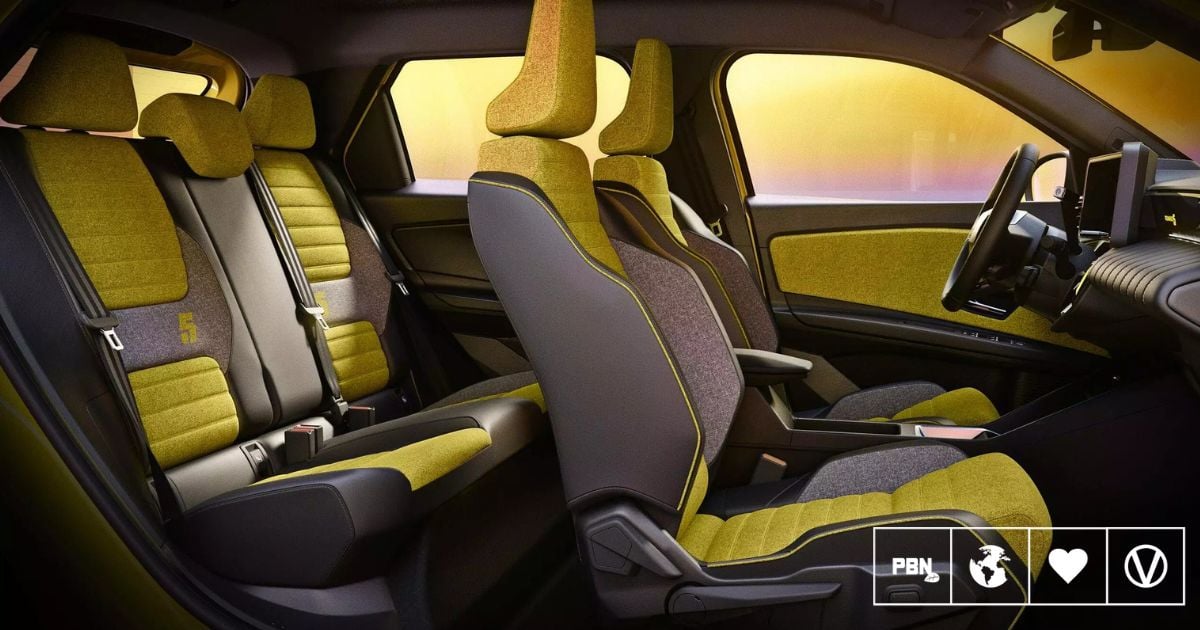
I have a Renault 5, was one of the first owners of the new EV model! It’s a fantastic car, but interestingly, the whole interior material is… denim! Seats, trim, everything. Even the inside of the roof! And it’s made out of recycled blue jeans. How cool is that?
Oh, good. My first instinct was that they’d use that plastic fake leather stuff. I really dislike fake leather. It’s not very durable and really difficult to mend when damaged. And it’s so very sticky in summer. Denim sounds like an amazing option though.
It’s so ugly, though. It looks like a Fisher Price toy. Nothing like the original R5. Same for the 208, this generation of cars is horrible. Massive square tanks.
I mean… I disagree? I think it looks like a retro-futuristic Mini Cooper or something. To each their own.
That is certainly one way of dressing up the use of cheaper materials.
This poses an interesting question…
Which is worse the suffering and exploitation of animals for their skin, or releasing more plastics in the world?
The leather industry keeps the environmental destructive beef industry alive.
The Beef Industry Knew Its Climate Impact as Early as 1989 — and Worked to Obfuscate the Science
Unfortunately, The beef industry isn’t going away anytime soon. What do we do with the hides if we don’t use them to make Leather boots etc. ?
It’s hard to believe that using (likely petroleum based) alternatives, has less of an environmental impact than using something that would have gone into the trash.
Sure leather supports the beef industry, but if it didn’t we’d still have the beef industry, and what do we do with that leather?
Edit: I thought about it a bit more, the less people use leather the cheaper it will become. It will still be used, because it’s so useful, profits will just go down a lot, so less money for the beef industry. So that’s a win.
It will go away sooner if everyone stopped using leather.
You’re right, thanks for the polite discourse. My mind has been changed.
Thousands of people are going vegan every year thus the force of supply and demand would require the beef industry to scale back operations.
supply and demand is a theory about price discovery. it doesn’t dictate production levels
Of course it does. That is the “supply” side.
Supply is directly linked with demand and price. It is a triangle of commerce. If either of those lowers, then it is prudent to lower supply as well or face overhead.
Sure, but global meat consumption is increasing, both overall and per-capita
However meat consumption is increasing in certain segments of the population. There is no guarantee this trend will continue especially since it’s unhealthy to eat so much of it.
The meat industry is heavily subsidized by governments of the world and is not sustainable with our planetary resources, we cannot keep clearing Amazonian forests for cattle ranching.
It’s important to note that the use of fur has dropped dramatically in recent years.
Leather isn’t a free byproduct, in many cases less CO2 is emitted by not using the hide and just producing an alternative instead
Sure but that leather could have been used to make leather boots, that could last decades. Instead petroleum based alternatives will be used, it needs to be weighed against those emissions.
Leather is a co-product, and it directly supports the beef industry. So yes, if leather sales decrease, the beef industry becomes less financially viable without a corresponding increase in government subsidies.
I did not know cars still had animal leather in them
Most cars can be bought with leather seats, that is a standard option on basically all cars.
The steering wheel is another component that often is wrapped in leather.
I mean I thought they were synthetic leather not real animal leather
I just did a quick check
†Leather appointed seats are a combination of genuine and artificial leather and are not wholly leather.
Yeah far out :|
Most manufacturers have the option to select either.
I suppose that would be the case in India.
Someone mentioned that leather is obvi very hot in full sun, but one other small detail missing from this discussion is that it being so hot becomes a bigger problem when you’re wearing shorts, skirts, etc. that expose skin on your thighs where they make contact with seat. Obvi, with current fashion standards this effects women way more then men, and has always struck me as one of those invisible, little ways that the world is designed by default by/for men (like with seat belt safety, high stools for presenters, etc.)
Hopefully they are not replacing it with some form of plastic.