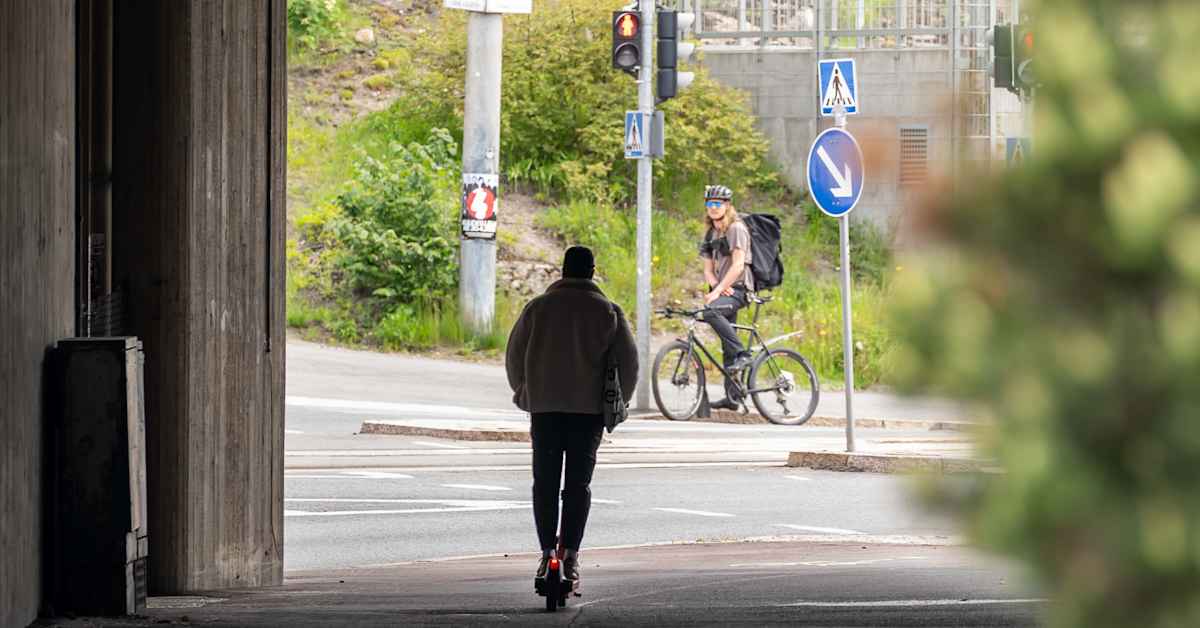
Helsinki has not recorded a single traffic fatality in the past 12 months, city and police officials confirmed this week.
The city’s most recent fatal accident occurred in early July 2024 on Keinulaudantie in the city’s Kontula district.
Authorities are calling the situation exceptional.
“A lot of factors contributed to this, but speed limits are one of the most important,” said Roni Utriainen, a traffic engineer with the city’s Urban Environment Division.
…
According to Utriainen, more than half of Helsinki’s streets now have a speed limit of 30 km/h. Fifty years ago, that proportion featured 50 km/h limits.
Earlier this summer, Helsinki decided to lower speed limits near schools to 30 km/h, a measure that is set to take effect as the academic year begins.
…
speed limits are one of the most important
I’ve seen a few YT videos that tell you the exact opposite. If you design the streets to feel “dangerous” to the driver, they will naturally pay attention, slow down and make the streets safer for everyone. You could plant some more tress, make the streets narrower etc.
Sure, people can’t drive to places as fast, but that’s not really a problem. If more people decide to use public transport instead, it’s just going to make the city nicer for everyone.
It’s not either/or. Those videos say that street design is important (i.e. if you make a wide and long stretch of asphalt, you can set a limit of 30 km/h, but nobody’s going to stick to it), but they don’t say that you can make a winding, cobble-stoned street lined with trees, and then put the speed limit at 100 km/h.
And as the article says, doing both is exactly what Helsinki did.
People prefer to drive at the speed dictated by the road design. If it feels natural to drive at 60 km/h, people will do exactly that even if it is illegal. if it’s a narrow cobble stone path with poor visibility, it feels much more natural to slow down to something like 20…40 km/h. The legal speed limit might be higher, but people just don’t feel comfortable driving faster, so they won’t.
In rural areas you can find some absurdly tight bends that have been there for at least a hundred years and were probably designed by cattle or sheep. The speed limit could be 80 km/h, but there’s a warning about a tight bend and a recommended speed. You slow down to 60 km/h, but it feels kinda dangerous. You slow down to the recommended 40 km/h but it still feels uncomfortable. You finally pass the bend at 30 km/h and that felt like you barely made it.
Every now and then, you’ll also find some fearless people, who usually end up wrapping their car around the nearest tree. They are immune to speed limits and only mildly resistant to good road design. These concepts don’t apply to the people who are striving to win the Darwin Award, but they are still relevant to everyone else though.
Yes, I am not arguing that street design doesn’t matter, and I’m not arguing that speed limits are always adhered to. All I’m saying is that none of those clips say that speeds limits do not matter at all. Usually they’ll say that they need to be combined with traffic calming measures like bends, roads, and cobblestones.
It actually is! Either car kills, or a person lives. And research can prove that some removes deaths and other things not.
I think you’d be hard-pressed to find research that looked at a real-life situation where speed-limiting measures were taken without a low speed limit being applied.
What’s the source of those videos? How could making the slow down mandatory not be more efficient at slowing them down?
Slowing down traffic will motivate more people to use public transport.
It’s more about the psychological. Setting arbitrary speed limits isn’t enough. If some idiot driver think it’s safe to speed, they will.
I believe Helsinki is aware of this and is one of the many measures they’ve made to limit traffic deaths.
https://www.strongtowns.org/journal/2021/8/6/the-key-to-slowing-traffic-is-street-design-not-speed-limits Its a very NA-centric organisation but a hood one. In europe the streets often look differently
Another example of a narrowed street https://www.threads.com/@thetransitguy/post/DD7VyqTx4-y?from_lookaside=1
Take a look at the description of these two:
I think it’s implied that street design is part if the limit. I’ve not been there but I bet that streets are narrow, with speed bumps and chicanes
Not just implied:
Helsinki decided to lower speed limits near schools to 30 km/h, a measure that is set to take effect as the academic year begins. (…) Street design has also played a key role.
The older parts of town definitely seem that way, although those streets weren’t really designed in the modern sense of the word. In suburbs though, you do have intentionally narrow sections and bump, occasionally even combined to a brutal choke point. Either way, people don’t want to drive there unless it’s absolutely necessary, so they’ll take the PT instead. Seems to be working.
I’ve seen a few YT videos that tell you the exact opposite.
So you suggest that speed limits would increase traffic deaths? Is this right? Where are these YT videos?
Here’s one. The others tell the same story with different words.
Just to get the broader picture, here is a world map displaying the deaths from road injuries.
The number of deaths from road injuries appears to be highest in China and India, Europe is among the regions with lowest numbers.
Unfortunately, the data used in that map don’t appear to be corrected for population size.
So the high numbers in China and India don’t really mean much without some additional context.The map on Wikipedia is based on deaths per 100k inhabitants, which seems more useful for gauging overall road mortality rate.
What’s the scale? Deaths per 1000km driven? Time in vehicle? Per 100k people?
Yeah, Europe, Australia, and Canada show the lowest numbers also here, though.
Addition:
According to the WHO (which is source of the Wikipedia map), a road traffic injuries report says:
- Approximately 1.19 million people die each year as a result of road traffic crashes.
- Road traffic injuries are the leading cause of death for children and young adults aged 5–29 years.
- 92% of the world’s fatalities on the roads occur in low- and middle-income countries, even though these countries have around 60% of the world’s vehicles.
- More than half of all road traffic deaths are among vulnerable road users, including pedestrians, cyclists and motorcyclists.
- Road traffic crashes cost most countries 3% of their gross domestic product.
And:
Road traffic death rate (per 100 000 population) according to WHO:
- Africa: 19
- Eastern Mediterranean: 16
- South-East Asia: 16
- Western Pacific: 15
- Americas: 14
- Europe: 7
deleted by creator
I was referring to the Wikipedia map posted by @wols@lemmy.zip - here again.
Aye, sorry, I missed the bit at the end of your comment
No worries, mate. Have a great one.
Just the total numbers, no scaling.
These traffic engineers are doing a great job.
The other engineers the country got enriched with not so much.