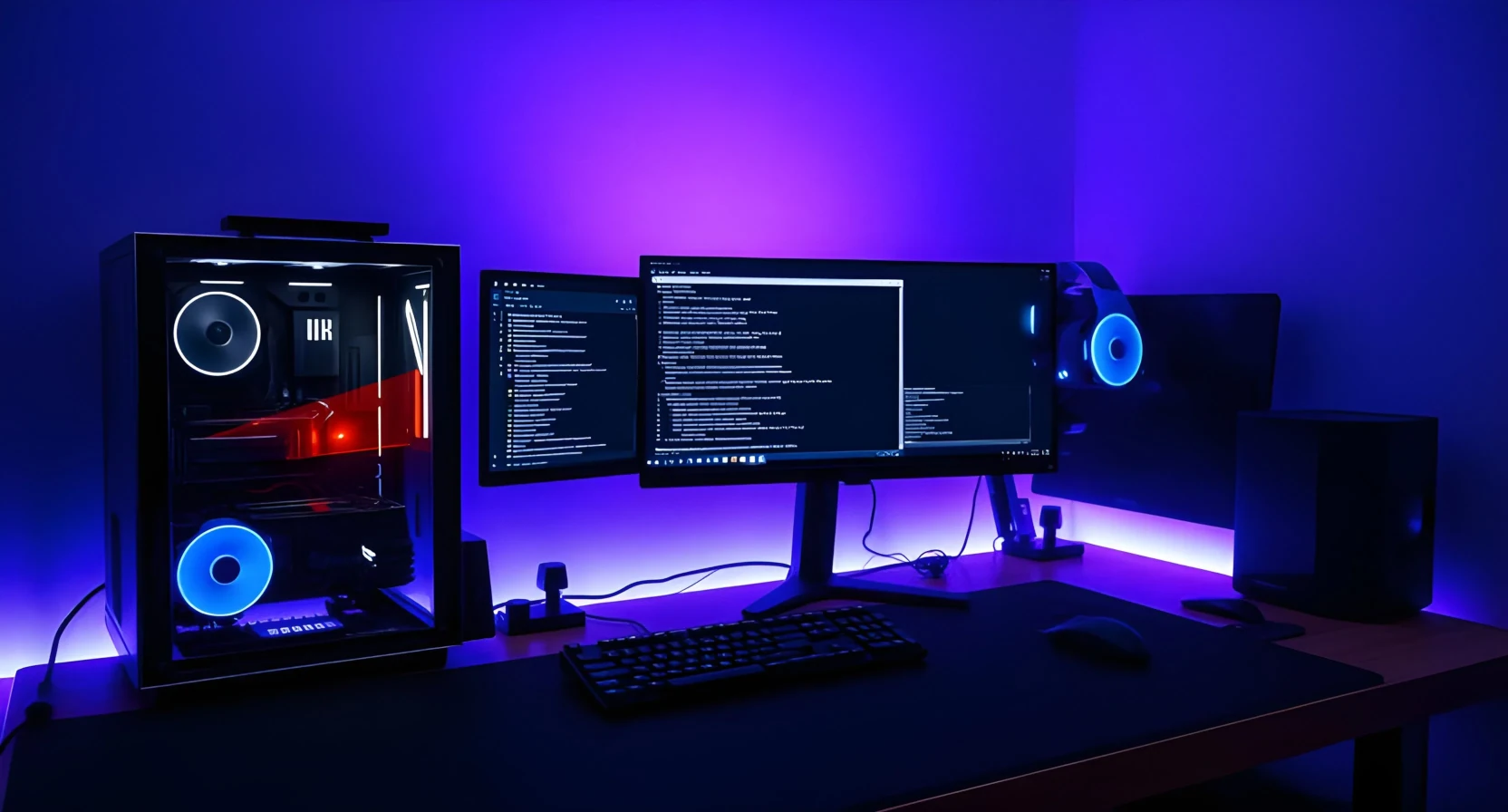
I’ve been using Linux for years, but as the proprietary alternatives get more aggressive with telemetry and adverts, I wanted to document the choices that actually keep my desktop predictable.
This isn’t a manual, but a practical overview of my setup. From why I’ve settled on CachyOS and KDE Plasma for my main rig, to the reality of dealing with proprietary software and app compatibility in 2026. It’s just an honest look at the transition and why I’m done with the corporate defaults.
What surprises me more is that someone feels the need to justify staying on Linux at all. That’s a conversation that shouldn’t even exist.
The question has almost always been the other way around: why use anything else?
I mean I kinda get it. BSD is pretty cool in its own way.
Yes. I have used Linux for 26 years. Never have I ever considered leaving.
Steam has reported record number of linux users in their os survey! I made the switch this year too!
Same. I’m enjoying the experience. I was surprised how seamless it went.
I’ve had discussions with my friends about using Linux full time. I got one of them to move their mom’s old All-in-one to Mint since it couldnt move to Win11. Most of them worry about anti-cheat and such, but I tell them consistently “the games we play all work, how do you think I play with y’all?”
I’ve started moving everything I do to FOSS, or at least respectful, alternatives. My whole world has become more intentional and free the more detached from the “convenience” of big tech solutions.
I’ve said some negative things about KDE Plasma feeling like three desktop oses taped together, but the latest version the fixed all that and it’s pretty good.
I still want to destroy all the hotksys and window decorations, but it just works, and it works well, and it works for edge cases where Gnome and Cosmic crash or fail silently.
KDE is pretty good, and I say that about a very small amount of software.
Also: I just switched to Nixos and now I can actually setup systemd units without wanting to shoot myself in the face. So that’s nice.
I’m a huge fan of tiling window managers, and i3 is still the king of getting the hell out of my way and letting me work/play. That’s the beauty of Linux systems, everyone gets to set things up how they want.
I was a longtime KDE user, but the lack of reasonable trackpad gestures drove me up the wall on my laptop, so I’ve been using niri+noctalia for the last couple months. It just feels so right, it’s lovely. Still some edge cases, but overall just so good.
And yet you use & support systemd…
Omg shut up. Nobody controls Systemd, it’s open source.
You can also replace individual components. It’s basically a bunch of binaries using an API.
Uh, the systemd devs do.
The “systemd devs” are anyone with the cashe to contribute to it. Yes, you need to be competent dev for your merges to be accepted, unlike in the virus-infested AUR.
But systemd can be forked if you don’t trust said devs. You’d be in the minority though because the majority of distros out there chose to adopt systemd, because it is that good.
Do you have any actual problems with systemd, or do you just want SysV init scripts to stick around forever?
Maybe systemd isn’t the best, but it’s way better than a bunch of mostly unstructured shell scripts, and more secure (it’s pretty easy to reduce privileges, sandbox the filesystem, restrict syscalls, etc per service just by editing the unit file)
Personally, my problem with systemd is that it’s slowly trying to take over everything it possibly can, and be as hard to remove as possible.
It’s not “so you just think it’s all a single binary!”. No, I’m 100% aware it’s multiple binaries. The problem is that it’s a single project, and that’s too much power to give to one single project.
“oh but you can swap out the individual parts!” Sure. For SOME of them. Until you swap out the systemd init and suddenly have to relearn a shitton of completely random other stuff because systemd was doing a boatload of other things. Might as well get that out of the way early and use normal other projects for the other stuff, and also ditching the init system can’t hurt just to reduce their stranglehold.
Also OpenRC might be worth looking into. “systemd or Old™ Nasty™ sysv scripts” is a false dichotomy, openrc’s init scripts are declarative like systemd units (and it also supports sysv scripts). There are also totally different init systems (but we don’t know much about them, we started with systemd and then jumped to openrc recently).
– Frost
Huh…? Unstructured…? Please explaln or are you just a troll or a lenfart puttering lover…?
Yes, unstructured. Every script is its own special snowflake that does things a bit differently.
There’s no guarantee of the verbs that the script implements. start, stop and restart are common, but the implementation is up to each individual script. I’m most familiar with Debian where some service (but not all) implemented it with
start-stop-daemon, but other distros and OSes handled it differently.Basic, commonly needed functionality, like restarting a crashed service after waiting for some delay, need to be implemented per app.
When sysvinit was widespread, there was a reason a lot of people used systems line supervisord to deploy services, rather than dealing with sysvinit scripts. It was a pain.
Systemd units were a logical progression from supervisord services.