

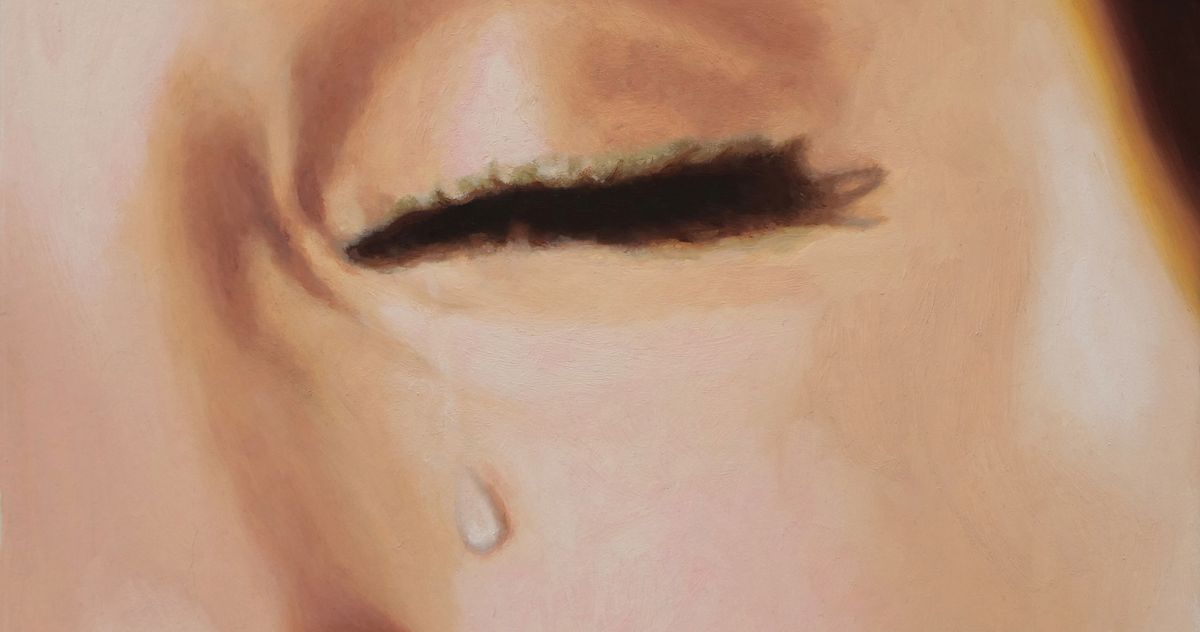
I’d started to suspect that something was wrong with me when a friend I’d known since childhood died and I didn’t shed a tear. I sat at her memorial service and felt something worse than nothing — a calcified layer around where feeling should have been, as if something were trapped in my body with no hope of emerging on its own. I noticed the absence at other times I would usually have sobbed. A late-night fight with my husband, at the point where any other form of communication feels impossible. Fifth-grade graduation, when the valedictorian thanked her teachers for helping her when she was going through chemo. Pixar movies, Call the Midwife, Sarah McLachlan singing “in the arms of the angel” — none of it moved me to tears. I wasn’t a monster, I was pretty sure. Something was wrong with me. I craved the cleansing sensation after the tears stop, that feeling in your sinuses that’s like you’ve been swimming in the ocean. The boneless relief that comes after sobbing has ceased to wrack your body and you can finally rest, absolutely drained. I had no idea what it would take to get back there, the place I’d been effortlessly able to access for the first 41 years of my life. But I would spend the next six months trying. I hoped it might even be fun.
L., my therapist, mostly wanted to know why crying was so important to me — a valid question, as her questions tend to be. I didn’t have a good answer. I told her I craved crying’s cathartic physical release, then clarified that I still had orgasms (just to get that out of the way). Joking around about how much of a therapist she was being, L. asked me to think harder about the significance of crying, to go beyond the moment of triumphant weeping to imagine what it would mean. I realized that I didn’t really know. I’d just understood it as a goal and also something to write about. Unlike every other therapist I’ve ever had, L. doesn’t treat my writing as something separate from the excavations of self that we talk about in therapy but as an inextricable part of my whole deal. It wasn’t that she worried about professionalizing my emotional journey; she was just wondering if I had a thesis beyond “I haven’t cried, and I want to.”
I didn’t have a thesis. Instead, I described sitting at my friend’s funeral, watching as the rabbi sobbed her way through the service, and glancing around to confirm that mine were the only dry eyes in the room. Didn’t she think it was strange that she’d never seen me cry? With my previous therapists, many sessions had ended in tears. But I’d been a different person before I started seeing her and B., before I’d gotten on this exact drug regimen, before the events of 2022 had split my life into a clear “before” and “after.” I wanted the tears back, but I didn’t want the rest of it; I didn’t know whether that was possible, but I wanted to try. When I thought about the project in those terms, I understood why L. and B. were wary. The “before” version of me had done her best to ensure there wouldn’t be an “after.”
I will probably be banded for being a cynic, but I’m not buying what the author is selling. To over the top.
Just seems too much drama queen, it’s all about me. Less a cry for help, and more about a need to sell an article to the New Yorkers.
I got like that because of taking antidepressants. It prevents me from crying.

