It’s interesting to note that these hand-wringing, sky-is-falling pieces unfailingly focus on external issues. Few of us doubt what we feel in our bones to be true — that long-form reading is being harmed by disruptive technologies and other beyond-our-control societal issues (political dysfunction and a decrepit educational system) that apply to the demand side of the equation.
But what about the supply side?
…
Consider the death of the mass-market paperback last year. When the Big Five publishing houses (Penguin Random House, Macmillan, HarperCollins, Hachette, and Simon & Schuster) took the most affordable book format in America — known for its modest price and compact size — off of life support in 2025, it had long ago failed to live up to the “mass” part of its name. At that point, the books under that banner were recognizable but lacking the vitality and freshness that had first driven them to national attention in the twentieth century.
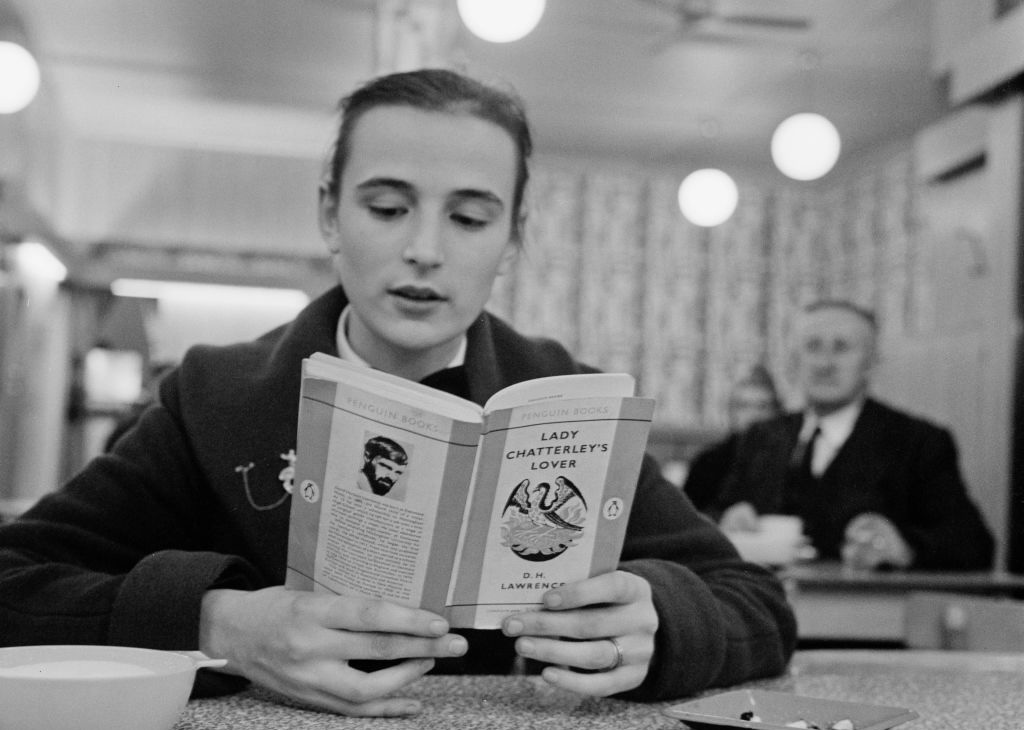
Until the 1940s, book retail was dominated by hardcovers — books held between cloth- or paper-covered boards, the pages secured by sewn spines. Penguin in the UK and Pocket Books here in the United States were the first to make successful use of an alternative book format that rivaled — and, for many decades, far outsold — the hardback. This cheaper-to-manufacture book had a soft cover and relied upon a glued (versus stitched) binding. The resulting tome was easier to carry and much easier to afford. The new format was as much commercial opportunism as it was any attempt to democratize reading or to improve the citizenry’s understanding of the world. If you make a dime on each purchase of one hundred thousand paperbacks, that’s more than making a buck each on 2,500 hardcovers, which was the average unit sale back then. Better yet, these books were sold all over middle America — in drugstores, grocery stores, and gas stations — not just in the little metropolitan oases.
Paperbacks are bonkers expensive now. They tried to turn them into a luxury item and then act surprised when people are sharing and borrowing them more and sales just keep declining.
This hasn’t been my experience at all… There, of course, is a distinction between trade paperbacks and mass-market paperbacks.
The latter are still pretty cheap (like under $10), and I feel like the former are about the same as they were 10+ years ago (usually between like $12-$20).
I’m old (+60)
i ditched 90% of my physical books long ago. I do read physical books occasionally from the library but i much prefer the ebooks. Same reason i prefer music as a file then on a record, tape or CD.
i see zero need for fiction books to be dead trees. A system of a display of physical books and then scan a qr code in the book to down load it might be nice.
Paid streaming is the devil, though I do occasionally listen to music streamed via internet radio.
All paper books are DRM-free. Isn’t it a hassle to try to work out whether an e-book is DRM-free before buying? Or is the presence of DRM transparently prominent? And when there is DRM, how easy is it to find a DRM-free version?
Did you ever discover a book has DRM after buying? I wonder how many people get stung like that.
Paper books have a subscription fee in terms of the physical space they take up. Social housing in my city is €800/month for 40m^2, so €20/month/m^2 , or €0.002/month/cm^2. A physical book might take up a floor space of 4x25 cm^2 , divided by 5 if your bookcase has 5 shelves, for around 20 cm^2. Meaning you’re paying €0.04 per month on every book in your library. If you’ve got 200 books, that’s €8/month, or almost €100 per year.
The only way to cancel this subscription fee is to lose access to the books, which is a worse penalty than for most DRM.
The only way to cancel this subscription fee is to lose access to the books,
Or move outside of Manhattan.
TBH I am able to get around the DRM via Pirate Ships.
I also found an app that rips DRM from Amazon purchased Audio Books.
this is not an argument of superiority as at the end of the day physical media is the simplistic (you buy and you own it) just saying work a rounds of the whole “you don’t own this.” scheme exists
Unless you do a lot of rereading or sharing I haven’t found the DRM to be a problem honestly.
For 8 or 10 bucks I can usually read whatever I want right now. The titles I really like I buy again to put on the bookshelf. I CAN go sail the seas and get stuff in PDF form, but a book to me isnt the same as a game or a movie title I want to use again down the road, it’s like several days or a week of one time entertainment followed by a bookshelf spot if I want to show it off.
DRM comes in many forms. I once heard of a granny looking at DRM book permissions, one of which was “read out loud”. She was annoyed: “you mean I cannot read some books out loud to my grandkids?” Of course what it really was was a control on the use of text-to-speech.
I have also heard:
- some books you can only read once
- some books block you from flipping back and forth… cannot re-read a previously read page
Some books I would read cover to cover and be done with. But I often inadvertently tune out because of my own mental distractions, and realize I have zombie-read 2 or 3 pages without absorbing it, and have to go back. DRM would probably screw me over for that. I usually need to return to previously read pages many times with cookbooks and motorcycle service guides. I don’t think I even want to be aware of all the various different DRM-imposed restrictions. Apart from restrictions which may potentially be tolerable (not tried it), what about the privacy? DRM is likely coupled with a bit of snooping, no?
I’ve never seen or heard of any of these forms of DRM. None of them sound like good business. As far as snooping goes I don’t prefer it, but the only content on my ereader is my library so not much to see.
We’ll all want something that still works when the lights go out though, whenever that is.
To be honest I’m surprised people still buy books. I read quite a bit but borrow everything from the library.
I can’t do e-reading. I need an actual book. I also hate hardback books. I want to curl that thing, I want the cover all beat-up and dog-eared.
I just buy hard covers for the physical copy and read on e-reader or audiobook. Like I bought the leather bound versions of my favorite Brandon Sanderson books, but they’ll stay for display only :)
I love my e-readers, but I still buy and read paperbacks too. I was just gifted one a few months ago.
I will even be a little spicy here and say most books I encounter in the wild secondhand are not worth printing in the age of ereaders and digital readers/audio ways to listen to books… which isn’t to say we don’t also need bad books and bad art and that tacky, accidentally funny relics of the past aren’t in their own way necessary… but I definitely don’t feel this universal comradarie with all printed books, some of them suck, some of them whisper violent ideologies into people’s hearts, some of them and this is by far the most common crime just simply wouldn’t be worth the resources invested to reprint when there are so many other ways to share words nowadays… which isn’t to say that what the books say isn’t worth being said or recorded, not at all but after you see your ten millionth Tom Clancy book you begin to lose your mind and start fantasizing about building a mansion using them as affordable bricks.
I LOVE a physical beat up paperback book, I love a beautiful copy of a cherished book, and I think even “mediocre” things are worthy of physical embodiment but I think we can love both physical and digital forms of reading at the same time and use both mediums to minimize the negatives of the other and to close out my TedX talk in summary: at the end of the day all I know for sure is that killing paperbacks is a stupid idea.