

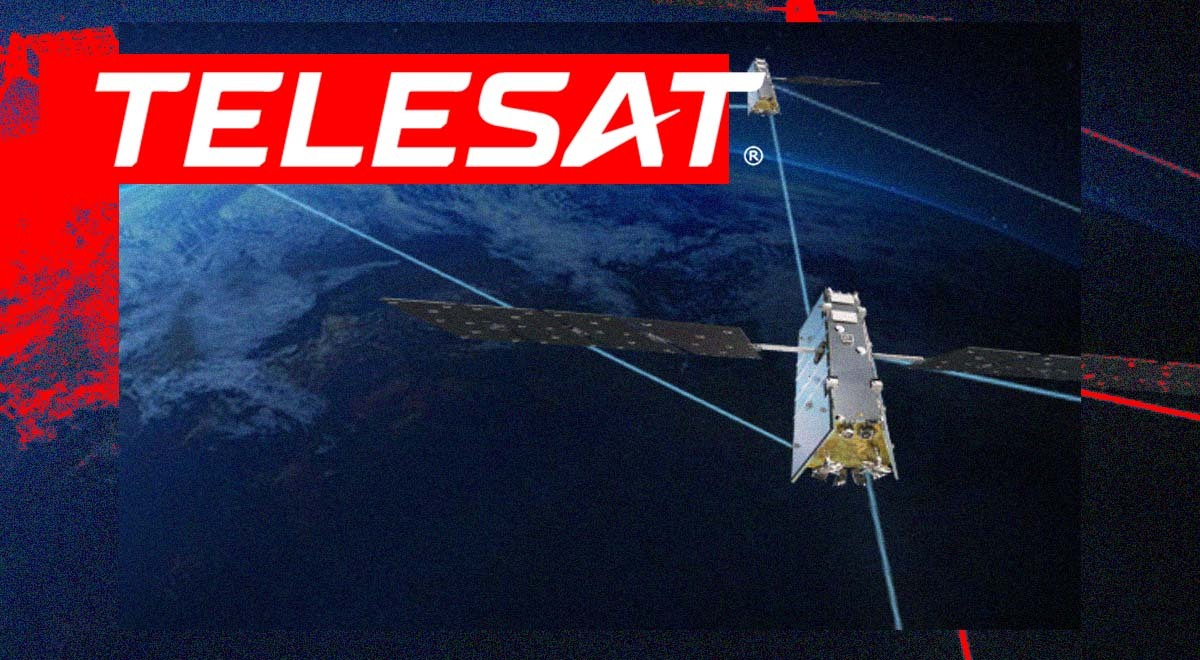
“Ottawa-based Telesat says its low-Earth-orbit broadband satellite network will enter service in early 2028 and be available to allied nations, including Ukraine.”
Fuck ya! Go Canada!
early 2028
I fear this may be getting too late for Ukraine.
It’s faster than I expected, though.
This isn’t just something you can slap together over the weekend.
It was delayedvand dobtvseecwhy itvwobt be again.
it was supposed to launch in 2026. it’s launching with SpaceX.
Telesat and SpaceX sign 14 launch agreement.
and now is being pushed again. Even 2026 was years behind schedule.
Hopefully thy did not make this announcement on “X”. Then again, what a slap in the face to inform the world on the platform of someone you are trying to replace.
Telesat Lightspeed main focus is enterprise and defense clients though, they don’t plan to expand into direct consumer service which would require a larger deployment.
Still nice to have an alternative to Starlink for that purpose though.
Getting Canadian governments services off Musk’s platform (and out of his income stream) is a win by itself.
First step to scale makes sense.
It makes me very happy to know that this is being developed for our military. They shouldn’t be at the mercy of American owned communications services out in the field.
Yay, more space debris
Thank you for being devil’s advocate. Don’t let the downvoting hypocrites get to you. Upvoted.
If fiber companies used 1% of the money we throw at them to actually build fiber, sattelite internet would never need to exist.
Its the most centralised, short term, low speed, expansive option possible and we are choosing it.
Fibre doesn’t work in airplanes or remote areas. Ukraine can’t use fibre in its very long range drones (they do for the short range ones).
There different use cases. That said, I still agree with you, we should have more fibre.
That’s why I take psyllium husk and only eat whole wheat bread.
I agree-ish, wartime is something else, but if we have fiber up in Hudson bay we really don’t need-need starlink anywhere in 2026 (other than where we’ve dragged our feet getting fiber).
airplanes could use an elliptical sattelite for their high speed, low latency requirments. Personally though any connection more than a high orbit satellite provides is a nice to have, but not safety critical by any means.
Plus LEO is just intentionally wasteful, I wouldn’t be surprised if starlibk was a money hole without its military contracts.
I would argue the internet isn’t critical, and is in fact harmful, and we would be better without it. I expect downvotes for this- but my point is, critical doesn’t really come into the question imo.
But I’m a bit of a luddite and think technology in general is bad for the human experience. Not inherently, but in practice.
Try laying fiber in the arctic and get back to us.
Northwest territories, Yukon, Hudson bay, and Greenland not enough for you?
Article ocean actually had fiber in Yukon before my hometown
Satellite internet should be in geo, not leo
Latency. Lower orbits give much less latency, and latency is a huge problem with satellite internet. This is especially bad if you’re trying to do anything realtime like, say, navigate a drone.
That’s why Ukraine got so fucked by Musk throttling Starlink on them recently. They use it to pilot both their long range drone weapons and their drone interceptor systems that protect people from Russian drones.
Any reason they can’t use radios?
The applications where you need low latency and global coverage are extremely limited.
Range, line of sight, and infrastructure.
Radios have limited range. For reliable communication, that is limited to, functionally speaking, line of sight. While you’re probably aware that it’s possible to transmit radio signals beyond visual range by bouncing them off of the ionosphere, this kind of long range communication requires substantial infrastructure; eg, a tall radio antenna placed in a high up location. This doesn’t work for piloting drones because a) the drone does not have the benefit of substantial communications equipment on it’s part, and b) the tall or high antenna is obviously a very exposed and vulnerable target. It’s also extremely unreliable. While bouncing signals off the ionosphere is possible, it’s deeply imperfect, heavily weather dependent, and the interference involved could easily impair the operation of a drone.
What Ukraine needs is the ability to:
- operate a drone very, very far beyond line of sight. Several thousand kilometres in some cases.
- do so reliably and without interruption of service
- do so with equipment that does not require an exposed position to operate from. Starlink dishes or similar can be pointed almost straight up, so you can operate them from, say, a small clearing in a woodland, among a cluster of buildings, or down in a trench or foxhole. They also don’t need very much power, you can run one off of a portable generator.
And they need to do all of that with as little latency as possible. LEO satellites are the only option that ticks all of those boxes.
I will note that radio is used for the operation of FPV drones, the small drones piloted using a first person view (FPV) camera that you’ve probably taking out Russian tanks and troops. This is one of the key limitations of these drones; they cannot operate beyond visual range. That means if you’re separated from your target by a hill or tree line, you will likely lose control on the final approach. These weapons have been as effective as they are in Ukraine because the terrain is extremely flat and these kinds of obstructions are rare.
But what we’re talking about here is specifically long range strike drones (intended to hit targets deep in Russian territory) and interceptor drones intended to knock out Russian long range strike drones being sent into Ukraine. In order to effect an intercept on an enemy long range strike drone you need to hit it as far out as possible. If you wait until you have line of sight, it’s already too late. Hence why, in both these cases, satellite communication is required.
It’s LEO so they’ll burn up after not too long. But that’s not good either- because all those toxic chemicals and components are left in the atmosphere.
Hell yes. Rare telecom win.
Musk can suck it.
Aren’t these all launched into orbit by space X?
Great idea, but I don’t see it going anywhere when their competitor can throttle their growth.
Aren’t these all launched into orbit by space X?
yes, you are getting downvoted by the same idiot when I made that comment. 14 launches , all Space X.
good now lets produce a better fighter jet and our own pickup trucks and SUVs
Worked with a group of Telesat folks a few years back. Really good peeps.
Great, so we jam more satellites into orbit, redoubling the same work and clogging up massive swaths of spectrum just so we can have someone else dictating terms and taking profit. Wish we could do it once, globally, and be done with it.
Keep on dreaming and wait for another 5-8y until this is actually comparable in terms of bandwidth and latency to Starlink in certain regions. You need a fuckton of satellites up there. Building is one thing. Having a payload slot on a carrier is the way more difficult part and one reason starlink was built so quickly. Their launch capacity is just insane. And if you don’t have your own space crafts, you just wait for a slot.
Telesat ordered their launches years ago in 2023.
But this project is years off schedule and 2027 is now 2029.
Ah! Good to know.
Now we know the constellation size. 14 launches with max 18 satellites = 252.
How man satellites does starlink have? 11,140 active satellites.
So how in the world does Telesat plan on competing Starlink again?
Didn’t read the article but they could be doing elliptical orbits.
Much more stable orbit (so longer lasting), but way less useful for equatorial countries.
they are LEOs
Oh shit so they’re just idiots