

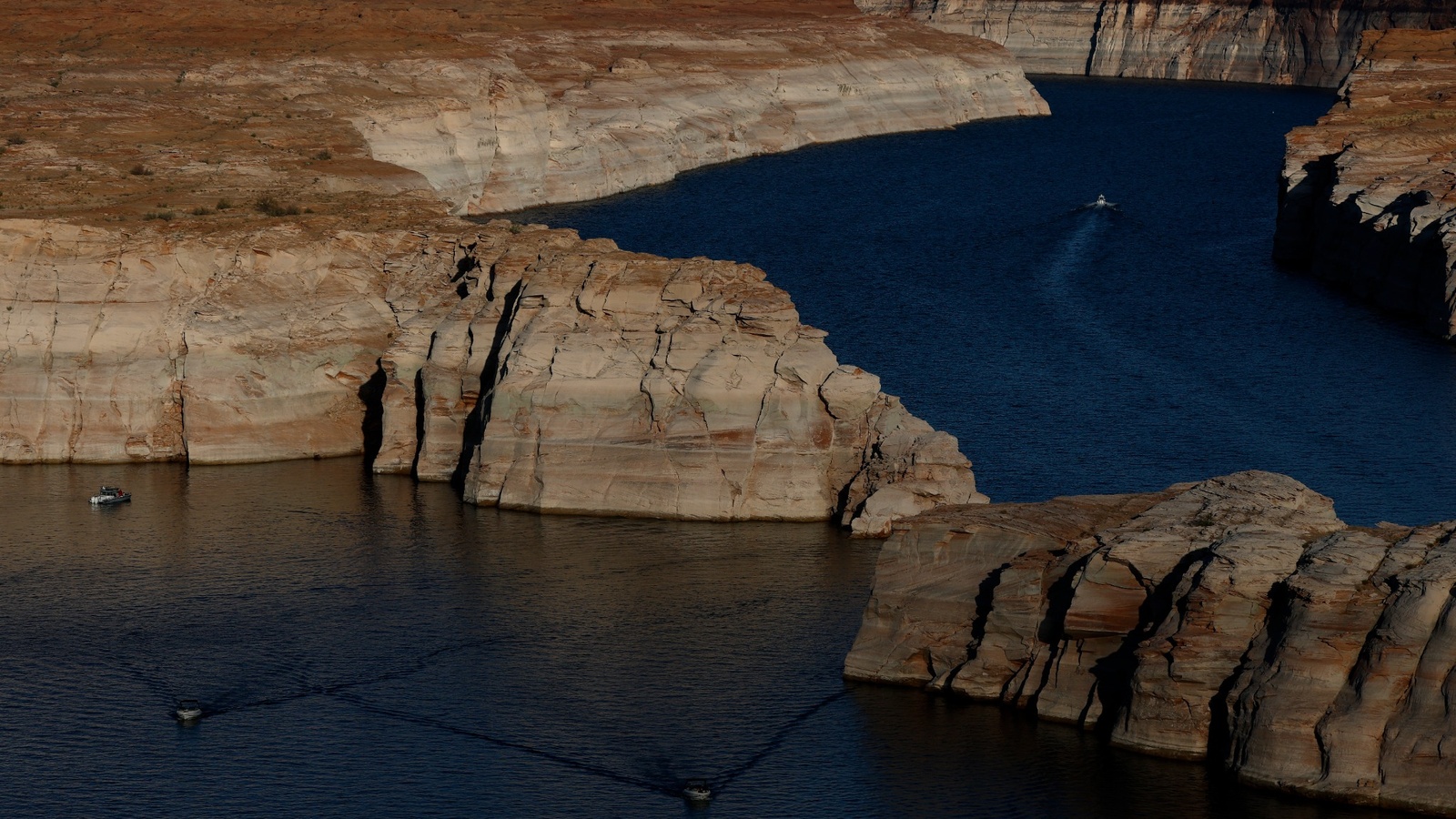
The 27-year-long drought in the Southwestern U.S. — the longest dry period in the last 1,200 years — is taking a serious toll on the flow of the Colorado River. Climate change is shrinking the snowpack in Colorado’s Rocky Mountains, the source of roughly 80 percent of the river’s annual flow, and higher temperatures are melting the snowpack earlier in the year, which saps runoff in late summer and fall. Warmer weather is also increasing evaporation from the river’s 40 reservoirs, including its two largest — lakes Powell and Mead.
Last month, Lake Powell, on the Utah-Arizona border, reached a record low, at less than 150 feet above dead pool, the point at which water can no longer flow through the Glen Canyon Dam’s bypass tubes to reach Lake Mead, behind Hoover Dam, 300 miles downstream. The low water levels reduced the generation of hydropower from both reservoirs, complicated how riverine ecosystems are managed, and slashed deliveries of water to the Lower Basin states of Arizona, California, and Nevada.
Farmers are fallowing fields. Developers in some areas have paused housing construction for lack of guaranteed water supplies. And the Bureau of Reclamation has curtailed its “environmental flows” — releases of cold water from Powell — which is threatening protected fish and preventing the buildup of sandbars that provide habitat for wildlife in the Grand Canyon. No matter how the river is managed going forward, observers say, ecosystems both downstream and up will see significant changes.
Faced with the prospect of even lower Colorado River levels, the federal and state governments have been scrambling to come up with ways to meet the competing demands of disparate interests that rely on its flow, from topping off Lake Powell with water diverted from upstream reservoirs, to slashing downstream water deliveries by 40 percent, to paying farmers to keep their allocations of water in the river. The crisis is even causing some to consider a fix once deemed unthinkable: draining Lake Powell entirely.