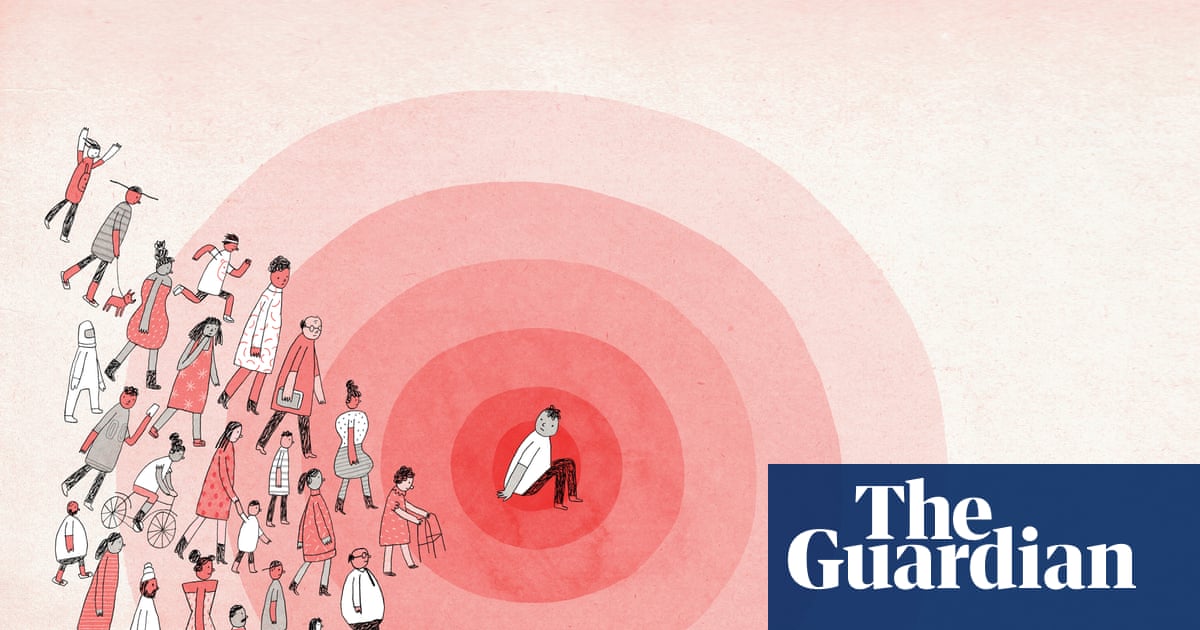
The home of 85-year-old Uta Frith does not exactly look like the latest front in the culture wars. Located in a serenely quiet corner of north-west London, it suggests a life still well lived, a set of deep interests and an idyllic kind of retirement. There are so many books that some are reachable only using a very tall ladder. The four hours I spend talking to her – and her husband Chris, an expert in schizophrenia – are an absolute pleasure. There is no sense of outrage or upset: even when I ask her about the stream of hostile and abusive emails she has recently received, she is relaxed and phlegmatic. “I tend to cope by just deleting them,” she says. “I don’t dwell on it.”
“It” is a reference to the controversy kicked up by her recently expressed views on a subject that sits at the heart of Frith’s academic career: what it is to be autistic, and who should or shouldn’t qualify for a diagnosis. Back in March, Dame Uta Frith – she was honoured with the title seven years ago – gave an interview to TES magazine (formerly the Times Educational Supplement) scattered with stark pronouncements. Among them was a claim that the so-called autistic spectrum has “gone on being more and more accommodating”, to the point that it “has come to its collapse”. Then, in August, she published a piece in the academic journal Psychological Medicine claiming autism was in dire danger of being turned from a “precise, clinical” term into a “vague, culturally amplified identity category”.
What she said has inevitably added to the cacophony of political and media noise about rising autism diagnoses. In the UK, there was a 787% increase between 1998 and 2018, with the rise greater for women than men, and the single biggest jump among adults; credible American stats have shown an increase across the whole population of 175% between 2011 and 2022, with the largest rise occurring among 26- to 34 year-olds (in both countries, childhood rates have also leapt up). Once, Frith agreed with the idea of a broad autistic spectrum; now, she has come to the conclusion that many people diagnosed as adults are so different from the autistic people whose condition becomes obvious in their early years and have learning disabilities that most of the former group do not merit the label “autistic” at all.
“Some of them, I think, are being wrongly influenced by social media to believe that they’re autistic, because it’s a possible way to explain your difficulties,” she tells me. “And then we have a subgroup of people who used to be called neurotic, who have all sorts of mental issues, including anxiety. And a kind of hypersensitivity.”
So, you’ve decided to be a gatekeeper. Fuck the people who can manage careers; we’re just wanting to join the club because it’s so trendy.
Also important to recognize that the expansion of symptom recognition has raised the numbers mostly because it finally allowed a lot of undiagnosed people who were not men and boys to finally get a diagnosis. Girls, women, intersex people, and trans and nonbinary people of all types were historically excluded from getting an autism diagnosis in favor of other diagnoses like hysteria, anxiety, PMDD, bipolar disorder, BPD, and psychosis.
A similar thing is happening with ADHD as well, where diagnostic criteria were expanded following years of symptom analysis, with the latest evidence showing a likely third ‘type’ in addition to the traditional hyperactive and inatentive types. It is one thing to say “New evidence shows we may have been lumping many disorders into one because we didn’t understand the mechanism.” It is entirely another to make the claim made here, that the terms now mean nothing because we have expanded our knowledge on the experiences of the people experiencing symptoms.
Yeah, that’s some hubric bullshit, for sure. She doesn’t like what reality did to her favorite bit of science, and now she wants to put up a velvet rope? Same as it ever was for all of us she claimed to care about. 🤮
deleted by creator