

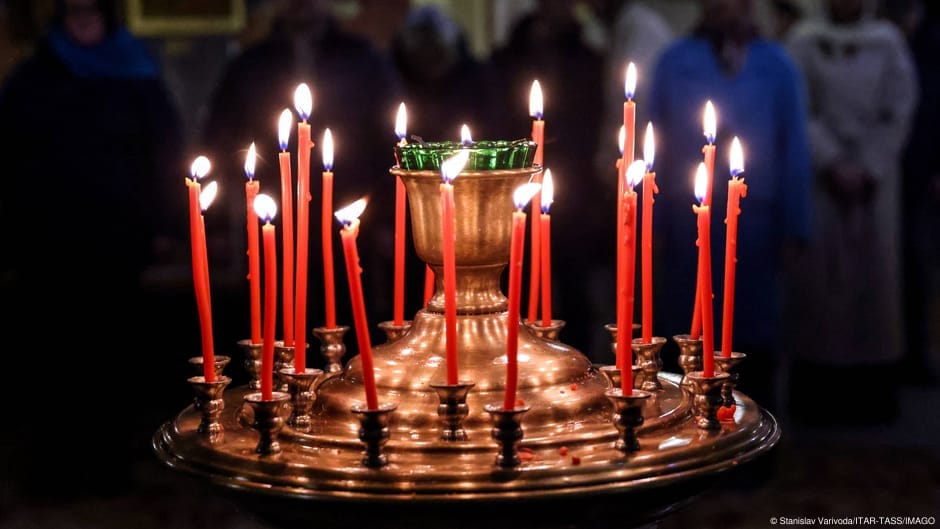
…
The German government report does not attempt to provide a statistical tally of attacks or the number of people facing persecution. Instead, it examines 30 countries as case studies where, in the federal government’s view, freedom of religion and belief is being restricted. These include about six countries each from Africa, Asia, and the Arab world. In Europe, the report focuses on Belarus, Russia, Ukraine, and Turkey, while in Latin America it highlights Mexico, Nicaragua, and Cuba. It also identifies shortcomings in five of the world’s six most populous countries: China, India, Indonesia, Pakistan, and Nigeria.
…
Regarding India, the report refers to “Hindu nationalist efforts” that threaten the equal treatment of all officially recognized religions. It states that the generally peaceful coexistence of different faiths is “repeatedly overshadowed by tensions and, at times, violence.” Both Muslim and Christian communities report growing intolerance and hate speech. According to the report, violent Hindu extremist groups have carried out a “large number of physical attacks” against Muslims, while the police and government authorities often respond inadequately.
In China, the German government identifies a “significant tightening of the legal framework of state control at the expense of freedom of religion and belief.” According to the report, this particularly affects Uyghurs, Tibetans and churches that lack official state approval and are subject to harsh measures by the authorities. The law on the “Promotion of Ethnic Unity and Progress,” which came into force on July 1, 2026, subordinates religion to “the formation of national identity” and patriotic education.
…
One of the countries where the situation has deteriorated most dramatically is Nicaragua, which has severely restricted freedom of religion and belief since 2018. The repression has primarily targeted the Catholic Church. According to the report, “intimidation, persecution, imprisonment, and expulsion” have forced around 130 priests and nuns to leave the country.
…
China is a particularly prominent example of religious and ideological tensions. Repression by Beijing in Germany primarily targets members of groups that the country’s Communist Party classifies as “hostile to the system.” These include Uyghurs, Tibetans, and members of the Falun Gong movement. According to the report, they are “also subject to surveillance and repressive measures in Germany,” while relatives living in China are pressured.
Thomas Rachel, the German government’s commissioner for freedom of religion and belief, and a member of parliament for the center-right Christian Democratic Union (CDU), hopes the newly published report will be “discussed in as many Bundestag committees as possible” and that members of parliament will “engage with the issue accordingly.” Previous government reports on the subject have been debated in the Bundestag plenary at least once and, in some cases, twice. Sweden: Hybrid warfare in a Russian Orthodox church
…
Genocide is bad, ethnic cleansing is bad, and plunging a third of any number of people, let alone two million people, is bad. This is the “balanced outlook;” anything more “balanced” than that is genocide apologia, plain and simple.
That’s the Israeli narrative, but it doesn’t match up with reality at all (little to no massacring of Jews was done by Arab armies in 1949, as opposed to Zionist armies which did a whole fucking lot of massacres). Also, the Arab states didn’t want to intervene in Israel; they did so under immense public pressure to stop the Nakba, which they do and then lose. This is classic “every accusation is a confession” material. You can look through the list of massacres in the War of 1948 and tell us who was trying to destroy who.
I’ve noticed that “genocide” (or other terms, such as “deliberate starvation” and “mass murder”) isn’t on your list of complaints.
Yeah surely it’s not because it’s committing one of history’s worst war crimes. Off the top of my head, Israel has killed the largest number of journalists in violent conflict in all of history.
TL;DR: Genocide apologia has no place here.