

- cross-posted to:
- gaming@kbin.social
- cross-posted to:
- gaming@kbin.social
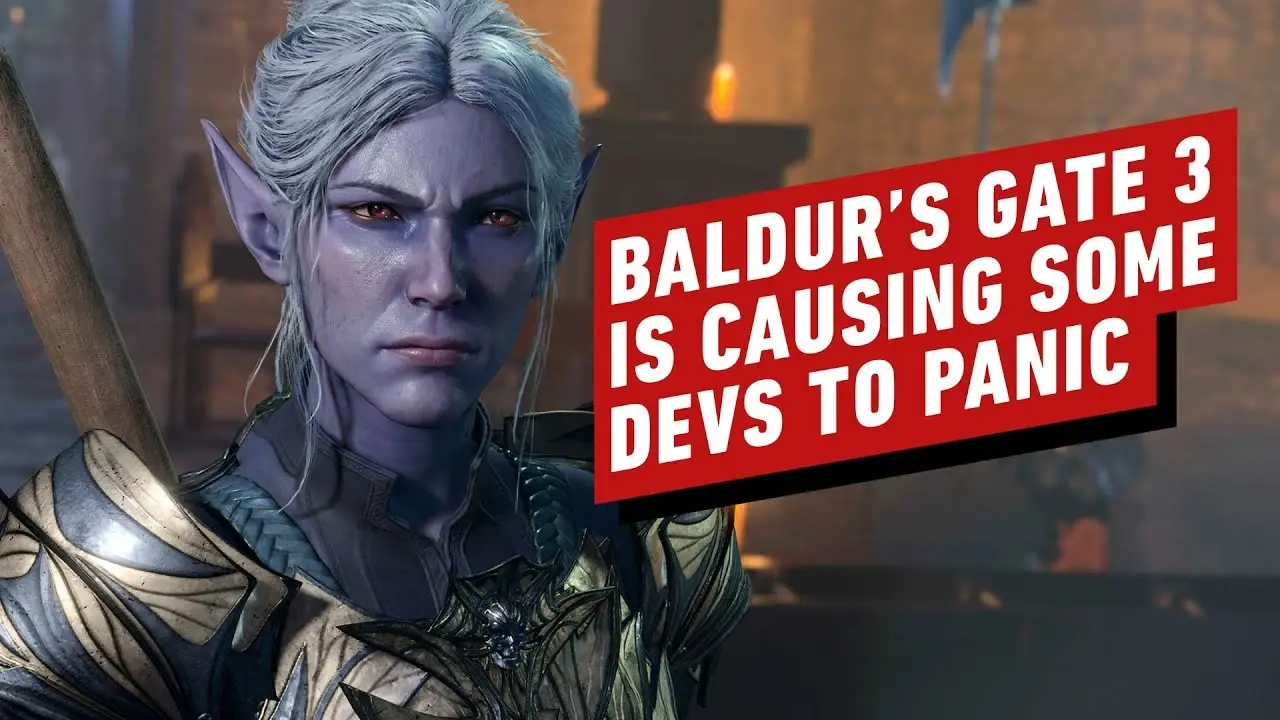
While Baldur’s Gate 3 is being widely celebrated by fans and developers alike, some are panicking that this could set new expectations from fans. Good.
You must log in or # to comment.
deleted by creator
I think by “some developers”, they’re referring more toward the AAA studios who have spent the last couple decades baking MTX into every nook and cranny they can find in their games, and not indie devs.
Honestly, nowadays it feels more like an indie studio is more of an indicator of quality than AAA. Most of the games I buy and enjoy are indie/small studios.
Honestly, nowadays it feels more like an indie studio is more of an indicator of quality than AAA. Most of the games I buy and enjoy are indie/small studios.
Larian is about as indie/small as Bethesda was when Skyrim released.
AAA games are very rarely as innovative as indie games, it’s all just the same rehashed stuff I feel like. Just whatever is “safe”.
So, I very much agree, the typical AAA stuff from studios like EA, Ubisoft, etc. Don’t interest me.
Although maybe Starfield will be interesting, we’ll see. I didn’t really like Fallout 4 though, I wished the RPGs were a bit more like the more old school ones lol.
I’m willing to be surprised by it, but I’m not optimistic for Starfield. What I’ve seen of it so far looks mainly like they grafted chunks of No Man’s Sky onto a Bethesda Fallout game and are trying hard to pitch it as The Next Big Thing. Frankly, I’d much rather have the next mainline Elder Scrolls game instead, but at this rate I’m going to be 40 before I get to play a sequel to a game that came out in my 20s.
They also lifted chunks of Star Citizen.
I’m fairness, incomplete chunks is all that exists of Star Citizen.
Well, that and a whaling operation on the scale of Victorian England’s.
I am in the SC club and it’s a glitchy, broken, incomplete mess while also being one of the coolest gaming experiences I’ve ever had when it works.
I saw a tier list meme that some teenager made on Discord of every game they’d ever played. You know what didn’t appear once on the list? Not a single Grand Theft Auto game nor a single Elder Scrolls game. I asked them why and they said because GTA5 and Skyrim are “old”
They’re taking so long between releases now that they missed an entire generation of gamers
because it’s more profitable to re-release those games over and over again and sell shark cards
deleted by creator
Even so they won’t be panicking. They can just pull a trusty piece of IP out and slap some microtransactions on it and the core target group will be all over it.
The video tries to imply it’s industry wide, but only show 3 tweets. I’ve also seen nothing but praise from other game developers I know.
deleted by creator
I sware that’s happened with all big games of late, Elden Ring, TotK, etc. A few Devs decide to be contraian to the praise and then the media decides it a huge backlash.
That’s just modern media, they often write about the internet exploding about something and then it’s just a few tweets from random people.
A few Devs decide to be contraian to the praise and then the media decides it a huge backlash.
They are not even criticizing the game.
The opinions are basically either “Smaller studios won’t be able to replicate BG3” and “Not all games/RPGs need to be as deep and long as BG3”.
It a headline says “some” in it, it’s clickbait.
deleted by creator
deleted by creator
deleted by creator
deleted by creator
deleted by creator
deleted by creator
deleted by creator
Not even close. I’m playing it right now, well into act 2, and while it is THE ultimate example of what a cRPG should be, that doesn’t necessarily mean the breadth and scope would work in other genres. You’re WAY overestimating the impact this is having on the gaming industry, and that’s evidenced by how other developers are responding to it.
Also. I’ve played through all the Mass Effects (even Andromeda, which I actually enjoyed more) and to say that it was industry-defining is a fanboy take. Full stop. From where I’m sitting ME1 did not introduce anything groundbreaking that hadn’t been done already by that point, and to be honest the early Fallout games had way more gravity when it came to choices and decision-making. I’d say of games in that era, the original Borderlands was more ground-breaking given it kind of kickstarted the looter-shooter genre, and that’s a stretch.deleted by creator
Then again, it might have just preemptively killed Starfield.
They’re pretty different games. They’re both RPGs, and there’s some overlap, but turn based is ultimately very different gameplay than action, and one isn’t going to scratch the itch for the other to a lot of us.
deleted by creator
I’m fully expecting to go pretty hard at both, and BG3 might have me engaged enough to not jump straight into Starfield at launch, but I need immersive 3D games, too, and except Elden Ring which is it’s own thing (even if it does pretty comfortably check the boxes of ARPG), I’ve been waiting for something of comparable scope to Skyrim that doesn’t have a fatal flaw for a long time. Even as old and janky as it is now, it’s still a scale that’s only matched by a handful of games in the decade since.
The beauty of Bethesda’s flagship titles (namely Fallout and TES) is even if they end up as buggy messes upon release, or have empty maps, the modding community corrects those flaws relatively quickly.
It’s one of the reasons that I, a long-time veteran of S.T.A.L.K.E.R., am not worried if GSC Game World fucks up S.T.A.L.K.E.R. 2. Today, the best part of the first titles is the mods that fix, improve, and add content to the games. It’ll be the same with this one, and I’m excited to see what people do with A-Life 2.0.
in the last decade we’ve started to see games really take shape as cinematic masterpieces. Experiences that truly top movies.
Metal Gear Solid is from 1998
deleted by creator
Real talk. I don’t game on console anymore, but Metal Gear Solid is the crowning jewel of console game plots.
Ever tried explaining the series to someone unfamiliar with it? You end up sounding like a fuckin meth head coming off a binge, and to me that makes it a narrative worth diving in to.
Yeah, it can and should be a warning to studio heads, but as game consumers we absolutely should raise our expectations (and stop buying micro transaction crap). There are plenty of big studios with money who could buy the licence and spend years making the game, but those studios belong to the big publishers who optimise for profit not for game quality.
Man, parts of Death Stranding were so interesting they should have won movie awards. Brilliant supporting character/mocapped actors. Couldn’t agree more on that front.
Click baiting video. Other devs don’t care. As long as they can make money pumping out mediocre games then they will continue to do so. Acting like this is the first good game to come out in a decade or something.
DEVs do care. As a developer working on something you want to be proud of it. Publishers do not care.
The individuals working on the game might care.
The managers who make the decisions don’t. Doesn’t matter if they are a publisher or the development company itself. It’s a bit blurry these days anyway, what with how easy it is to self publish and how many publishers have their own internal development studios.
The managers who make the decisions is also unclear as power differs on the company. They could care all the way up to the CEO but if the CEO puts an unrealistic deadline, the game has an unrealistic deadline
Looking at how many games have stood in Dragon Age: Origins’ shadow over the past decade, I get the sense that lots of studios wanted to create the true spiritual successor but couldn’t come up with the resources to do so.
Or if not lacking resources, definitely lacking the creative freedom.
BG 3 is so stupid, it’s not even optimizing micro transactions for maximum profits
How am I supposed to feel a sense of pride and accomplishment without paying for my dice rolls?
Wonder what a divine crit roll would cost, $5 in combat $3 outside? Heck that’s too complicated $10 for all, $7 for season pass holders.
For those wondering there is no season pass.
They would have to also start charging to save scum. Why would I pay $5 for a crit when I can just reload my save and try until I get one? Every new save is $0.50 and every reload is also $0.50.
Fuck it, exiting the game now costs $2. We need to recoup the opportunity cost of you not being somewhere you can be directly marketed to.
How can I save time and pay to skip playing the game?
Unity CEO has entered the chat
“Leaving money on the table” must be the exec’s perspective.
“Oh no fans might demand good games at release! The horror!”
Won’t anybody think of the stockholders‽
Oh no, if people remember that games are supposed to be good, no one will buy our lootbox-infested crap anymore.
Good.
Loot boxes are so 2017. It’s all about battle passes, engagement, and player retention now.
You know what creates engagement and retains players?
Making a good game that’s actually fun to play instead of focusing on how you’re gonna sell me hats and paint jobs and weaponizing FOMO.
But however will the poor shareholders get their value this quarter?
Someone think of the shareholders!
Oh I am thinking of them… how to murder shareholders in various unique ways… could be neat game idea too!
deleted by creator
I wonder if the TF2 “buds” item is still used as a game-trading currency.
Sorry, but the other methods are demonstrably better at it. We didn’t arrive at them by accident. There are outliers like Civilization keeping people hooked for years; the people still playing Skullgirls all these years later sure aren’t doing it for any type of reward system. But the fast track to keeping people playing your game is to use all the scummy bullshit.
I wonder why they haven’t tried the model airport books and comics use, though. We could do it with games at this point. Like, make a series of games that are low budget, relatively short, and easy to pump out very quickly, but with a distinct series identity and maybe a consistent writer/artist across games. Then make a lot of them and get people hooked on the series instead of on 1 mega game.
Even just text adventure style games, wireframe arcade style games, bullethells, shooters like Vampire Survivor & etc, visual novels, syuff like Undertale, whatever? I think it’s clear that a low budget or small team doesn’t equate to unpopularity these days, if the game is made with care and attention to detail.
We do have series now but they’re high budget and long and kind of also trying to be the 1 mega game at the same time.
There’s also a lot of options for reaching new/underserved audience. Like. Make a high quality horse game for once, please? And profit off a bazillion horse girls who’ve been waiting for just that for decades.
Or make games for other countries that don’t have a big video games market yet, maybe. Like sell a console real cheap, at a loss, and then sell games in an area where there’s less competition? Maybe.
a series of games that are low budget, relatively short, and easy to pump out very quickly, but with a distinct series identity and maybe a consistent writer/artist across games
Telltale has entered (and exited) the chat.
One example might be Fnaf (before security breach or help wanted), since they are relatively simple, short games made by one guy, not on high budget. Most of them launched like 3-6 months after each other, keeping up interest in the series.
Something big aaa games also miss is the creativity, since a cool gimick can be implemented as a main mechanic in a 1-2 hour game, since it doesnt over stay its welcome.
So yeah, most games are getting too long for their own good (like ubi sandbox games), not to mention the ‘games as a service’ games.
I wonder why they haven’t tried the model airport books and comics use, though. We could do it with games at this point. Like, make a series of games that are low budget, relatively short, and easy to pump out very quickly, but with a distinct series identity and maybe a consistent writer/artist across games. Then make a lot of them and get people hooked on the series instead of on 1 mega game.
I think that’s exactly what Fortnite and Destiny 2 do, even though I object to the way they do it for so many reasons.
Like, make a series of games that are low budget, relatively short, and easy to pump out very quickly, but with a distinct series identity and maybe a consistent writer/artist across games. Then make a lot of them and get people hooked on the series instead of on 1 mega game.
Urban Games currently does this with Transport Fever. They flat out said while hyping the release of Transport Fever 2 (which was their third transport tycoon style game) that their goal as a development studio is to make the best transportation tycoon game they can. So they intend to continuously iterate.
N3V Games, who developes the Trainz simulator game was literally formed to buy up the property and talent from its original developer Auran and continue the franchise
There’s a third example I was going to give but got distracted while writing this comment and forgot
people remember that games are supposed to be good
I’ve played a lot of great games in the past few years 🤷♂️
If you have to panic because a competitor makes a good game maybe you should reconsider why you’re a game developer in the first place. If it’s not to make the best games you can make, you shouldn’t be a game developer. I’m guessing the developers panicking aren’t the ones who pour their heart and soul into every game they make.
Maybe release 1 good game every year or two instead of 10 mediocre games a year to make as much cash as possible.
I don’t have a convenient way to play this game at the moment, but I’ll pick it up as soon as I get a steam deck.
Sir, allow me to introduce you to capitalism
Yeah! This is why I’m mostly play retro games before the j turner was introduced to consoles.
The ultimate enshittification speedrun
The companies we’re all complaining about stopped making 10 games per year a long time ago.
deleted by creator
My counter to that is the last 2.5 BioWare games - I say 2.5 because Dreadwolf has been in development for ten years total now and still isn’t out. Andromeda was in development for 5 years. Anthem had money galore thrown at it until it came out. Too many devs, not just BioWare, are wasting years of development time because they haven’t got a clue what they can feasibly make then rush to get things out the door.
Instead of making excuses for why gave dev is the way it is now - a way that isn’t working - maybe look at what Larian did right and ask why more studios aren’t doing that. Early Access is normal used by indies with overinflated budgets? Well, why aren’t larger studios taking advantage of it or using systems like it?
The new normal for a have to be developed is turning into 5+ years, and there’s no excuse for the hot messes that have been coming out lately.
I’d like to ask…why are publishers even required anymore? Games don’t need physical releases anymore. You don’t need a publisher to host a zip file on a web server. Storefronts let indie developers self-publish so why do the big names still fall for the publishers who exist only to enshittify gaming anymore? They bring negative value to the industry.
They bring funding when you have none. Also marketing. How likely are we to have heard of The Plucky Squire without it being featured alongside several other Devolver games?
Because all those things make it possible to release independently, it’s still not easy. Marketing and getting exposure is hard, it’s a totally different skill. With a publisher, you don’t have to worry about any of that - you might even get funding up front.
Personally, I still think it’s worth doing - I’m in that position, and although I’m having a lot of trouble getting off the ground, at least I’m free to follow my visions
But I get why people would do it. A slice of a big pie is worth more than all of a tiny one.
It’s also stressful if it’s not in your skillset - I’ve started using chat gpt to rewrite my announcements and such. Before I’d stress trying to put them together and focused on being clear and honest, but no one was reading them. I find it worse than public speaking, at least when I get on stage I’m too busy to feel self conscious.
The stuff I come up with using chat-gpt is a bit cringe, but at least people read them - sadly corpo speak draws people in
The only thing I can think of is branching dialogs in RPGs. J. Sawyer said that better than I can: https://youtu.be/eeUwPLxsp7Y
deleted by creator
deleted by creator
Well it’s main competitor also collapsed on it self, maybe it’s just hard to do?
main competitor also collapsed on it self
Elite Dangerous is alive and well, thank you. I still play it.
Developers? Panicking? Developers will rejoice that they don’t have to build these garbage mechanics. Publishers and game studio execs? Yeah they’ll panic
Honestly I hope this does indeed set a new gold standard. Probably not with the whole early access thing, though. It’s a thing that needs to go away.
EA is an immensely useful tool for game devs, the issue is EA as an excuse to ship unpolished games or to leave games unfinished forever. Neither of which are problems intrinsic to early access, they’re just bad business practice that should be shunned like any other
As a gamedev: Early Access was useful for devs, back when it was real Early Access. Think: Kerbal Space Program (the first, not the second).
Nowadays it’s mostly a marketing tool, that allows to generate the hype for launch twice… Publishers and players expect “Early Access” games to be feature complete and polished before the “Early Access” launch…
And again, Larian Studios used EA as intended, which allowed them to publish a good, polished game.
As did Supergiant, with Hades. When Early Access is used properly, it can help make a great game.
I liked what Daemon X Machina did, where they released a demo, sent out questionnaires to everyone who downloaded it, published a video about the results save how they were planning to act on it, and a few months later released a new demo with a new questionnaire.
Yep, that’s probably the most helpful thing for devs. This sadly often conflicts with publishers’ announcement schedules. There are, however, companies that do NDA-protected play-tests, where you get the same kind of information, without publicly announcing the game.
Ubisoft did (does?) it to a degree with their Rainbow 6 TTS (beta) servers to test the sandbox and did so for a few technical alpha/beta releases acting as selected pewviews to see how the game is received and where bugs are.
Early access worked well for them, part of the start of the game was able to be play tested, the community got to give feedback, and they actually listened, its how it should be done
Yeah but not how the remaining whole industry treats it.
I saw literally no outcry regarding BG3 and early game bugs. Comparing it to CP2077 it was a stellar release in terms of PR.CP2077 didn’t have early access tho? How is this an argument against early access
I don’t think Early Access should go away as it’s not inherently bad in and of itself.
What’s bad about it is when it’s used to sell a totally unfinished piece of shit that stays an unfinished piece of shit indefinitely.
Making bad developers panic maybe?
I can’t imagine something like this makes the Redfall devs feel good about themselves.
Actually Redfall likely doesn’t make the Redfall devs feel good about themselves.
Wasn’t the whole thing with Redfall that it was Bethesda mismanagement? I’m not going to put that on the Redfall team. Does make me completely disinterested in buying any Bethesda games that aren’t mainline TES though.
Looks like it went way deeper than that…
https://www.escapistmagazine.com/redfall-development-lost-70-percent-staff-arkane-austin-prey/
That’s just part of the mismanagement.
What worries me is that one of the leakers who was leaking shit about Redfall prior to release who was 100% correct about everything, also said he saw Starfield and it was in worse shape than Redfall was. It’s obviously coming out later, but not that much later.
Starfield is a Bethesda game proper and it’s wise to have appropriate expectations. :)
I forget, on launch wasn’t Fallout COMPLETELY broken for Nvidia cards? Or was it AMD? I can’t remember, it was one or the other…
While true, the state of Redfall was far worse than the expectation for a mainline Bethesda RPG (comparatively), even as bad as they have been in the past. So saying Starfield was in worse shape still has some hefty weight to it, if the leak is true. It will have at least had more time in the oven for things to be fixed up a bit more in line with normal expectations. And that’s my hope.
Plus, Microsoft needs a win, especially after Redfall. They need this one to be hit outside the park.
That’s upsetting. I was never going to play Starfield, but I want games coming out to be good. We don’t need another dumpster fire like the CP2077 launch was.
Such a shame, I was immensely sold on the initial trailer. I did not even end up playing it
For what it’s worth, I thought it’d be horrible from the reviews and ended up trying it anyway, and I actually really enjoyed it. shrug Rather feels like I played a different game than everyone else.
I’m sure it’s partly the difference between starting with rock bottom expectations vs starting with Prey/Dishonored expectations, but I think even without that I’d like it.
Also, it has no micro transactions! Zero. Not even for cosmetics - those are just unlockables. Credit where credit is due.
Anyway if you liked the look of the trailer and you have gamepass, it’s worth at least trying, imo.
deleted by creator
It’s faithful enough to 5e that my partner and I broke out the players handbook to do some long term class planning together. A couple of things are different, like buffs to frenzy barbarian and changes to roleplay feats or spells to have a more mechanical benefit.
But yes, as a long term DM for 5e, it’s faithful to 5e.
deleted by creator
Larian has been absolutely phenomenal through their process on both of these. Kept with the ‘it’ll release when it’s ready’ model, the exception with the alpha/early release on BG3 which I would say helped improve the quality of the Release product that much more, through testing/reports and cash influx without the ‘pre-order today, get whatever you get tomorrow’ mantra.
deleted by creator
The most significant change I noticed was you can cast any number of leveled spells per turn. That’s a pretty significant shift from 5e’s rule of only one leveled spell (excluding using action surge if you dip into fighter) per turn.
However it makes the player stronger so I doubt anyone is really complaining about it.
deleted by creator
It gets a little silly if you exploit it. Sorcerer can get pretty ridiculous.
I’ve been playing BG3 and perhaps I’m misunderstanding but you only have one action and one bonus action per turn and you only have so many spell slots per caster. Unless you have a leveled spell as an action and a separate leveled spell as a bonus action and enough spell slots for both you’d be hard pressed to cast more than a single spell per turn per character
It’s been a while since I played 5e, but if I remember correctly you could do some fuckery with Haste and/or Sorcery Points if you don’t follow that rule.
Plenty of spells cast as a bonus action. With a cleric I can cast Spirt Guardians and Spiritual Weapon on the same turn. Or polymorph and mass cure wounds. It makes a significant difference for bonus action spells.
BG3 is what games used to be and what they should have been like. It bring me back to my KotOR1/2, and Witcher 1 days. It’s great.
deleted by creator
In similar fashion, EA/Dice woukd have desperately tried to ignore battlebit.
4 devs made a game that is better in nearly every way than any of the last few battlefield games in their spare time.
I hope AAA studios clear house and find a new formula that doesn’t ruin good IP.
dice is the perfect example of a studio with the worst kind of incompetent people in charge of game direction
they released a great game in battlefield 1 and went to shit after that chasing trends and monetisation strategies over everything else
(shoutout to the guys who worked on base gameplay of BFV, they got fucked over by dumb decisions from higher up)
Battlefield 1 is still good. God it’s fun to play. Though they left balance kinda weird on the last update. I wish standard issue rifles were better than the theoretical automatics that most soldiers didn’t have, or the ones that were invented in the last week of the war.
Or Hogwarts Legacy, which did the Ubi formula without the nonsense.
HZD is also extremely Ubisofty, but done right.
How does it cost millions of dollars to make a current AAA game, and they’re rarely worth it?
If you have 5,000 people on your payroll for a game what the hell are they doing? Every game should be fantastic.
I love indie and AA games. Smaller teams. More focus. More fun. Usually more quality content.
It’s an issue of time and scalability. Going from 100 employees to 200 employees wont make the game in half the time. And corporate accounting would rather have 2 mediocre games per year than 1 extremely good game every 2 years, even if it sold 4 times as well since revenue is analyzed within fiscal years and financing isn’t free. Capitalism sucks.
Capitalism sucks.
All the greatest games ever made were created in capitalistic economies so i cannot see how that is a determining factor. I don’t know what games your thinking of. Tetris?
I think you’re missing the point. They’re just saying the incentive structure of capitalism doesn’t necessarily encourage the best types of games. We see this with borked EA launches, predatory MTX, loot boxes, battle passes, etc
I think there is a difference between “capitalism” and “capitalism”.
I think a more nuanced argument is that better games come from companies that are not primarily driven by the quarterly revenue cycle of Wall Street, that is defined as “capitalism”.
I think it’s more of a hit-and-miss, and good corporate leadership is the kind that people forget it’s there when good games come out. I mean CDPR had a CEO both when Witcher 3 was the thing, and also when Cyberpunk 2077 was the thing that flopped. Obviously, people were more interested in the beancounters’ influence in the latter case.
We don’t exactly have many non-capitalistic economies.
But we have games that people made outside of the incentives of capitalism. i.e., because they wanted to make the game they wanted to make. This is what has created the absolute best games in existence. Not the incentive of money.
Was terraria made for the purposes of money? Was outer wilds? No. They were passion projects. Of course they had to earn money, because you need to earn money to survive, but that wasn’t their primary goals. Contrary to games such as call of duty or whatever. Which are just incredibly bland in comparison.
I mean see how much microtransactions, loot boxes, etc. Is ruining the atmosphere of games and exploiting the hell out of people and kids. Don’t tell me devs are putting that in because that is what their dream game would contain. No, they put it in purely because of capitalistic incentives. Would you argue that that is good?
Making a good product is an incentive of capitalism too. Microtransactions, battle passes, loot boxes, and other “live service” trappings dilute once-good products because people are often too attached to brands. As people tire of bad products, good ones can come along and thrive, which is what Battlebit appears to be doing for Battlefield fans, what Baldur’s Gate 3 appears to be doing for RPGs, and what Elden Ring and the last two Zelda games are doing for open world games; what Cities: Skylines did for SimCity fans and maybe what Life By You could do for Sims fans. There’s money to be made for making a good version of something that the reigning champs screwed up, abandoned, couldn’t think of, or didn’t bother to bring to market; that’s capitalism.
Do you think those games wouldn’t have been made without capitalism?
All of those examples are driven by people wanting to make a good game because that is their passion.
If they were given infinite resources to make a game, and would gain nothing else beyond just a decent standard of living or whatever, do you think they wouldn’t made them? Because I think they would.
How hypothetical are we getting here? Somehow we live in a world where everyone has infinite resources? Capitalism just distributes the finite ones we have to things that people buy. A government can do that as well, but we don’t have a great track record of them being able to buck the realities of where those resources need to go. If there’s a UBI, you could end up with more games of the scope of Stardew Valley, or once tools and game engines get to be good enough, you could end up with more games that are feasible to be made by one or two people in a handful of years like that one was. But Baldur’s Gate 3, Elden Ring, Zelda…no, probably not. I can’t predict the future, but they seem to be impossible to be made by small teams even with magical game engines that automate a lot of work that went in to make them.
Once you get beyond the profit motive, you’re now at this point where you need to hire more people. Anything beyond really small teams are going to have a hard time sticking to someone else’s vision unless one person is the boss calling the shots; otherwise known as the one with capital, paying those other talented people to work toward that goal. Of the 600 people making Baldur’s Gate 3, I’ll bet 550 of them disagreed on lots of directions that it went in, and it just becomes an insurmountable problem to wrangle that many people otherwise and keep them on track. If you don’t need the money and you disagree with what the boss is doing, you’ll just do your own project instead.
Meanwhile, we just got a Titan Quest II announcement, which I’ll bet is a reaction to the general direction Blizzard has been going in since Diablo Immortal was announced, much like I was saying earlier. There’s also another perspective I’d like to add on here, which proves both of our points. Ryan Clark of Brace Yourself Games, makers of Crypt of the NecroDancer, used to do a YouTube show called Clark Tank, similar to Shark Tank, talking about how to make indie games that make money. Creatives have tons of passion projects they want to make, and you’ll never get through all of them in a lifetime. However, you know types of games that you would like to make, that you can observe are also making money, that you’re confident you can deliver while they’re still popular, so that you can profit, expand, and repeat the cycle. In a sense, passion projects and what the market is asking for via where they’re spending their money.
My point was that capitalism and its incentives do not create good games.
Capitalism rewards profit at any cost, and nothing more. In the end this allows for cash grabs and terrible working conditions, which the industry is riddled with. Good games would still have gotten made without these incentives.
There’s many assumptions in this text, and it ignores great games that were financial flops (or couldn’t get made in the first place), and terrible ones (like gacha games or basically the whole mobile games ecosystem) which are greatly rewarded and successful. There are so many resources wasted on objectively not good things for players such as how to exploit their psyche to spend money which compromises the game design, or resources spent on stuff like marketing just because that’s what pays back, instead of spending those on making a better game.
I would argue that capitalism’s incentives hampers the creation of good games if anything. Because now instead of thinking what makes a game good, devs are instead forced or incentivized to think what makes money. And they are very much not the same thing.
deleted by creator
Counter point: Baldur’s Gate is selling well within capitalism because it satisfies what the customer wants, which capitalism rewards in an environment with lots of competition, and video games have lots of competition. As big publishers like Ubisoft, EA, Activision-Blizzard, and Take Two have scaled back their offerings of lots of different types of games, including the type of RPG that Larian makes, it’s no surprise that the likes of Larian are rewarded for making that type of game. It’s why companies like Embracer, Anna Purna, Devolver, and Paradox are going to be growing a ton over the next decade.
Trust me, I get it and I agree, #capitalism sucks. Mostly.
But that’s not how it works.
You can’t just take an arbitrary event and claim it came to be despite the circumstances, not because of them.
Like, that’s not how causality works.
Besides, It’s a way stronger argument to point at the overwhelming amount of bad games and bad features and say those got produced under capitalism and that’s why it’s bad full stop.
deleted by creator
Without capitalism Tetris would have remained an obscure piece of shareware probably vaguely known outside of ex-soviet nations. It’s only the desire to monitise the IP that saw it on every platform under the sun and packaged with every Gameboy.
deleted by creator
Yeah, the creator didn’t profit at the time because of communism and their belief that his creation belonged to the state. If he had been in a capitalist country at the time he could have copyrighted his game asap and exploited it for profit himself.
deleted by creator
At the very least a smart creator in the US can go to a solicitor and make sure he isn’t being mugged off before they sign a deal, you didn’t have that that with the Soviet Government.
Yes lots of creators have been screwed by the people that worked for, notably in the comics field. But a lot of the time it’s because they signed a contract having no inkling how big the work would be.
I know that’s probably rhetorical, but probably a similar problem to modern movies where (as described in the video
Why Modern Movies Suck - They're Too Expensive) they are going after spectacle (rather than story or other elements) and due to cost they must make a ‘safe’ product to stay profitable, where a bland but universally palatable product will sell more tickets/copies than a stellar niche thing.I’d also add that companies know they can usually ride the success of their own name/brand recognition. Even worse here with games because of pre-ordering, early-access as a product, and crowd-funding (which some wildly successful publishers still do–on top of unpaid self-promotion and all the other things–because people still think of them as indie).
The main problem is they drop $20mil on effects and star faces and fucking spend $20/hr for a fucking committee to write a story in a week that wouldn’t pass a screenwriting 101 course.
The problem with movies and games these days is where the money goes, not how much of it there is.
Did you intend to link you the video you mentioned? Because I’d like to watch it.
I gave the title of it and I figured that would easily be found (title only because it was something I saw in not-logged-in YT recommendations, figured others may have seen it too).
But here it is since I’m making a comment now: https://www.youtube.com/watch?v=9FQgp_sLGjg
Thanks!
games are art projects at the end of the day and there are often many non-art people (or just people without the right skills or vision) making executive decisions on direction, deadlines etc.
Usually they don’t. Something like Horizon Forbidden West credits almost 3500 people even though Guerilla Game has less than 500 employees, most of the rest is absolutely massive bloat from different outsourced teams and Sony departments - like the “Head of Opportunity Markets Business Operations Tim Stokes from Sony Interactive Entertainment Inc.: Global Business Operations” was undoubtedly very important for the development of the game.
As for Baldurs Gate 3, Larian Studios currently has 450 employees in 6 different locations, so they are actually around the same size as Guerilla. I wouldn’t be surprised if the credits end up being well above a thousand people (D:OS2 has around 500 credits even though Larian back then had only 130 people).
Battlebit has 4.
4 people. That’s it.
No… no its not.
Other developers appreciate art.
deleted by creator