What the actual fuck⁈ “Batteries can catch on fire.” Sure, whatever could go wrong with a 1000l tank of FUCKING GASOLINE.
AAAaaaaHHhh I hate people!
You’re aware that diesel is quite hard to catch on fire
No it’s not. It’s harder to catch fire than gasoline.
It still catches fire easily.
You can toss a lit match into a puddle of diesel and the match will go out. Diesel burns, but since it doesn’t evaporate as fast as gasoline, you don’t have those flammable gases hanging in the air. A trail of diesel that’s being burned at one end will not spread, unlike gasoline.
Okay
Gasoline doesn’t burn that easily, either. Cars with gas tanks don’t burst into flames while sitting powered off in a garage. Even when they get wrecked they don’t usually burst into flames.
On the other hand, gasoline is slowly causing the world to burst into flames…
Well yeah… You need a spark to cause a fire. To have ignition you need oxygen, fuel and a spark.
Nothing burns easily if there’s no spark.
Gasoline burns accidentally when fumes are released, as the stoichiometric mixture has to be pretty specific to combust.
Gasoline in a gas tank does not achieve this mixture. That’s the entire job of the fuel pump and throttle in modern cars. As the other user said, there are lots of sparks and live electricity in a car crash, it’s just not easy to set gasoline on fire or make it explode.
Diesel does not appear to achieve this vapor mixture readily at standard temp and pressure, like gasoline does, and therefore is technically safer in this specific regard.
Okay.
There are plenty of sparks in a car crash.
Gasoline doesn’t burn that easily, either. Cars with gas tanks don’t burst into flames while sitting powered off in a garage
Diesel combusts at 140 degrees. A care could reach those temps in a car accident as well if we’re making that argument.
That’s why he said gasoline tho
But that’s not relevant for busses
Meanwhile on the Autobahn:
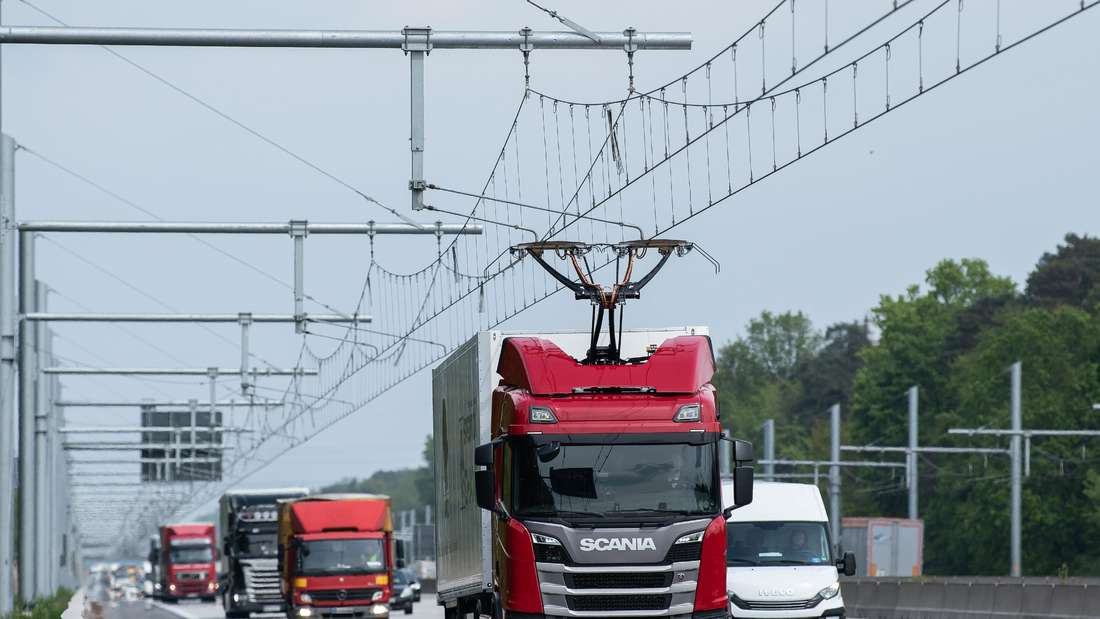
WTF Germany how did I not know this was a thing and why aren’t we doing it here in the US?
Question though. Obviously the wires can’t cover every road and the truck sometimes has to drive off the wired road. Do they have small batteries to carry them between the wires?
There are 5 testing areas for this atm and only a handful of trucks which use that. These are hybrid trucks having batteries and electrical engines besides the main traditional diesel engine. So it’s far from an widely adopted tech right now.
deleted by creator
Let’s face it: in most US cities there probably isn’t much aesthetic for the power lines to spoil. Just like in the grey Soviet cities where they come from
Greetings from Winterthur, a pretty nice, human-friendly, town in Switzerland which bunch of old buildings. Also called the bike-city of switzerland. It turns out that the trade off is worth it. I rather have power lines than cars or fuel powered busses.
Meanwhile in Australia:
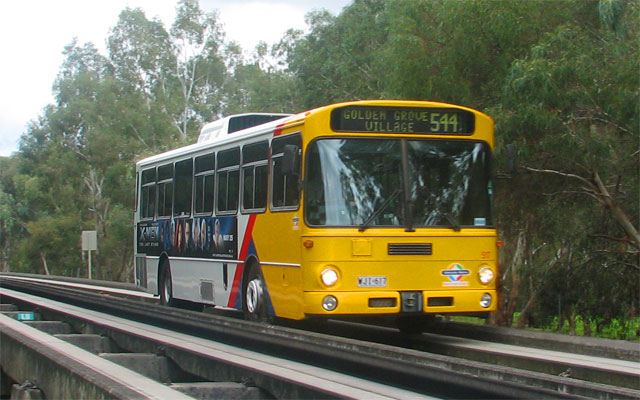
What am I looking at? A diesel bus on rails?
Pretty much. This is the O-Bahn in Adelaide. More info (and the original picture I shamelessly ganked) here: Wikipedia link
We have something similar in the UK, guided busses.
Holy shit, I didn’t know that. I always thought the O-Bahn was a unique piece of Adelaide weirdness. Adelaide has a lot of weirdness.
We have these in Vancouver, a lot of them. And a few battery buses as well
How are they?
Works just as well as the diesel buses. Sometimes they hop off the guide wires and the driver has to get out with a fibreglass pole to reattach them but that usually only happens due to driver error
The torque on these things…
Ehhhhhh! A fellow Vancouverite! Greetings from Scotland!
Buses are lame. They combine the cons of public transit with the cons of driving a car in a city. I believe in tram surpremacy.
Buses > trams. Something breaks down in bus lane? Bus go round. Breakdown on tram track? Tram stuck.
I love trams, light rail, and subway systems. I’ve had to think long and hard about why. Busses have notable advantages for flexibility and redundancy in the system, so why do I prefer to use a railed transit solution?
For light rail, grade separated trams, and subways it’s easy: they’re faster in the city. Like… WAY faster. They don’t fight traffic so I wait a few minutes (at most) in any city with real transit solutions, ride for a short bit, hop off, and I’m there. Not having to deal with my car is freedom.
So… trams… why trams over busses?
First of all they’re bigger. There’s more elbow room and it’s easier to get on and off. It’s easier for a group of people (see: me and the kids) to all climb on and make room. The doors are larger and it’s easier to use multiple doors to load a large group so the people getting on and off a tram can go much faster. There is less shuffling along trying to wedge yourselves into the tram like you’re forced to do on a bus.
Second, they’re predictable and have a visible route. When I’m walking around, I can tell where the tram will be because I can follow the rails. I don’t have to guess what the route will be or where I should go to meet it. Yes, busses have signs every so often, but it’s not nearly the same as seeing the rails and knowing I’m on the route. This is especially true if they do move the bus route (which is what everyone who advocates for busses says is a good thing), and I don’t know it. The bus is just gone.
Thirdly, the tram drives in a predictable path. I can be near it and know where it’s going to go. In fact, whole big crowds of people do it all the time in plazas in Europe. You can walk near the rails and know that you’re still safe. Check out the plaza in front of the main train station in Amsterdam. They chose to run the trams right through it, but not allow busses since they weren’t safe and predictable enough.
Fourth, they’re quiet. Trolley Busses get this too, but trams have had it a long time. They can co-exist with a people-oriented space without being too disruptive. When you sit in a cafe talking with your friends and the tram goes by it’s no big deal. When a diesel bus goes by it’s incredibly noisy.
Lastly, they’re a community commitment. When a city installs a tram, the whole city knows that the route it travels will be supported for a long time. If you choose to live near a stop, you’ll have transit. If you’re choosing to start a business, you’ll want to be close to the tram line so customers can easily get there. The same isn’t nearly as true for a bus line. I haven’t really pinned down why yet, but there’s a very different feel to rolling along on a tram while looking at businesses to visit, and rolling along on a bus. You just don’t have the same kind of connection to the street around you on a bus that you do on a tram.
You. You get it.
I totally agree with passenger space, predictability, speed and overall commitment towards development of the parts of the city that the tram goes through.
However I personally cannot agree on trams being quiet at least in my country. They have an incredibly loud squeal when cornering at higher speeds. Sometimes one can hear a tram squealing by half a kilometer away.
The tram supremacy doesn’t lie in the inherent nature of the technology but in the way we treat it! Trams get:
- their own lane
- dedicated signals at intersections (often even priority)
- infrastructure money and thus planning effort
In short, they are (usually) treated like public transport. Busses on the other hand are too often treated like just another car that’s thrown in with the rest but also has the obligations of public transport. If you treated trams like that (sharing the road, waiting behind cars) they would be even worse than busses.
trams!!!
Doesn’t work in hilly cities. That’s why San Francisco has trolleybuses too (and the historical cable cars, but those are more for tourists). They do have light rail where it does make sense though.
They are still running in The Netherlands, although only in 1 city.
Vancouver, Canada, still rocking these bad bois
I think trams are pretty good as well, which I know the Netherlands has a lot of
Basically the same thing but with actual rails.
Really sad we should have more of them their just better then battery electric.
Honestly, for growing places, or places with bad public transit, diesel busses are the way to go. They are the cheapest and require almost no new infrastructure so it can offset car emissions quicker than the other options. Established bus routes that are popular should be converted to tram lines or BRT.
Diesel busses should be considered the last alternative though, out of all the mass transit options they are still the worst for the environment. Not unless a city has exhuasted all other options should they look into them, or truly have no money for alternatives.
Downtown areas can easily be canternaried for electrified busses, and battery busses are great for trips within cities.
If a city is growing then it’s the perfect time to lay down rail and plan it out properly before road infrastructure gets in the way, and rail always pays off in the long run.For longer trips then fine, diesel, but only if 1) It’s out of range for electrified busses and 2) there is not ridership enough for rail. (but even then, look at the UK’s request stop numbers and I’d say that argument is pretty flimsy)
I honestly disagree. If you can get 5 car users on a diesel bus, you are making a positive impact on the environment. And you can deploy way more diesel busses than electric ones. Once you build demand, you can skip busses altogether and replace with trams. The batteries in busses are a cool technology, but still exploit child labor and extended neocolonialism in the same way oil does. Also battery fires are much worse than normal fires.
I think we should electrify fleets as soon as possible but I think adding a few battery busses here and there won’t do anything but pander to environmentalist
I think someone else mentioned that San Francisco has these. I also wanted to throw in that Seattle has got them too. Maybe it’s a West Coast thing in the USA? I’d be curious to know if other parts of the country have them too.
Vancouver, Canada has them as well
There’s a few in Philadelphia I think
My grandfather ran a printing press using old trolley bus motors, reliable and powerful shit.
that rocks
i actually like the aesthetic.
But cables ugly/s
And the same people who gripe about overhead cables apparently have no trouble staring at a street full of idling, polluting, and noisy cars. It’s really impressive.
Also people from Vancouver ( Canada ) where hydro power makes electricity super cheap.
I heard we tried that in some German Cities way back in the 80ies or even late 70ies, but the technology wasn’t that far yet and the overhead cables would get damaged when the buses engaged them, sometimes leading to complete outages of the tram network, and as such it was scrapped again. Glad to see that other places took it on later, we could really need that right now.
Trolley Buses are over 100 years old as a technology. They were super wide-spread in the entire eastern block and now cities in hungary, the czech republic and romania introduce a lot of newer (better) models: For example, Skoda has one that can easily integrate with exsisting tram infrastructure and has batteries to bridge smaller distances in places where there are no overhead lines.
You can also find them in North America, in Vancouver!
They are still in use in Stuttgart/Esslingen since 1944. https://upload.wikimedia.org/wikipedia/commons/thumb/2/22/TrolleyBusEsslingenVanHool_P1010048.JPG/624px-TrolleyBusEsslingenVanHool_P1010048.JPG
https://de.wikipedia.org/wiki/Oberleitungsbus_Esslingen_am_Neckar
They are pretty nice and if you are on your bike in traffic behind one, the feeling of not being dieselized is amazing …